Scientific Name
Zamioculcas zamiifolia (Lodd.) Engl.
Synonym(s)
Caladium zamiifolium, Zamioculcas lanceolata, Zamioculcas loddigesii
Common Name(s)
Aroid Palm, Eternity Plant, Fat Boy, Golden Tree, Money Tree, Succulent Philodendron, Zanzibar Gem, Zu Zu Plant, ZZ Plant
Scientific Classification
Family: Araceae
Subfamily: Asclepiadoideae
Tribe: Marsdenieae
Genus: Zamioculcas
Etymology
The specific epithet "zamiifolia" (pronounced "zam-ee-FOH-lee-uh") means "Zamia-leaved; having leaves resembling those of Zamia" and refers to the similarity of the structure of the leaves of this species with the leaves of the members of the unrelated genus Zamia.
Origin of Zamioculcas zamiifolia
Zamioculcas zamiifolia is native to is native eastern and southeastern tropical Africa (Mozambique, Zimbabwe, Malawi, and South Africa). It occurs in humid to dry evergreen forests, Brachystegia woodland, dry wooded grassland, and bushland thicket, often on rocks, and is locally abundant.
Description of Zamioculcas zamiifolia
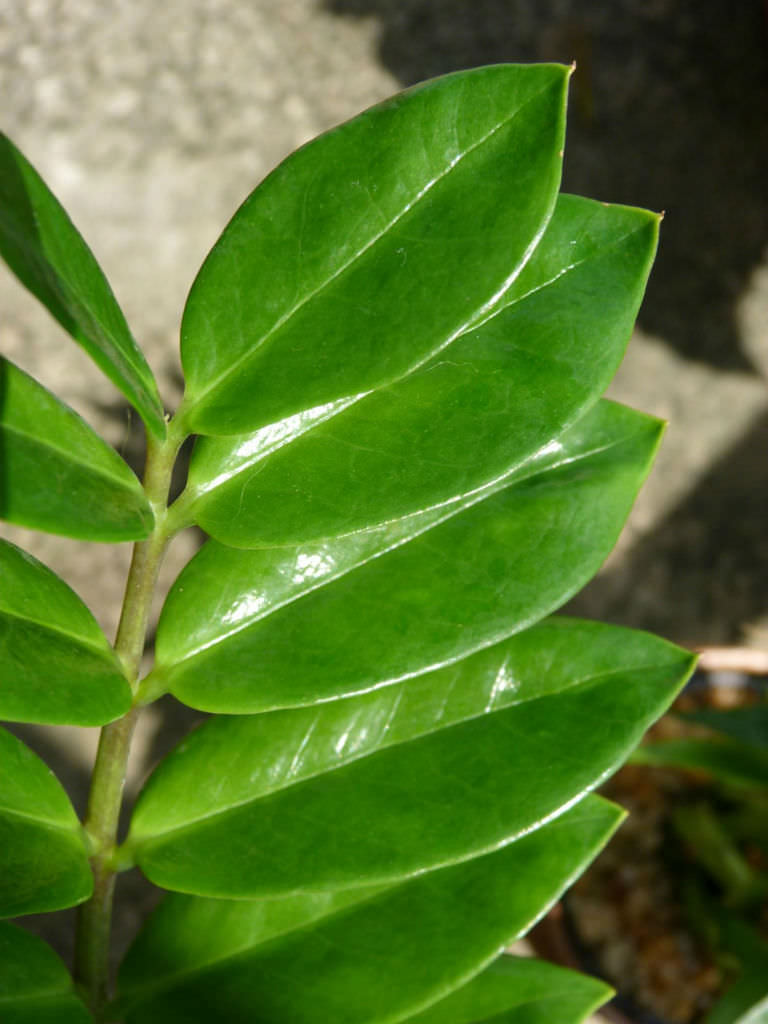
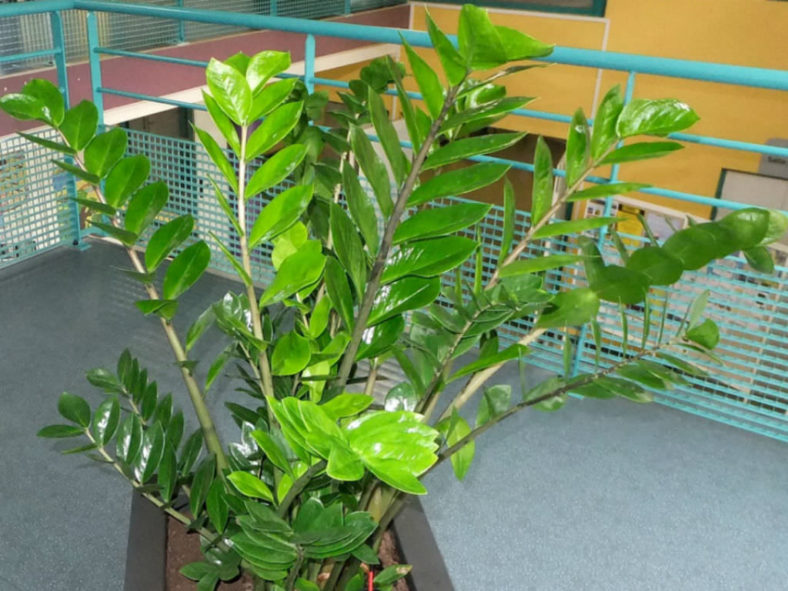
Zamioculcas zamiifolia is a popular plant with pinnately compound leaves arising from a stout, underground, subcylindrical rhizome. The petiole is green with darker transverse blotches and can measure up to 24 inches (60 cm) in length and 0.8 inches (2 cm) in diameter near the base. Each leaf usually comprises six to eight pairs of elliptic leaflets that are smooth, dark glossy-green, and can reach a length of 6 inches (15 cm) and a width of 2 inches (5 cm).
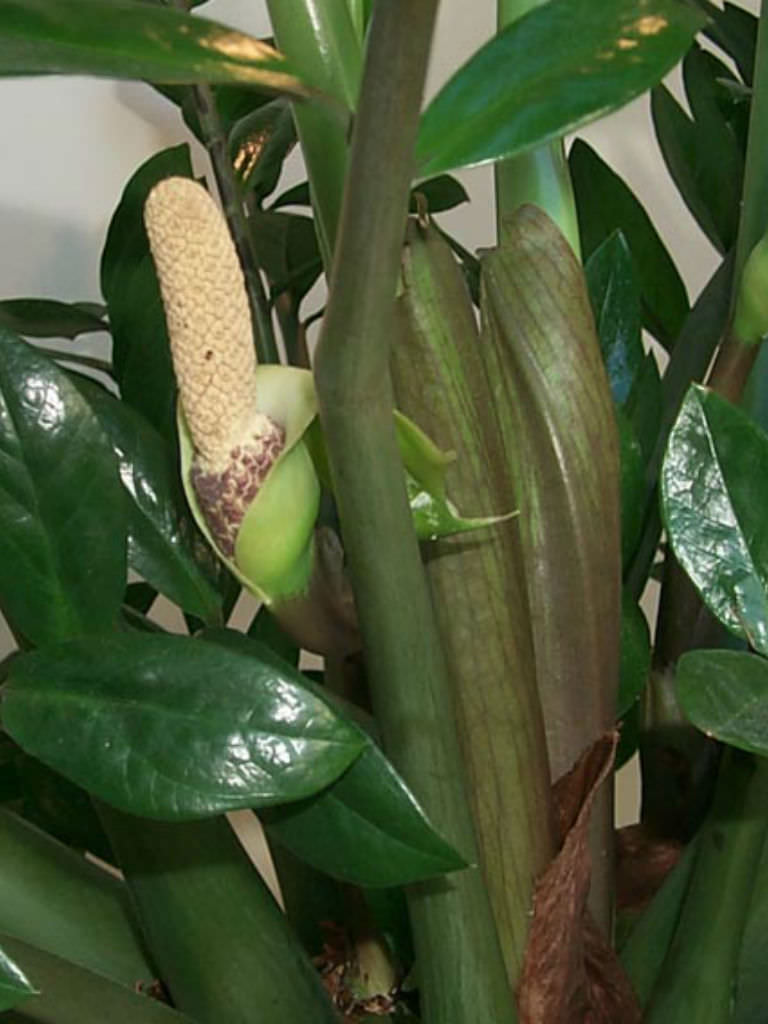
The flowers appear partly hidden among the leaf bases on a small, bright yellow-to-brown-to-bronze spadix from mid-summer to early fall. The spadix can measure up to 3 inches (7.5 cm) in length. The fruits are white berries containing 1 to 2 brown, ellipsoid seeds. They can reach a diameter of up to 0.5 inches (1.2 cm).
How to Grow and Care for Zamioculcas zamiifolia
Hardiness: USDA hardiness zones 9a to 10b: from 20°F (-6.7°C) to 40°F (4.4°C).
ZZ Plant care begins with neglect. This plant will do better if you leave it alone. Much like cacti, it needs less water rather than more. Water the plant only when the soil has dried out. The rare way you can kill this plant is to overwater it. A ZZ Plant turning yellow means it is getting too much water, and its underground rhizomes may rot. So, if you remember nothing else about caring for a ZZ Plant, remember to forget to water it. It can survive for months without water, but it will grow faster if regularly watered.
ZZ Plants are happy without fertilizer, but if you would like, you can give the plants half-strength fertilizer one to two times a year, and only in the summer months. Growing ZZ houseplants is easy and especially suited for the forgetful gardener.
Repot the ZZ Plant once a year at the beginning of spring, especially during the first 3 to 5 years.
Cutaway leaflets that are turning yellow near the base of a stem. Once a stem has grown much longer than the others, you can remove it or cut it back to the tip. The problem with cutting it to size at the tip is that it can look quite odd, so removing it might be the best option.
You may propagate by dividing rhizomes or with leaf cuttings. However, leaf cuttings have to be placed in a pot with a plastic covering and then left to grow roots, which can take up to a year.
Links
- Back to genus Zamioculcas
- Succupedia: Browse succulents by Scientific Name, Common Name, Genus, Family, USDA Hardiness Zone, Origin, or cacti by Genus
Photo Gallery
Click on a photo to see a larger version.