Scientific Name
Zygophyllum fabago L.
Synonym(s)
Zygophyllum fabagineum, Zygophyllum fabago subsp. fabago
Common Name(s)
Syrian Bean Caper
Scientific Classification
Family: Zygophyllaceae
Subfamily: Zygophylloideae
Genus: Zygophyllum
Etymology
The specific epithet "fabago" (pronounced "fah-BA-go") means "bean-like" and refers to the resemblance of this species to a bean plant, more specifically to the Broad Bean (Vicia faba🡕).
Origin
Zygophyllum fabago is native to the Mediterranean Region and Central Asia. It grows in open, rocky areas and gravelly soils.
Description
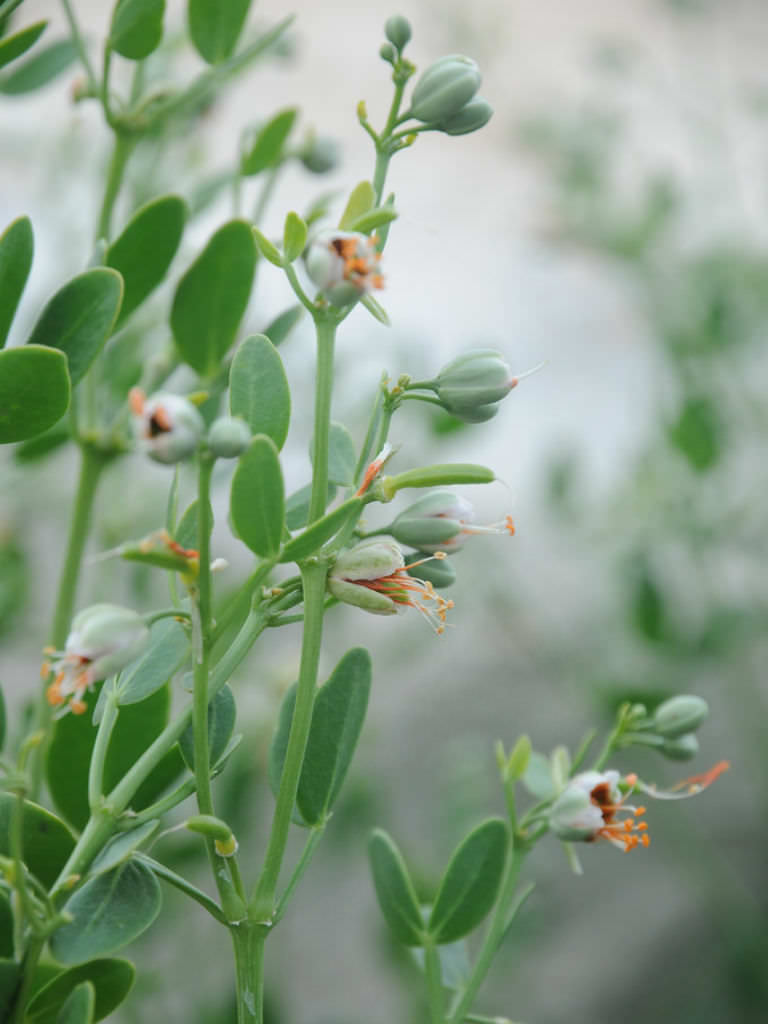
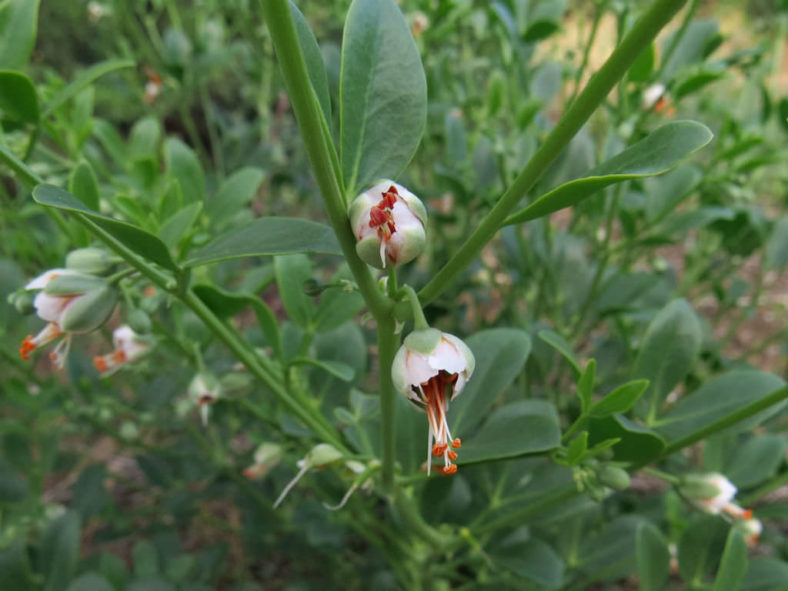
Zygophyllum fabago is a shrubby plant with much-branched, spreading stems bearing green, somewhat succulent leaves with two leaflets. It can grow up to 3.3 feet (1 m) tall, branching from the thickened woody base and forming colonies over time. This plant is a perennial that acts as an annual in regions with cold winters. The leaflets are obovate, measuring up to 1.3 inches (3.3 cm) long and 0.8 inches (2 cm) wide.
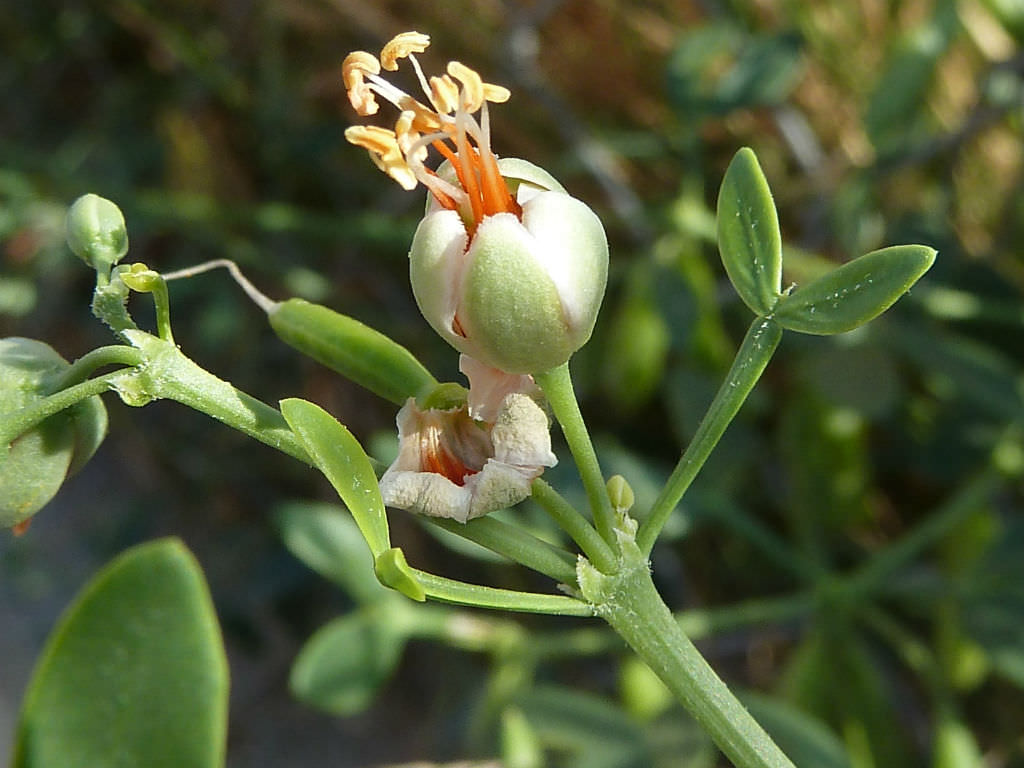
The flowers have five petals varying in color from salmon to yellow or white with pinkish veins. They can reach up to 0.3 inches (0.7 cm) in diameter and appear in summer on stalks that can grow up to 0.4 inches (1 cm) long. The fruits are capsules that contain five seeds. They are oblong to cylindrical, measuring up to 1.4 inches (3.5 cm) long and 0.25 inches (0.6 cm) in diameter.
This plant has invasive potential because of its long taproot, which, even if fragmented, can produce new plants. Also, its leaves have a hard wax coating that protects them from herbicides. As a result, it is considered a noxious weed of economic importance in much of the western United States.
How to Grow and Care for Zygophyllum fabago
Hardiness: USDA hardiness zone 7a to 10b: from 0 °F (−17.8 °C) to 40 °F (+4.4 °C).
Zygophyllum is found in many deserts and semi-deserts worldwide, including some of the aridest habitats where plant life is possible. The species is found in various habitats along hill slopes, dry rivers, ridges, and road verges in coarse sandy soil, calcareous sand, and brackish soil.
Species of Zygophyllum are usually not found in cultivation. However, some are very attractive with yellow, delicate petals and interesting fruits, and will undoubtedly be suitable for growing in gardens.
Propagation can be done from seed or by taking cuttings in spring.
See more at Growing and Using Zygophyllum.
Links
- Back to genus Zygophyllum
- Succupedia: Browse succulents by Scientific Name, Common Name, Genus, Family, USDA Hardiness Zone, Origin, or cacti by Genus
Photo Gallery
Click on a photo to see a larger version.