Scientific Name
Yucca thompsoniana Trel.
Synonym(s)
Yucca rostrata var. integra
Common Name(s)
Beaked Yucca, Thompson's Yucca, Trans Pecos Yucca
Scientific Classification
Family: Asparagaceae
Subfamily: Agavoideae
Genus: Yucca
Etymology
The specific epithet "thompsoniana" (pronounced "tom-soh-nee-AY-nuh") honors Charles Henry Thompson (1870-1931), an American botanist who worked at the Missouri Botanical Garden.
Origin
Yucca thompsoniana is native to Mexico and the United States. It occurs on limestone hills, rocky slopes, and plains at about 5,900 feet (1,000 m) above sea level, mainly in the Mexican states of Coahuila and Chihuahua but also north of the border in the United States (Texas).
Description
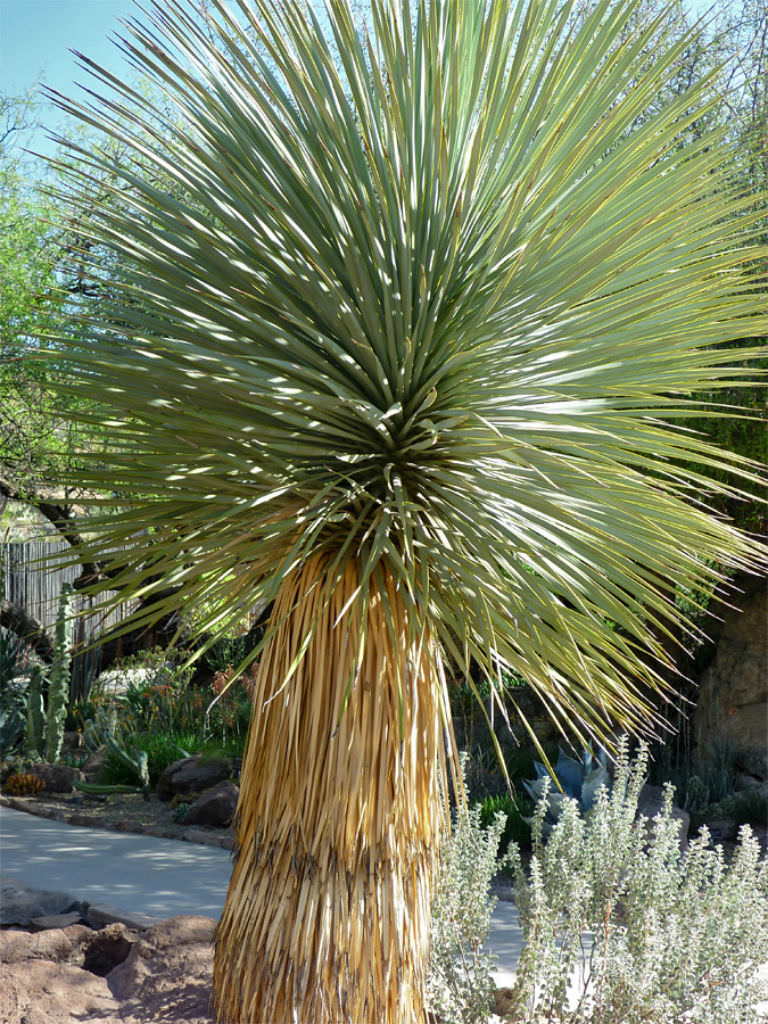
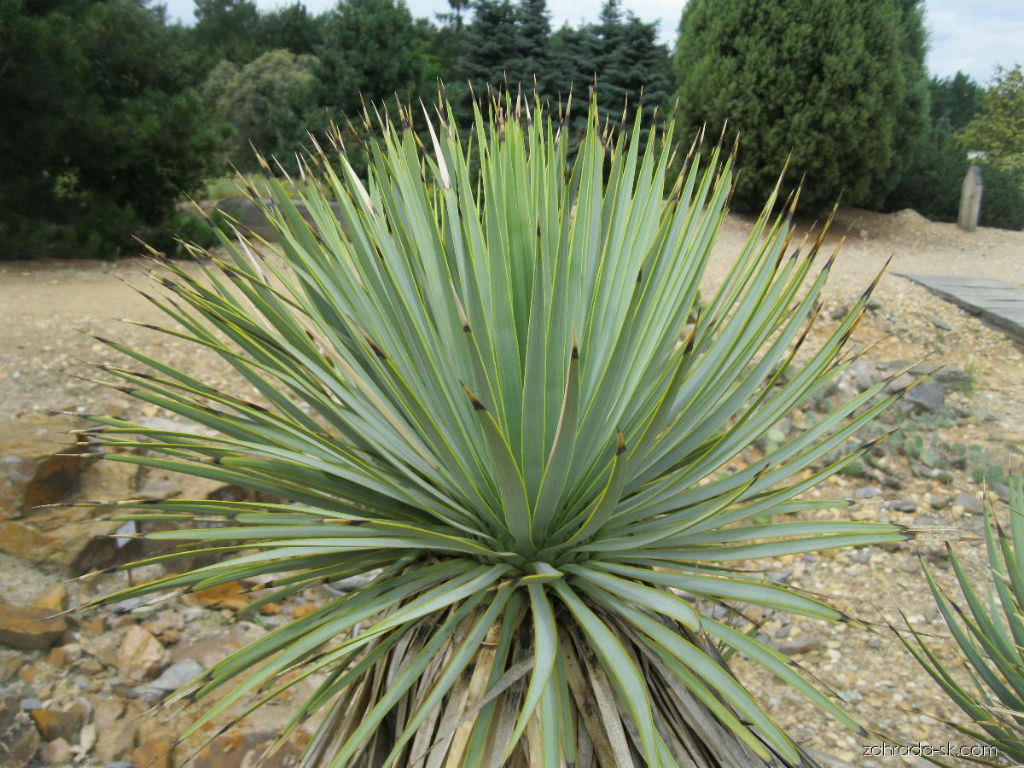
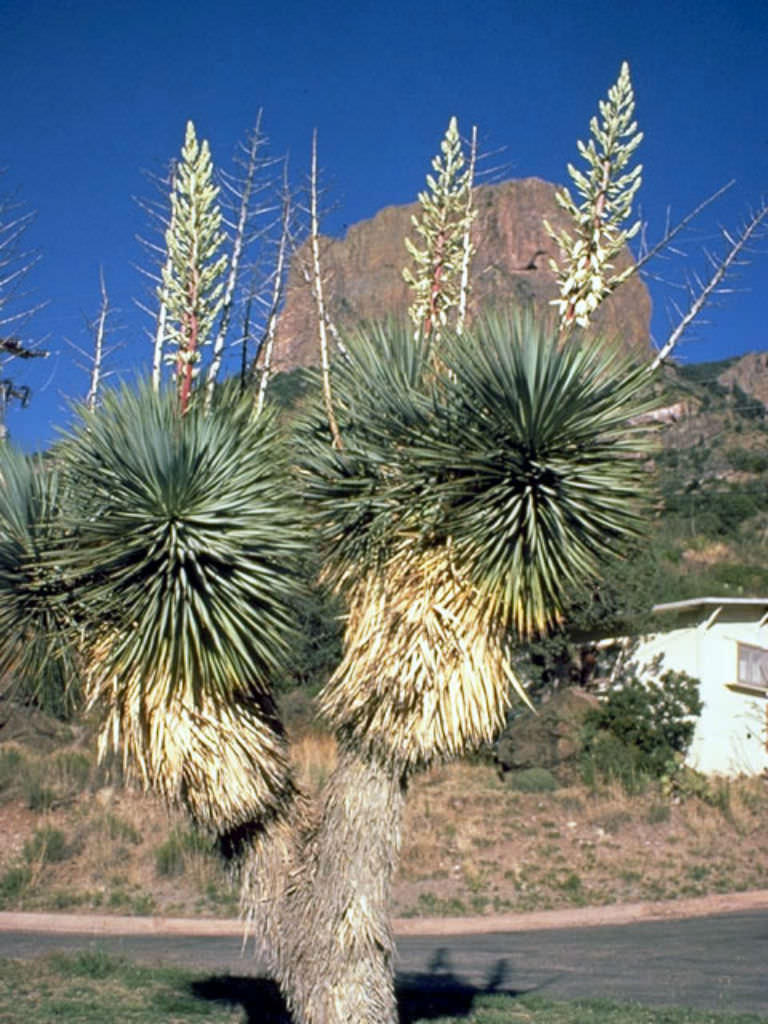
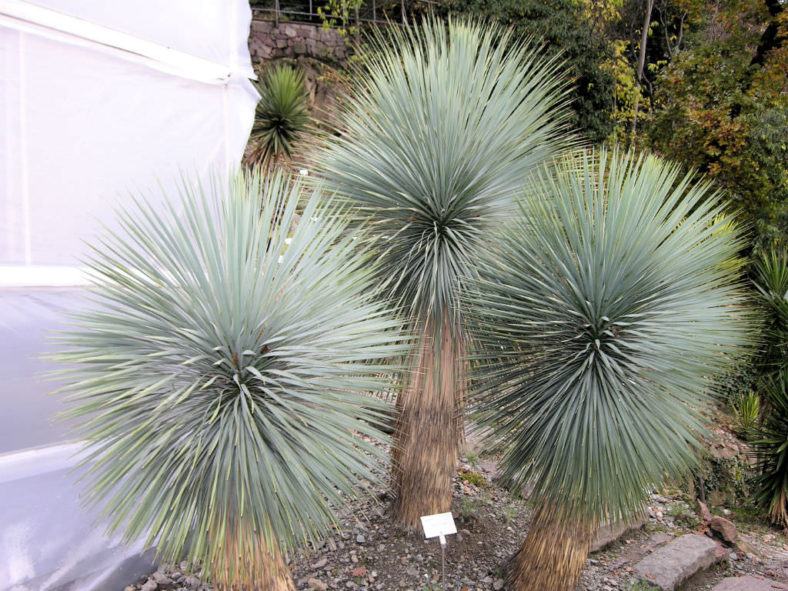
Yucca thompsoniana is a slow-growing plant with dagger-like leaves arranged in a rosette at the top of an erect trunk that can reach up to 3.3 feet (1 m) in height and 8 inches (20 cm) in diameter. The trunk is usually unbranched but may have 1 to 3 branches. The greenish-blue, a bit glaucous leaves have fine teeth along the edges. They can measure up to 14 inches (35 cm) long and up to 0.4 inches (1 cm) wide. The older leaves hang down neatly like a coat around the trunk.
The plant blooms before there is any trunk. The flowers are creamy-white, bell-shaped, and can reach up to 1.6 inches (4 cm) in length. They appear in spring in dense panicles on slender stalks that can grow up to about 3.3 feet (1 m) tall. The fruits are dry, egg-shaped capsules with dull black seeds.
How to Grow and Care for Yucca thompsoniana
Hardiness: USDA hardiness zone 7b to 11b: from 5°F (-15°C) to 40°F (4.4°C).
Under the right conditions, Yuccas are not difficult plants to grow. They tend to thrive on a bit of neglect rather than too much attention. They are especially easy to overwater, and soggy stems are a sign of too much water. The best conditions for Yucca include a sunny corner with relatively low humidity. They are not prone to many pests, although scale can be an issue. Over time, plants will typically lose their lower leaves (in nature, they droop, forming a skirt around the trunk), giving the plant a pleasant "tree-like" appearance.
Yuccas are relatively slow-growing plants that should only need to be repotted every other year. They do well, slightly pot-bound, as long as they don't become heavy enough to tip over their containers.
See more at How to Grow and Care for Yucca.
Links
- Back to genus Yucca
- Succupedia: Browse succulents by Scientific Name, Common Name, Genus, Family, USDA Hardiness Zone, Origin, or cacti by Genus
Photo Gallery
Click on a photo to see a larger version.