Scientific Name
Weingartia steinbachii subsp. verticillacantha (F.Ritter) Hentzschel & K.Augustin
Synonym(s)
Rebutia steinbachii subsp. verticillacantha, Sulcorebutia steinbachii subsp. verticillacantha, Sulcorebutia verticillacantha, Weingartia verticillacantha
Scientific Classification
Family: Cactaceae
Subfamily: Cactoideae
Tribe: Trichocereeae
Genus: Rebutia
Etymology
The specific epithet "verticillacantha" (pronounced "ver-ti-sil-la-KAN-tha") means "having spines arranged in whorls". It refers to the spines of this subspecies, which are arranged in whorls around the areoles.
Origin
Weingartia steinbachii subsp. verticillacantha is native to Bolivia. It grows on hillsides and rocky outcrops near Arque in the Cochabamba Department at elevations that range from 9,510 to 12,800 feet (2,900 to 3,900 m).
Description
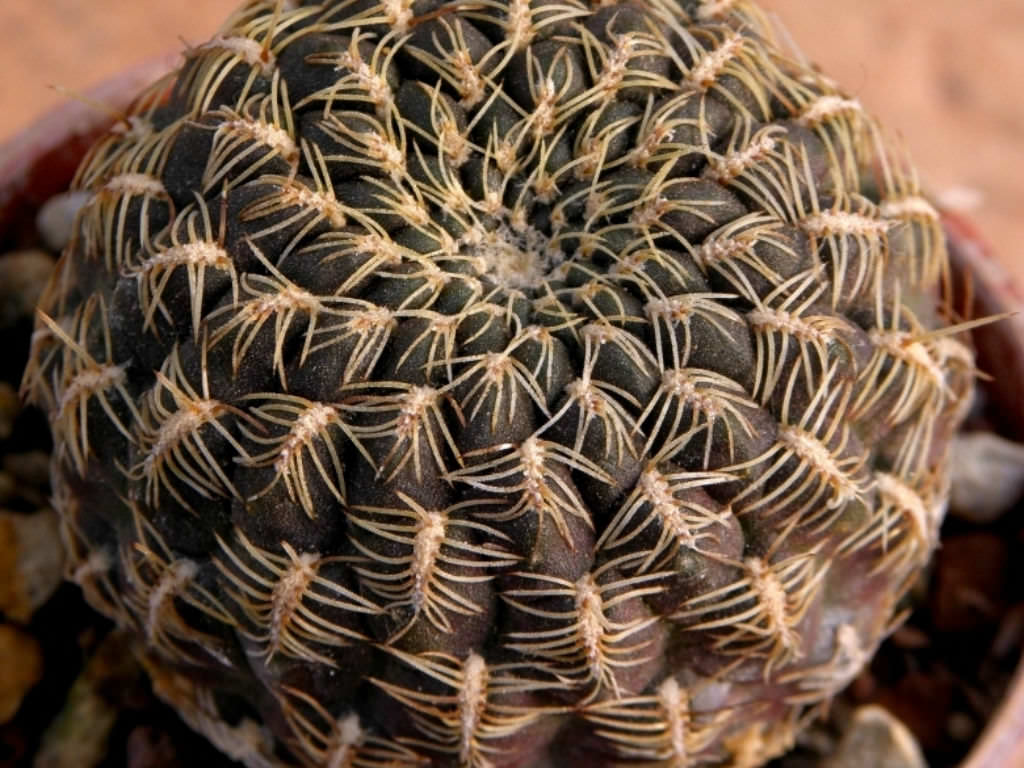
Weingartia steinbachii subsp. verticillacantha, formerly known as Rebutia steinbachii subsp. verticillacantha, is a small, clump-forming cactus with spherical stems with rhomboid tubercles spirally arranged into 13 to 21 ribs. The stems can grow up to 1.4 inches (3.5 cm) in diameter. They are grey-green to dark olive green and often red-tinged when grown in full sun. At the tip, each tubercle has a narrow areole that bears 6 to 14 radial spines. The central spines are absent. The areoles are white or yellowish and up to 0.25 inches (0.6 cm) long. The spines are cream-colored or yellowish and can grow up to 0.2 inches (0.5 cm) long.
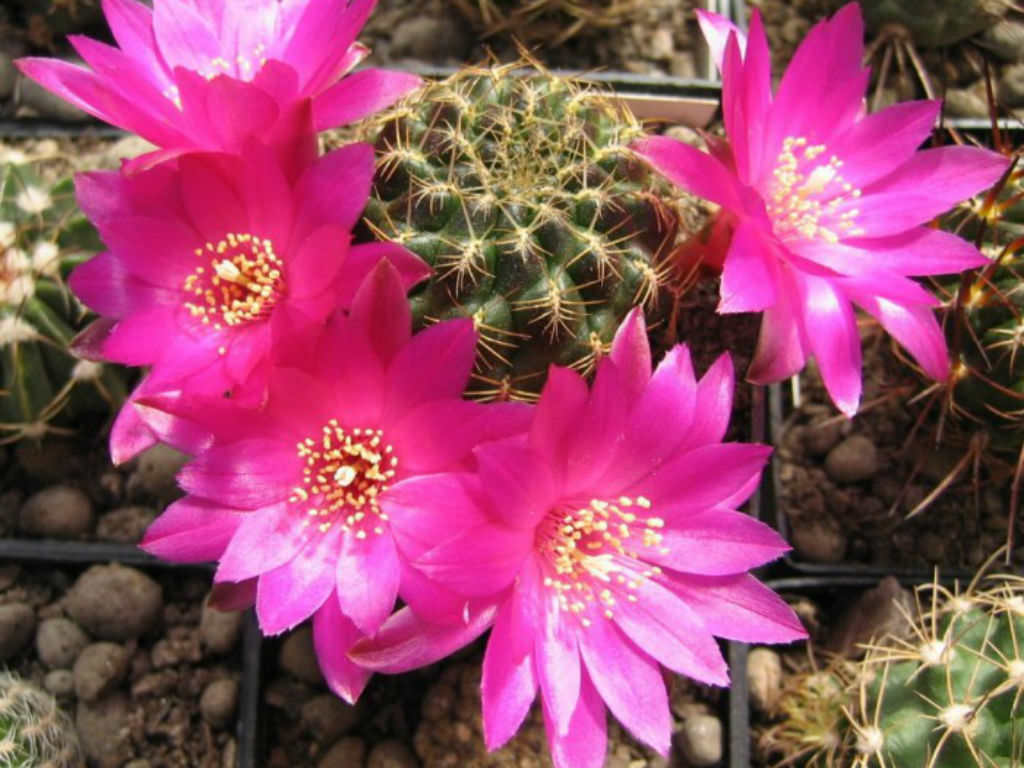
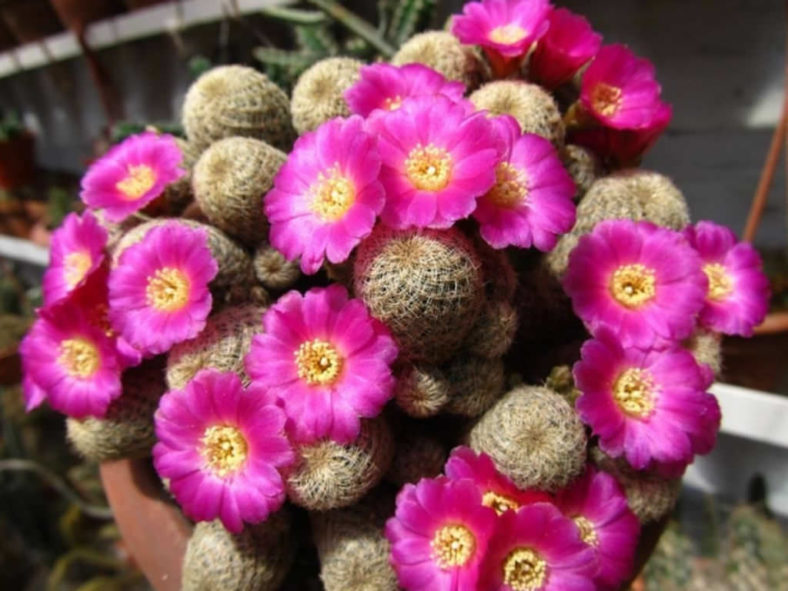
The flowers appear in a ring at the base of the stems, brightening the plant in spring. They are usually light purple with contrasting yellow-orange throats.
How to Grow and Care for Weingartia steinbachii subsp. verticillacantha
Hardiness: USDA hardiness zones 9b to 11b: from 25°F (-3.9°C) to 50°F (10°C).
If you can grow cacti and succulents successfully, you can likely grow the popular Rebutias without too much trouble. Their water and light requirements are fairly typical for many cactus species, including a winter cooling period to promote better blooming. Watering should be done carefully, allowing the plant to almost dry out between waterings. The cactus mustn't be exposed to prolonged dampness and standing water. Never let your cactus sit in a dish of water. Instead of propagating your offsets, let the plant form a large cluster for the best viewing. When it blooms, this will make a stunning display. Lastly, ensure fertilizer during the growing season for the best results.
Repot as needed, preferably during the warm season. To repot your Rebutia, ensure the soil is dry before repotting, then gently remove the pot. Knock away the old soil from the roots, removing any rotted or dead roots. Treat any cuts with a fungicide. Place the plant in its new pot and backfill it with potting soil, spreading the roots out as you repot. Leave the plant dry for a week or so, then begin to water lightly to reduce the risk of root rot.
Learn more at How to Grow and Care for Rebutia.
Links
- Back to genus Rebutia
- Succupedia: Browse succulents by Scientific Name, Common Name, Genus, Family, USDA Hardiness Zone, Origin, or cacti by Genus
Photo Gallery
Click on a photo to see a larger version.