Scientific Name
Sempervivum royanum Correvon
Accepted Scientific Name
Sempervivum tectorum subsp. tectorum
Common Name(s)
Houseleek, Hens and Chicks
Scientific Classification
Family: Crassulaceae
Subfamily: Sedoideae
Tribe: Sedeae
Subtribe: Sedinae
Genus: Sempervivum
Etymology
The specific epithet "royanum" (pronounced "roy-AH-num") means "of or pertaining to Roya" and refers to the origin of this plant.
Origin
Sempervivum royanum is native to the Roya Valley, a southwestern region in the French Alps. It is not accepted as a separate species and is treated as a synonym of Sempervivum tectorum subsp. tectorum.
Description
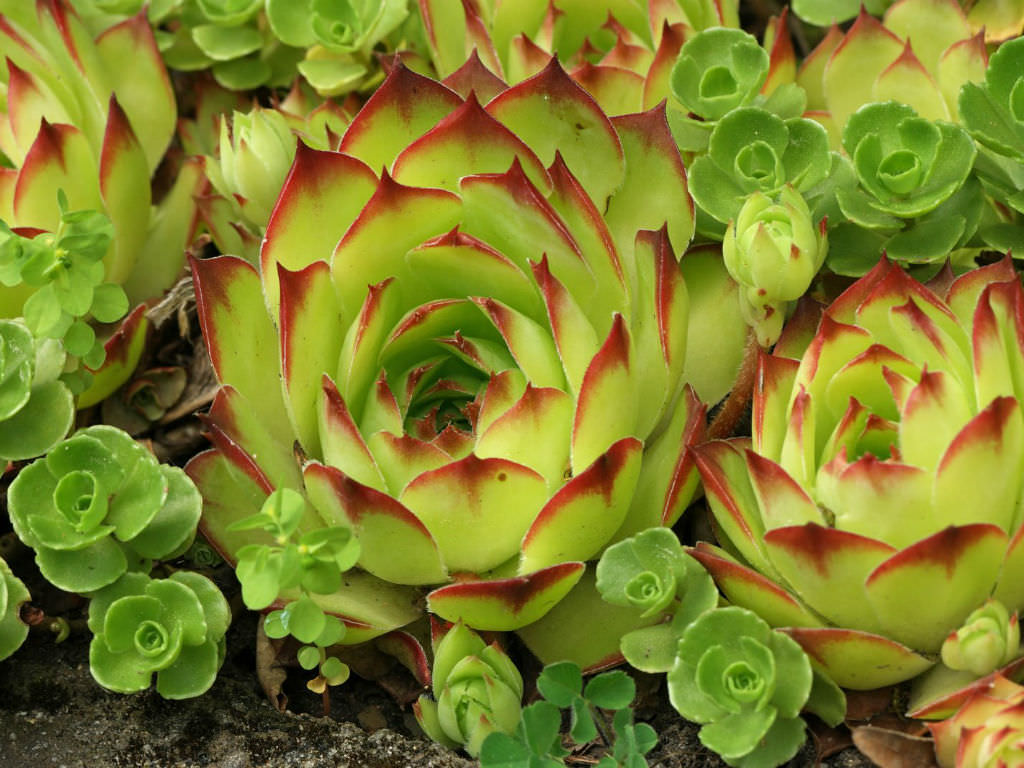
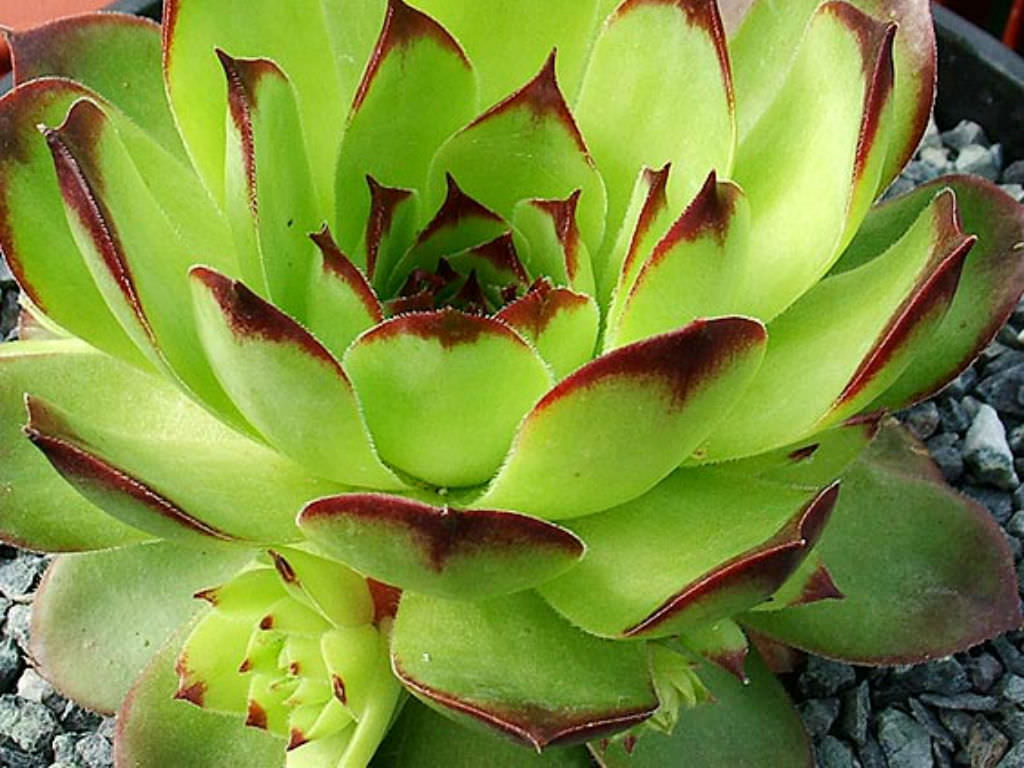
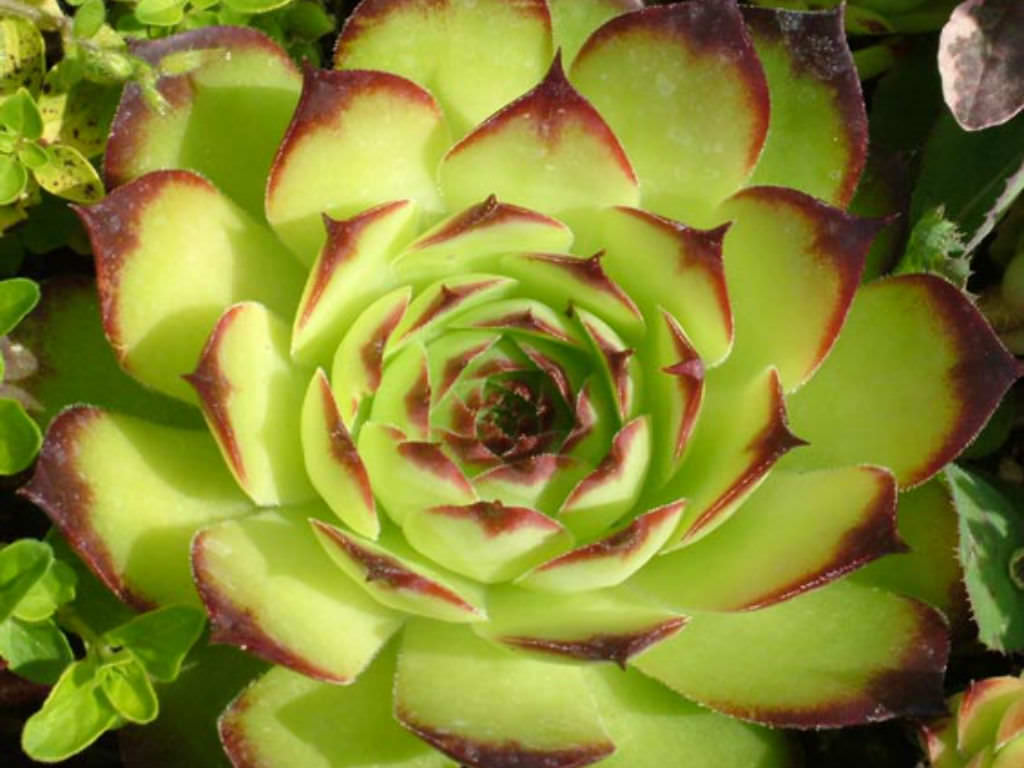
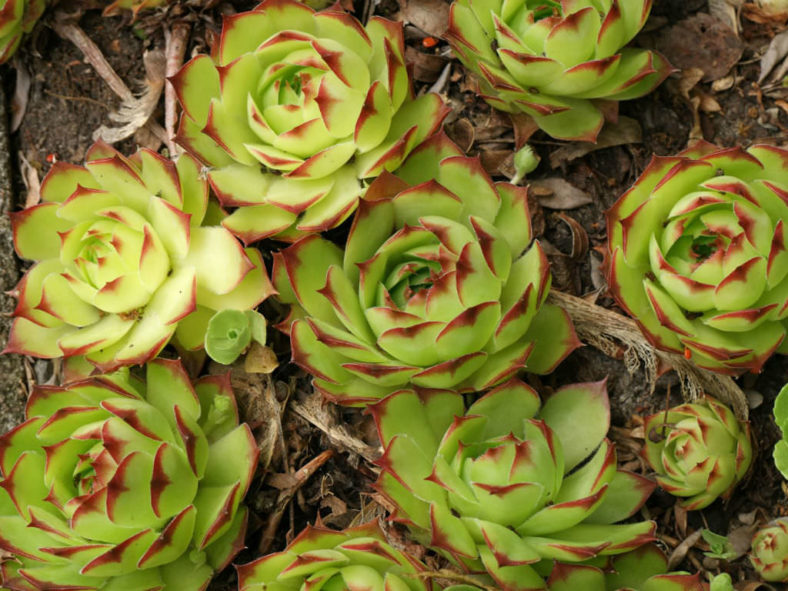
Sempervivum royanum, usually sold as Sempervivum tectorum 'Royanum', is a mat-forming succulent with rosettes of fleshy, yellowish-green leaves with purple-pink tips. The rosettes can reach up to 4 inches (10 cm) in diameter.
The star-shaped, reddish-purple flowers appear in flat-topped terminal clusters on a stout, upright, leafy stalk that can grow up to 8 inches (20 cm) tall. The rosettes die after flowering but are replaced by offsets on stolons.
How to Grow and Care for Sempervivum royanum
Hardiness: USDA hardiness zones 5a to 9b: from -20°F (-28.9°C) to 30°F (-1.1°C).
Common Houseleek can be grown from seeds, seedlings, or by dividing offsets.
Don't plant your Common Houseleeks too deeply. Dig a shallow hole and spread the roots. Cover the plant's crown and gently tamp the soil to firm it. Water lightly, but you don't need to water newly planted Common Houseleek daily, as you would with non-succulents. Common Houseleeks need to let their roots dry out between waterings.
Seeds can be sprinkled on top of a soil-gravel mix and kept moderately moist until germinating. Once they sprout, spread a thin layer of fine gravel around them as mulch. Seeds are usually started in pots and then transferred to the garden as seedlings. You can sow your seeds in the fall and transplant them in the spring.
Common Houseleeks will spread by underground roots. Each plant multiplies by at least 4 in a growing season by producing tiny offset plantlets all around the perimeter of the "hen." These are the "chicks." The chicks can be snapped off and replanted elsewhere at any time.
Learn more at How to Grow and Care for Sempervivum.
Links
- Back to genus Sempervivum
- Succupedia: Browse succulents by Scientific Name, Common Name, Genus, Family, USDA Hardiness Zone, Origin, or cacti by Genus
Photo Gallery
Click on a photo to see a larger version.