Scientific Name
Sempervivum globiferum L.
Common Name(s)
Rolling Hen and Chicks
Synonym(s)
Diopogon globifer, Jovibarba globifera, Sedum globiferum
Scientific Classification
Family: Crassulaceae
Subfamily: Sedoideae
Tribe: Sedeae
Subtribe: Sedinae
Genus: Sempervivum
Etymology
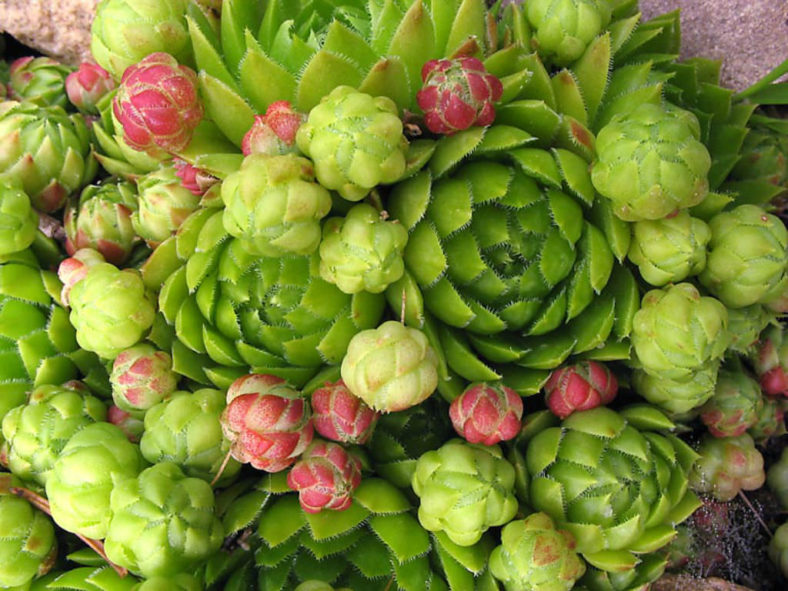
The specific epithet "globiferum" (pronounced "GLOB-ih-FER-um") means "sphere-bearing, globe-bearing" and refers to the shape of the offsets of this species.
Origin
Sempervivum globiferum is native to central and south-eastern Europe. It occurs southward to northern Albania and extends to the southwestern Alps, usually at low altitudes on dry, sandy sites, mainly in pine forests and along rocky riverbanks.
Description
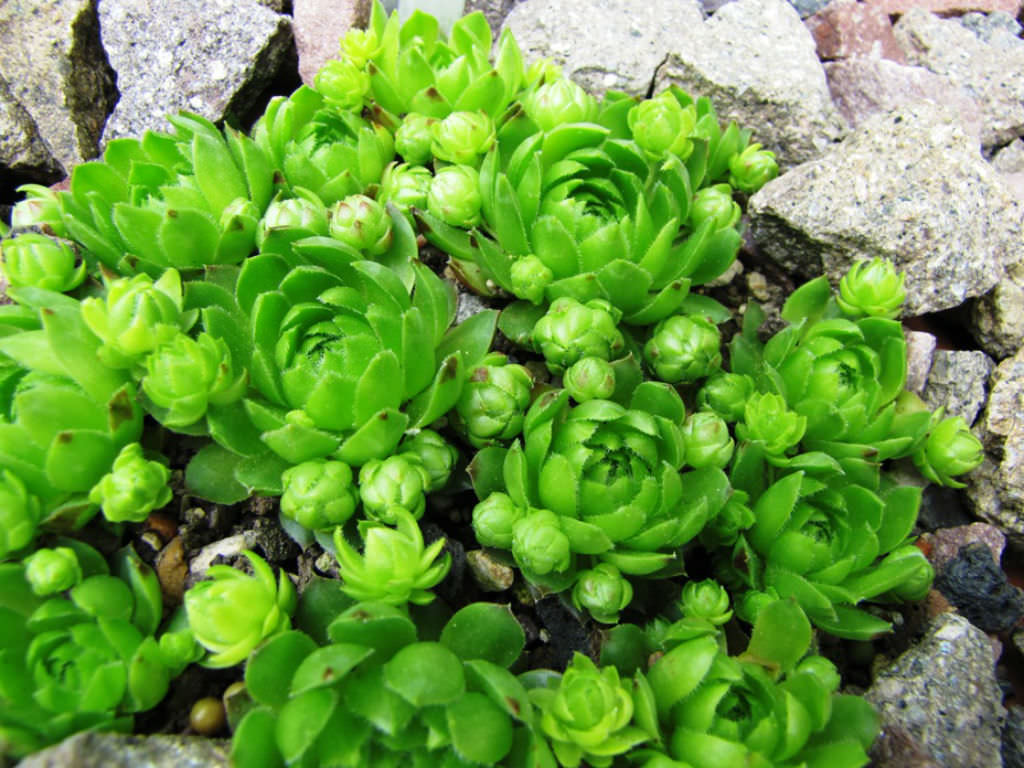
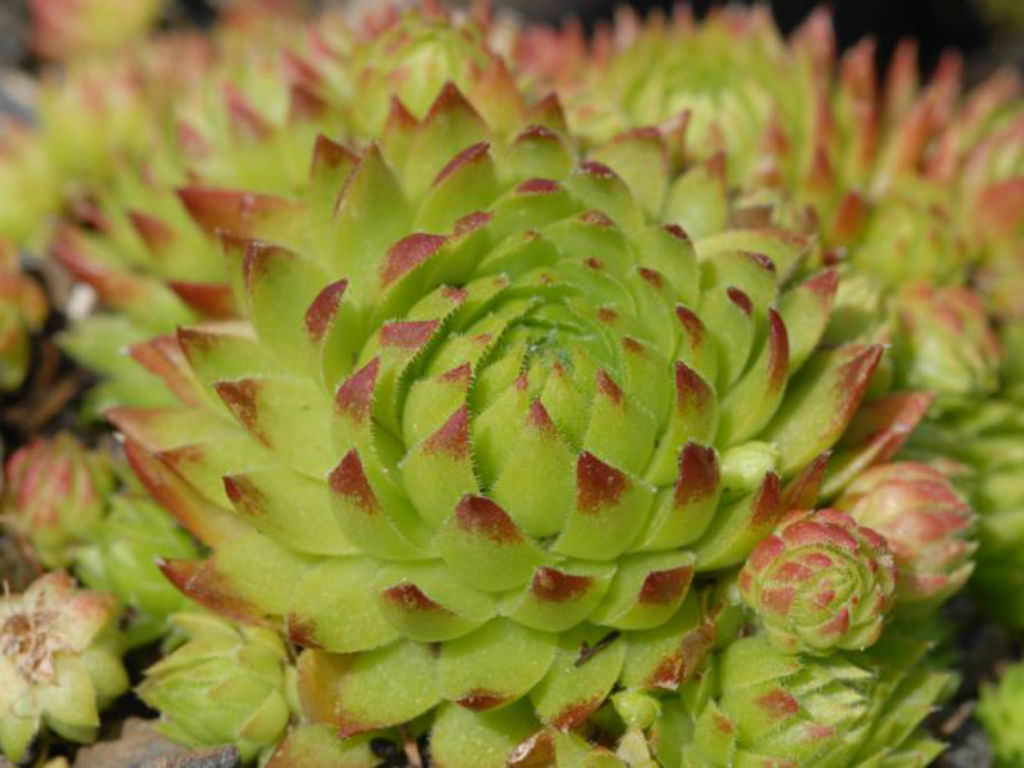
Sempervivum globiferum, also known as Jovibarba globifera, is a small succulent that forms flattened globose rosettes of light green leaves, often with a large apical red blotch on the back. The rosettes grow up to 1.2 inches (3 cm) in diameter and offset abundantly, forming attractive, dense tufts over time. The offsets are spherical and often on short, slender stolons. They are lightly attached and easily pop off and roll away from the mother rosette. The leaves are fleshy, oblanceolate, measuring about 0.4 inches (1 cm) long and 0.2 inches (0.5 cm) wide.
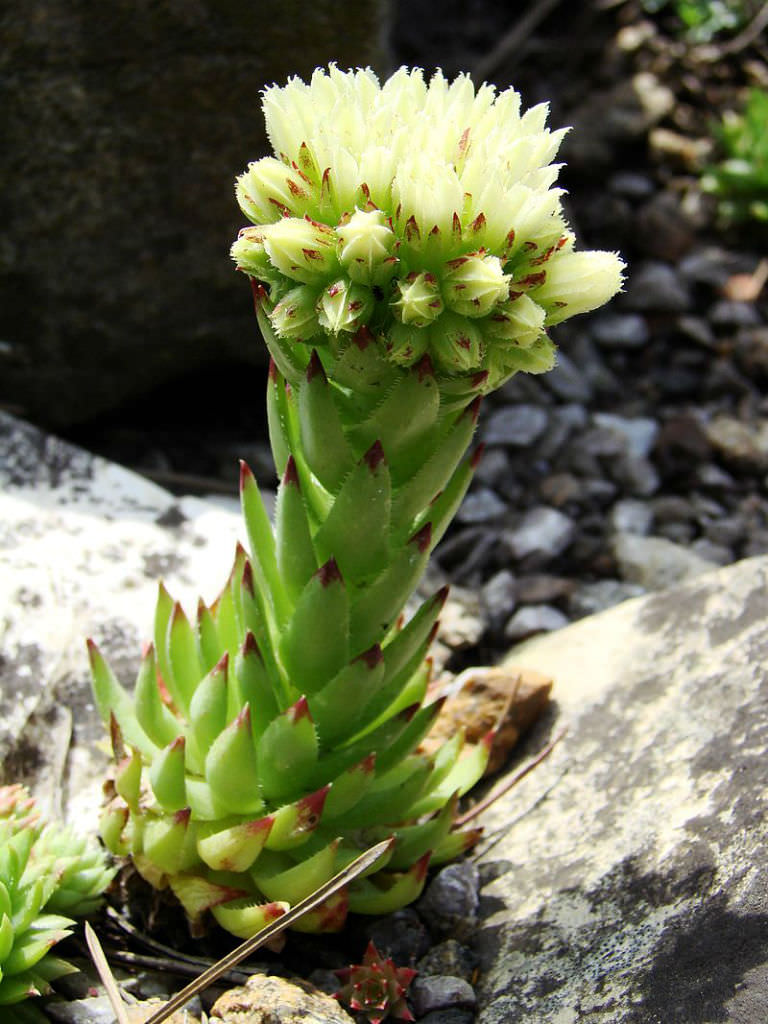
The flowers are star-shaped, usually 6-merous, with green sepals, often flushed with red, brown, or reddish-brown and greenish-white to greenish-yellow petals. They appear in dense terminal clusters on an erect stalk clothed with red-tipped leaves in summer. The flower stalk can grow up to 8 inches (20 cm) tall.
Subspecies of Sempervivum globiferum
- Sempervivum globiferum subsp. aghricum
- Sempervivum globiferum subsp. allionii
- Sempervivum globiferum subsp. arenarium
- Sempervivum globiferum subsp. glabrescens
- Sempervivum globiferum subsp. globiferum
- Sempervivum globiferum subsp. hirtum
- Sempervivum globiferum subsp. lagarinianum
- Sempervivum globiferum subsp. preissianum
- Sempervivum globiferum subsp. pseudohirtum
How to Grow and Care for Sempervivum globiferum
Hardiness: USDA hardiness zones 4a to 10b: from -30°F (-34.4°C) to 40°F (4.4°C).
Sempervivums are not difficult to grow, provided they are not waterlogged and killed by excess watering. They can be easily grown outdoors and in containers, and they earned the name "Houseleeks" because they tend to root on the roofs of houses. After the mother plant flowers, it will naturally die, but it has likely produced many offsets that will have continued to grow by this time. These are excellent for cold windows. Sempervivum earned its popular name, "Hen and Chicks," from their growth habit. The mother plant, or hen, sends off numerous offsets, clustering around her base like chicks. These offsets can be easily repotted, or the plants can be left to form a clumping mat.
Repot as needed, preferably during the warm season. To repot a succulent, ensure the soil is dry before repotting, then gently remove the pot. Knock away the old soil from the roots, removing any rotted or dead roots. Treat any cuts with a fungicide. Place the plant in its new pot and backfill it with potting soil, spreading the roots out as you repot. Leave the plant dry for a week or so, then begin to water lightly to reduce the risk of root rot.
Learn more at How to Grow and Care for Sempervivum.
Links
- Back to genus Sempervivum
- Succupedia: Browse succulents by Scientific Name, Common Name, Genus, Family, USDA Hardiness Zone, Origin, or cacti by Genus
Photo Gallery
Click on a photo to see a larger version.