Scientific Name
Ruschia uncinata Schwantes
Synonym(s)
Mesembryanthemum uncinatum, Mesembryanthemum uncinellum, Ruschia uncinella
Common Name(s)
Doringvygie
Scientific Classification
Family: Aizoaceae
Subfamily: Ruschioideae
Tribe: Ruschieae
Genus: Ruschia
Etymology
The specific epithet "uncinata" (pronounced "un-sin-NA-tuh") means "hooked; bearing hooks" and refers to the hook-like appearance of the pointed leaves of this species.
Origin
The native range of Ruschia uncinata extends from the Great Karoo and Vanrhynsdorp in the Western Cape province of South Africa to Namibia.
Description
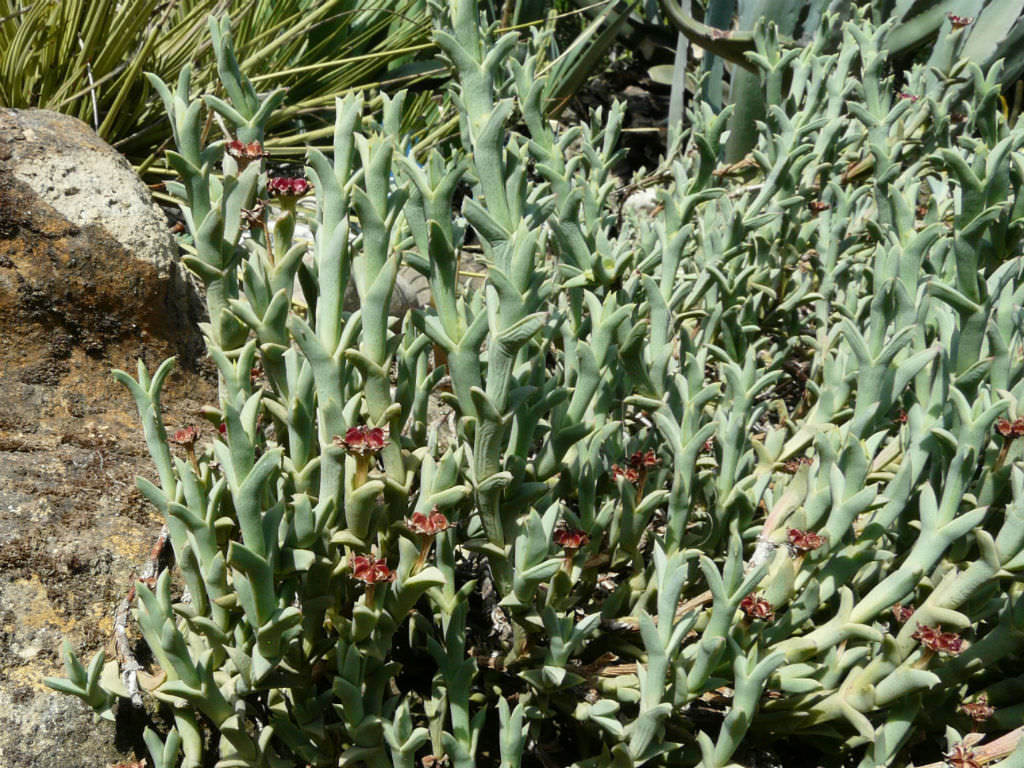
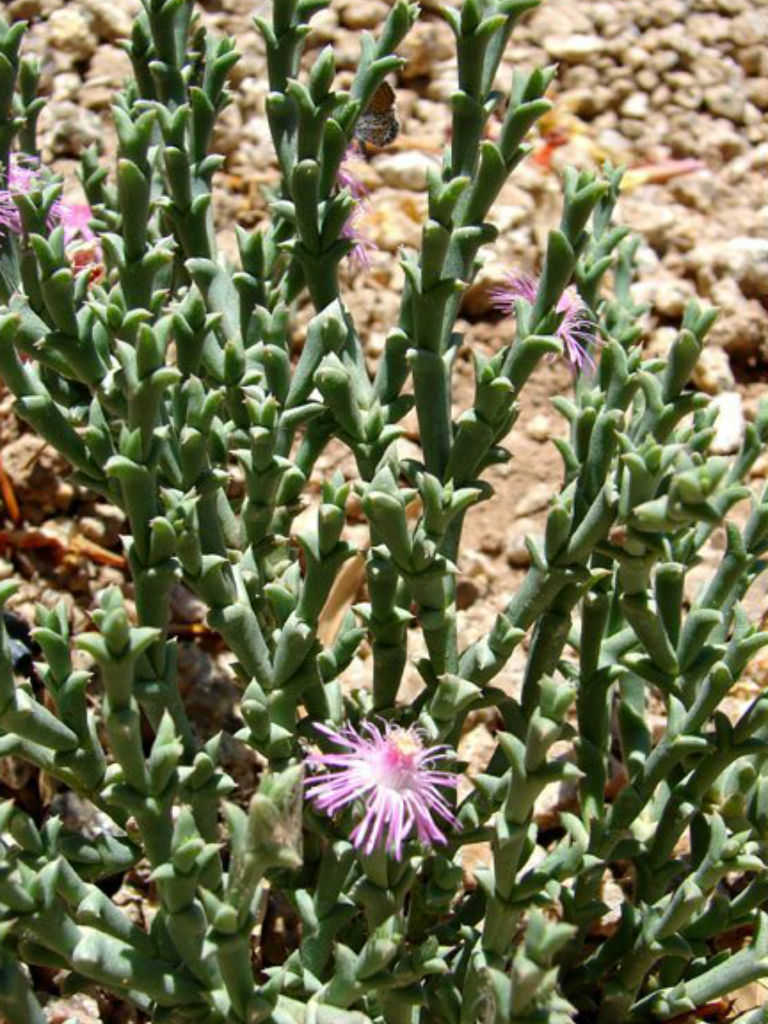
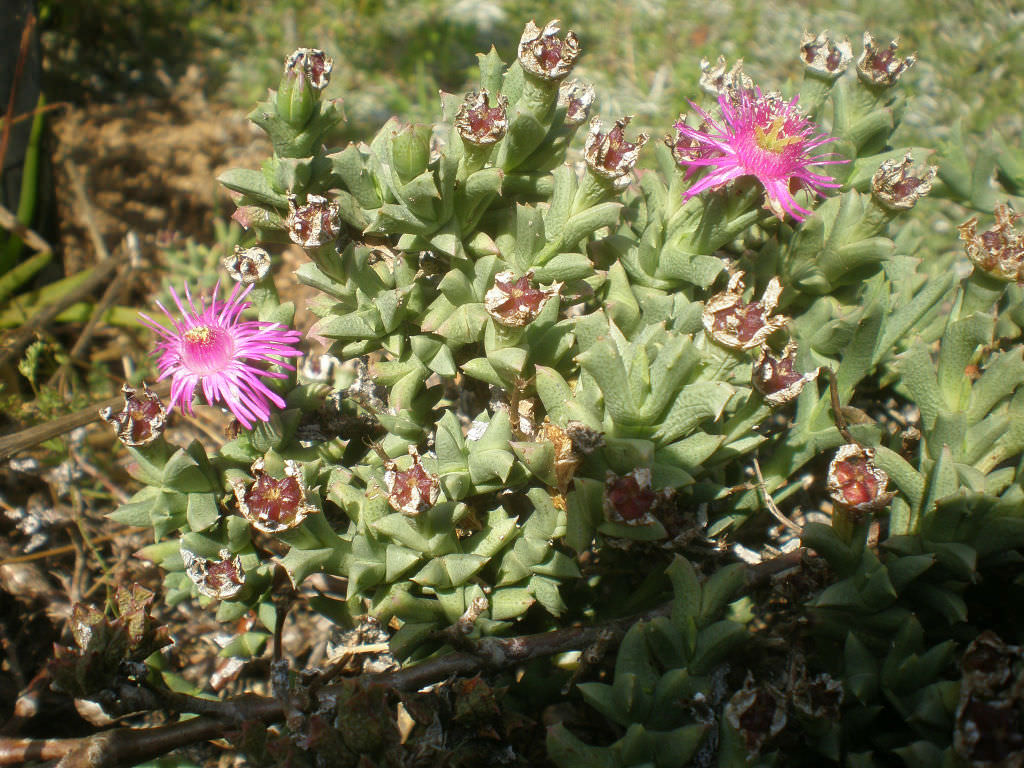
Ruschia uncinata is a dwarf succulent shrublet with decumbent, gray-green, cylindrical stems that bear opposite, perfoliate leaves that alternate 90 degrees from one pair to the next. It can grow up to 10 inches (25 cm) tall and typically forms loose clumps. The leaves are small, triangular in cross-section, and have a recurved, pointed tip. They are shortly united into a sheath around the stem. The keel of the leaves has one or two prominent teeth on younger leaves, but these become less noticeable as the leaves age.
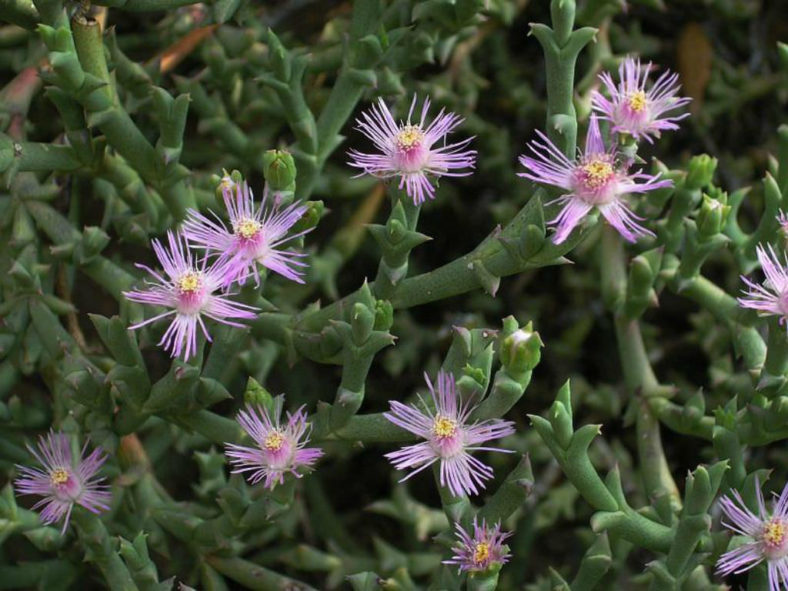
The solitary flowers are purple to pinkish-purple and have petals that radiate outwards along the edge but are erect in the middle of the flower, surrounding the reproductive parts. They can reach a diameter of 0.8 inches (2 cm) and usually appear in spring and summer.
How to Grow and Care for Ruschia uncinata
Hardiness: USDA hardiness zones 9b to 11b: from 25°F (-3.9°C) to 50°F (10°C).
Ruschias are popular for use in the garden. Their tolerance to drought makes them ideal water-wise plants in the arid and semi-arid parts of the world. Brilliant seasonal color displays can be achieved by mass planting over large areas and using a variety of growth forms.
There are tufted, round-shaped plants well suited for containers and flower boxes. The low-growing, spreading species cover well, will do wonders for terraces and embankments, and will easily stabilize loose sand. Then there are the larger, more robust types, best suited for larger plants or for combining with other succulents in rock gardens and mixed beds.
Remember that Ruschias are short-lived plants, and it is essential to replant them every 3 years. All species attract a host of insects, making them ideal subjects for attracting wildlife to the garden throughout the year.
Once rooted or germinated, cuttings and seedlings can be feed with organic fertilizers to enhance vigor and health.
Learn more at How to Grow and Care for Ruschia.
Links
- Back to genus Ruschia
- Succupedia: Browse succulents by Scientific Name, Common Name, Genus, Family, USDA Hardiness Zone, Origin, or cacti by Genus
Photo Gallery
Click on a photo to see a larger version.