Scientific Name
Chaloupkaea chrysantha (Boiss. & Heldr.) Niederle
Synonym(s)
Cotyledon chrysantha, Prometheum chrysanthum, Rosularia chrysantha, Sedum chrysanthum, Umbilicus chrysanthus
Scientific Classification
Family: Crassulaceae
Subfamily: Sempervivoideae
Tribe: Sedeae
Genus: Chaloupkaea
Etymology
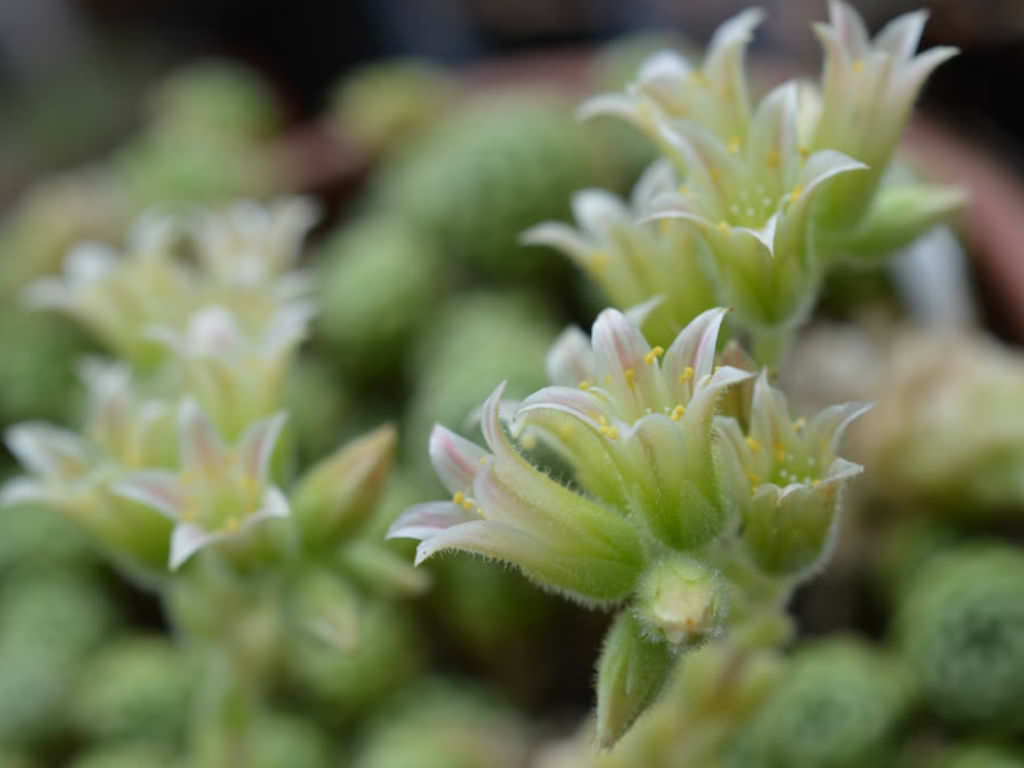
The specific epithet "chrysantha" (pronounced "kris-ANTH-uh") means "golden-flowered; having golden-yellow flowers." However, the flowers on this species are often a more delicate creamy yellow or ivory with reddish venation on the petals, rather than a literal golden hue.
Origin
Chaloupkaea chrysantha is native to southwestern and southern Turkey.
Description
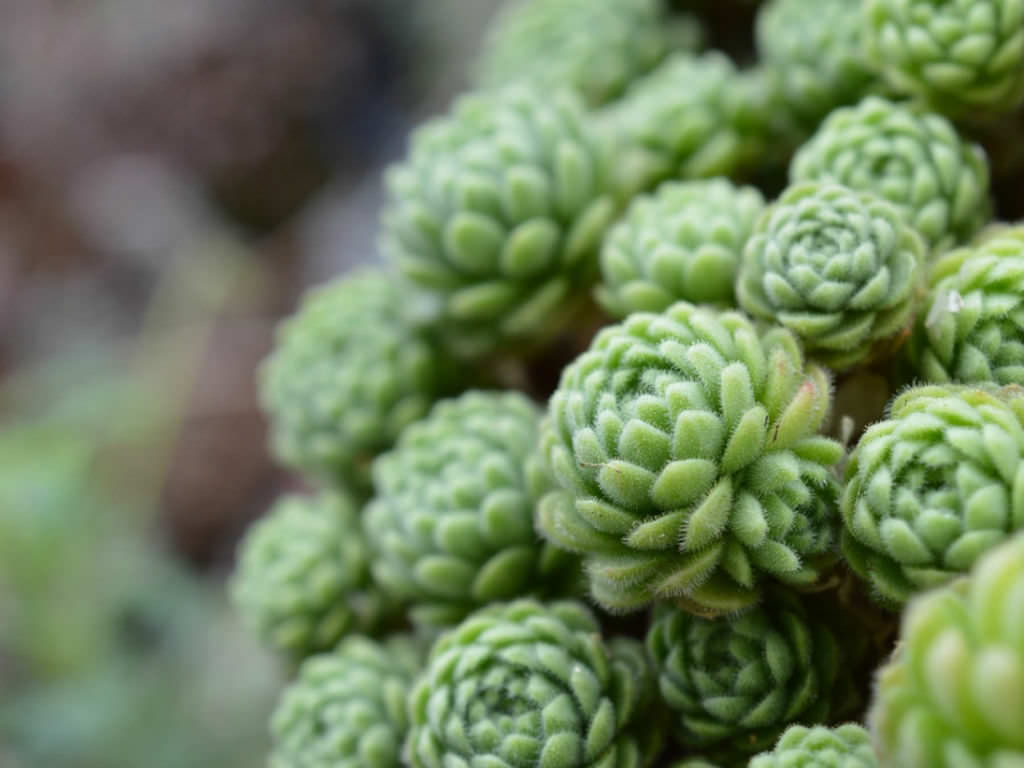
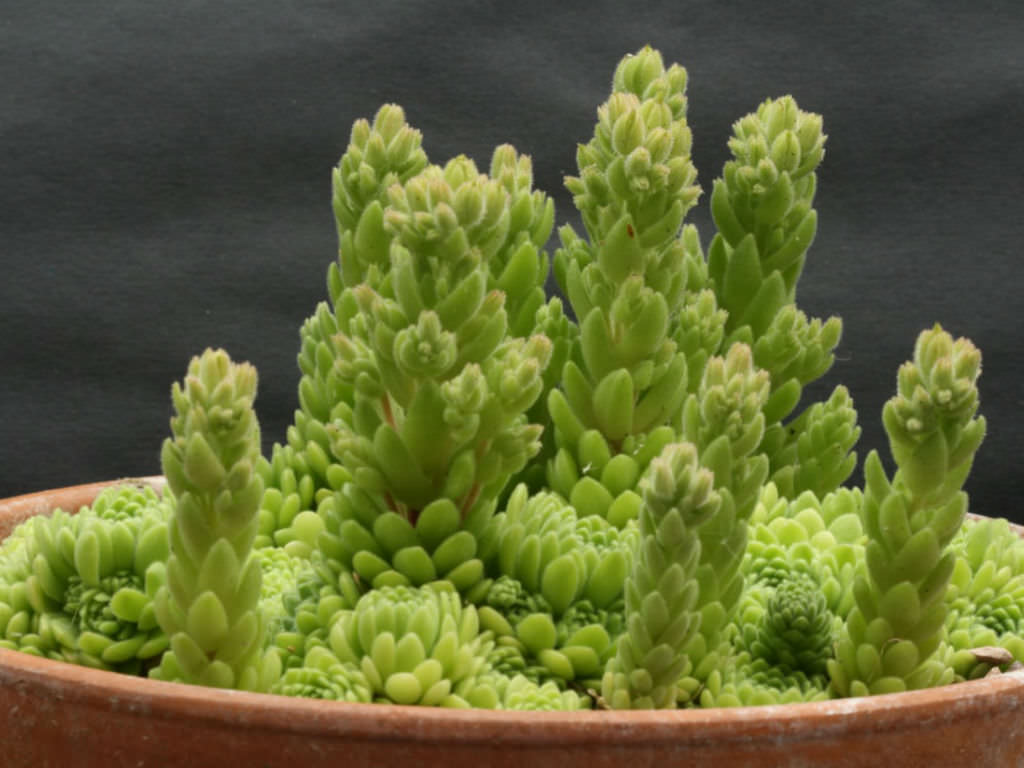
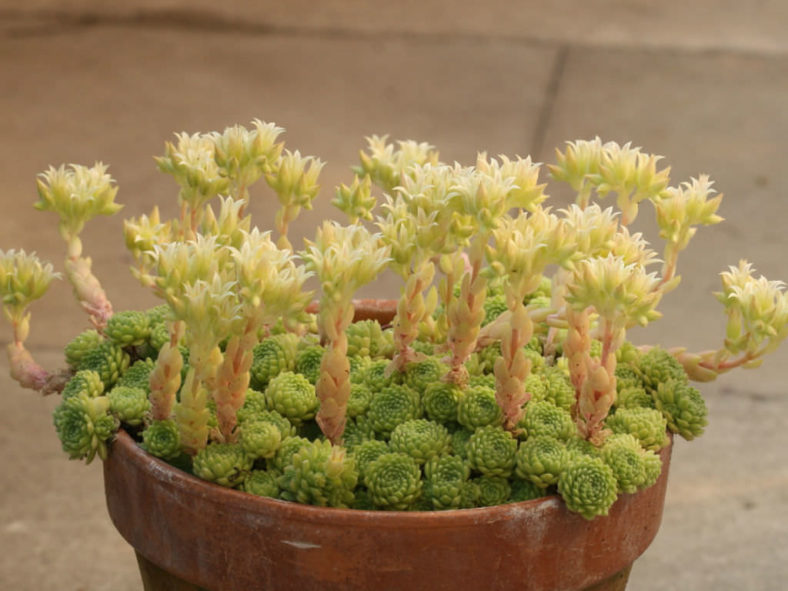
Chaloupkaea chrysantha, formerly known as Prometheum chrysanthum or Rosularia chrysantha, is a slow-growing succulent that forms small rosettes of fleshy, spoon-shaped, fresh-green leaves with a light velvety coating. The rosettes can grow up to 1.2 inches (3 cm) in diameter and produce offsets, forming a dense mound over time.
Clusters of ivory or pale yellow flowers with reddish venation on the petals are produced on upright stems in early summer. The flowers are bell-shaped to narrowly funnel-shaped and can reach 0.6 inches (1.5 cm) in length. The rosettes die after flowering.
Subspecies of Chaloupkaea chrysantha
- Chaloupkaea chrysantha subsp. chrysantha
- Chaloupkaea chrysantha subsp. uludaghensis
How to Grow and Care for Chaloupkaea chrysantha
Hardiness: USDA hardiness zone 5a to 9b: from -20°F (-28.9°C) to 30°F (-1.1°C).
Whether grown outdoors or indoors, these plants are best forgotten about. Too much attention from nervous gardeners will kill the plant. When grown outdoors in a wet environment, make sure that the soil is sandy and well-draining. If you aren't careful, your plant will turn into rotten mush. Mix native soil with sand, if necessary. When grown indoors, a standard commercial cactus-and-succulent soil mix works well. In the event of an unhealthy plant, the first thing to examine is your watering habits.
The most common problem is root rot due to overwatering. If the soil is too wet, don't expect it to dry out safely just because you don't water it for a while. This plant is best grown outdoors, and if you live in an area where winter temperatures rarely go below -10°F (-23°C), this is the best for Rosularia.
When potted, these plants are very susceptible to vine weevil. The plant is often used as a bedding or groundcover plant.
See more at How to Grow and Care for Rosularia.
Links
- Back to genus Chaloupkaea
- Succupedia: Browse succulents by Scientific Name, Common Name, Genus, Family, USDA Hardiness Zone, Origin, or cacti by Genus
Photo Gallery
Click on a photo to see a larger version.