Scientific Name
Rebutia marsoneri Werderm.
Accepted Scientific Name
Rebutia minuscula var. minuscula
Synonym(s)
Rebutia minuscula var. marsoneri
Scientific Classification
Family: Cactaceae
Subfamily: Cactoideae
Tribe: Trichocereeae
Genus: Rebutia
Etymology
The specific epithet "marsoneri" (pronounced "mar-son-ER-ee") honors Oreste Marsoner (ft. 1932), an Argentinian cactus collector.
Description
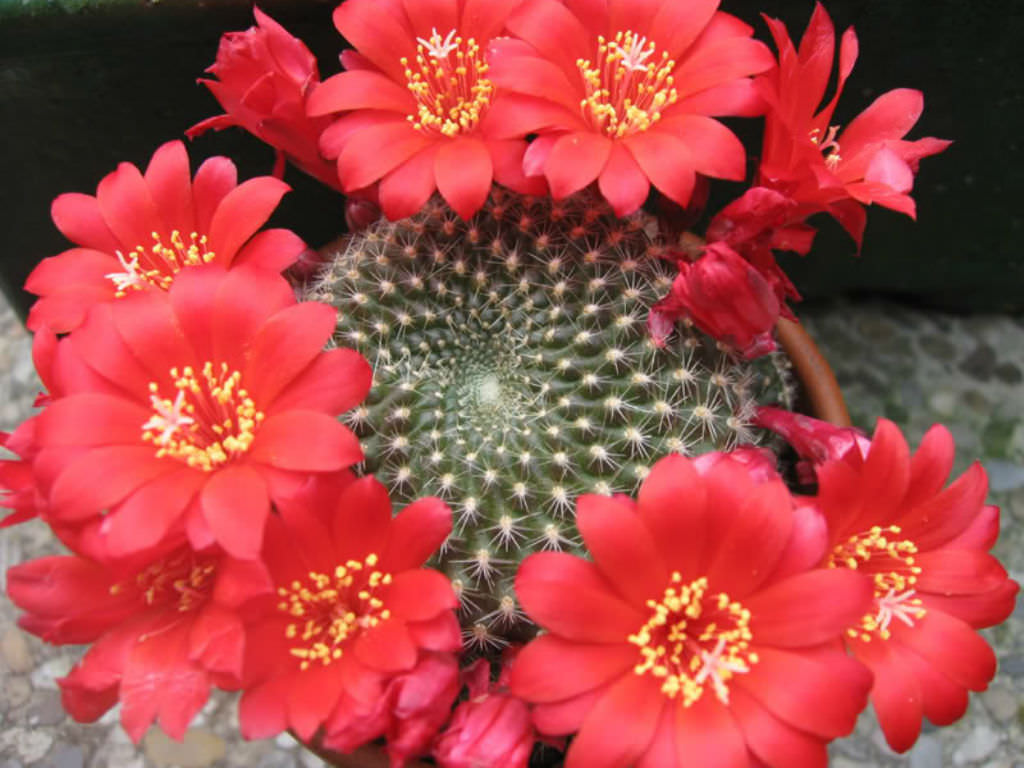
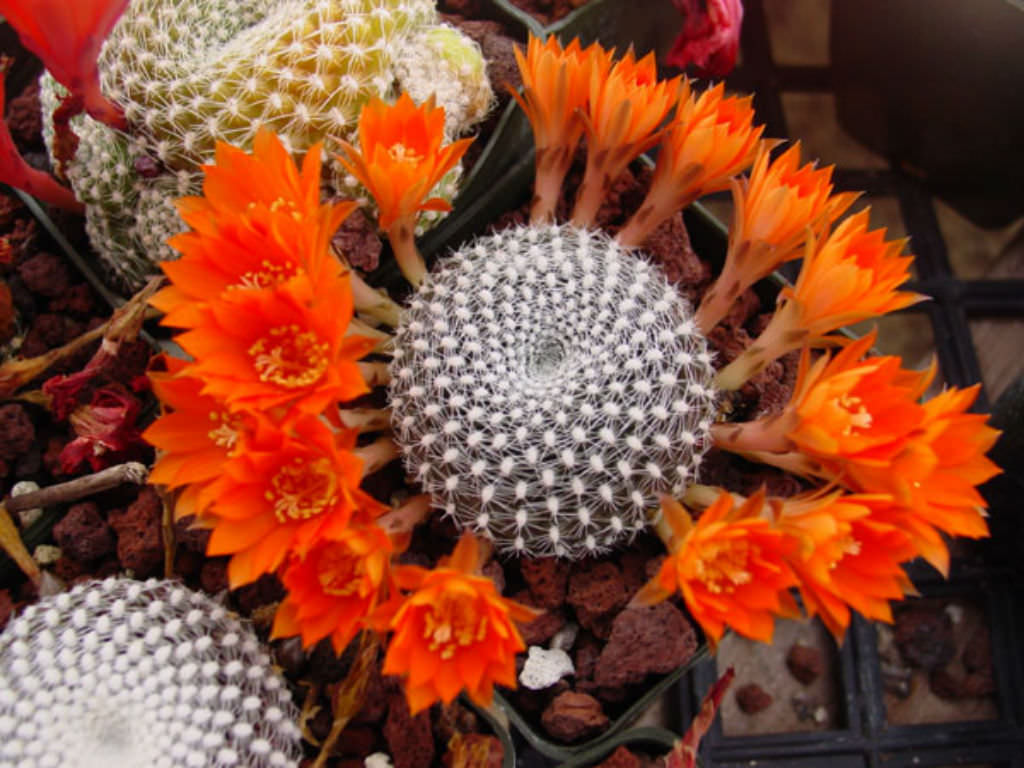
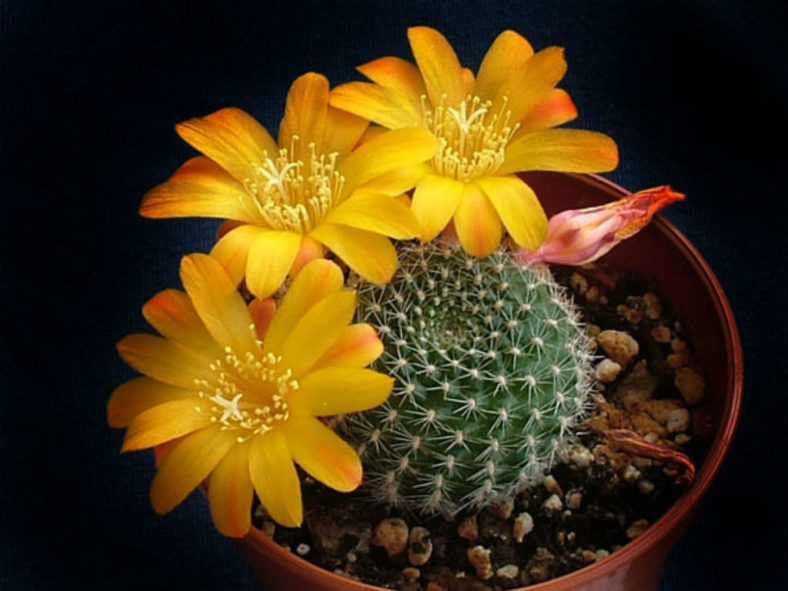
Rebutia marsoneri is a small cactus with green, depressed, globose stems that have conical tubercles arranged spirally and clusters of thin, white spines at the tips. The stems can grow solitary or freely clustering and can reach a diameter of 2.8 inches (7 cm). The spines are brownish to golden yellow or white and usually have dark tips. Each areole bears up to 30 spines, variable in length from 0.1 to 0.6 inches (0.3 to 1.5 cm).
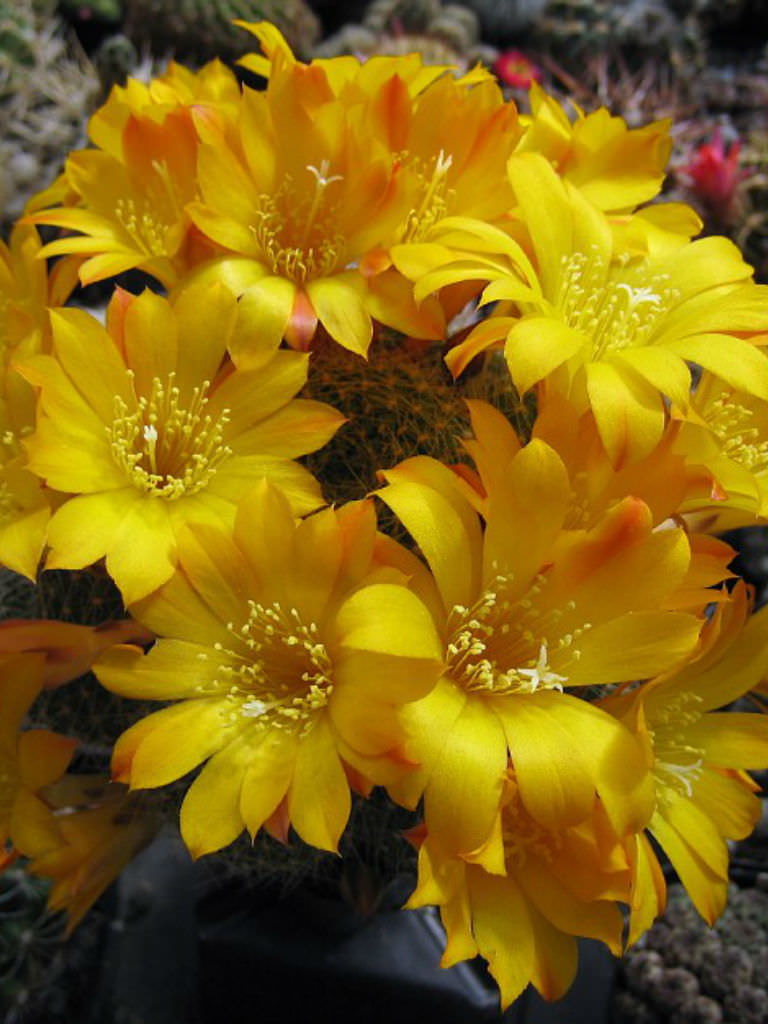
In spring, Rebutia marsoneri develops a large crop of flowers from the base of each stem. The flowers are bright yellow to orange or orange-red, reaching 2 inches (5 cm) in length and 1.4 inches (3.5 cm) in diameter. This species is one of the earliest Rebutias to bloom and has a long-lasting, continuous blooming period.
Rebutia marsoneri is also listed as a synonym of Rebutia minuscula or Rebutia minuscula var. minuscula.
Origin
The native range of Rebutia marsoneri extends from Jujuy to Salta in Argentina, where it grows on rocky outcrops. It is not recognized as a separate species and is treated as a synonym of Rebutia minuscula var. minuscula.
How to Grow and Care for Rebutia marsoneri
Hardiness: USDA hardiness zones 9b to 11b: from 25°F (-3.9°C) to 50°F (10°C).
If you can grow cacti and succulents successfully, you can likely grow the popular Rebutia without too much trouble. Their water and light requirements are typical for many cacti species, including a winter cooling period to promote better blooming. Watering should be done carefully, allowing the plant to almost dry out between waterings. The cactus mustn't be exposed to prolonged dampness and standing water. Never let your cactus sit in a dish of water. Instead of propagating the offsets for the best viewing, allow the plant to form a cluster. When it blooms, this will make a magnificent display. Lastly, ensure that you apply fertilizer during the growing season for the best results.
Repot as needed, preferably during the warm season. To repot a cactus, ensure the soil is dry, then gently remove the pot.
See more at How to Grow and Care for Rebutia.
Links
- Back to genus Rebutia
- Succupedia: Browse succulents by Scientific Name, Common Name, Genus, Family, USDA Hardiness Zone, Origin, or cacti by Genus
Photo Gallery
Click on a photo to see a larger version.