Scientific Name
Myrtillocactus geometrizans' Fukurokuryuzinboku'
Synonym(s)
Myrtillocactus geometrizans f. monstruosus
Common Name(s)
Boob Cactus, Boobsie Cactus, Breast Cactus, Titty Cactus
Scientific Classification
Family: Cactaceae
Subfamily: Cactoideae
Tribe: Echinocereeae
Genus: Myrtillocactus
Origin
Myrtillocactus geometrizans 'Fukurokuryuzinboku' is a Japanese monstrous cultivar of Myrtillocactus geometrizans. It is indeed a rare and prized collector's item.
Description
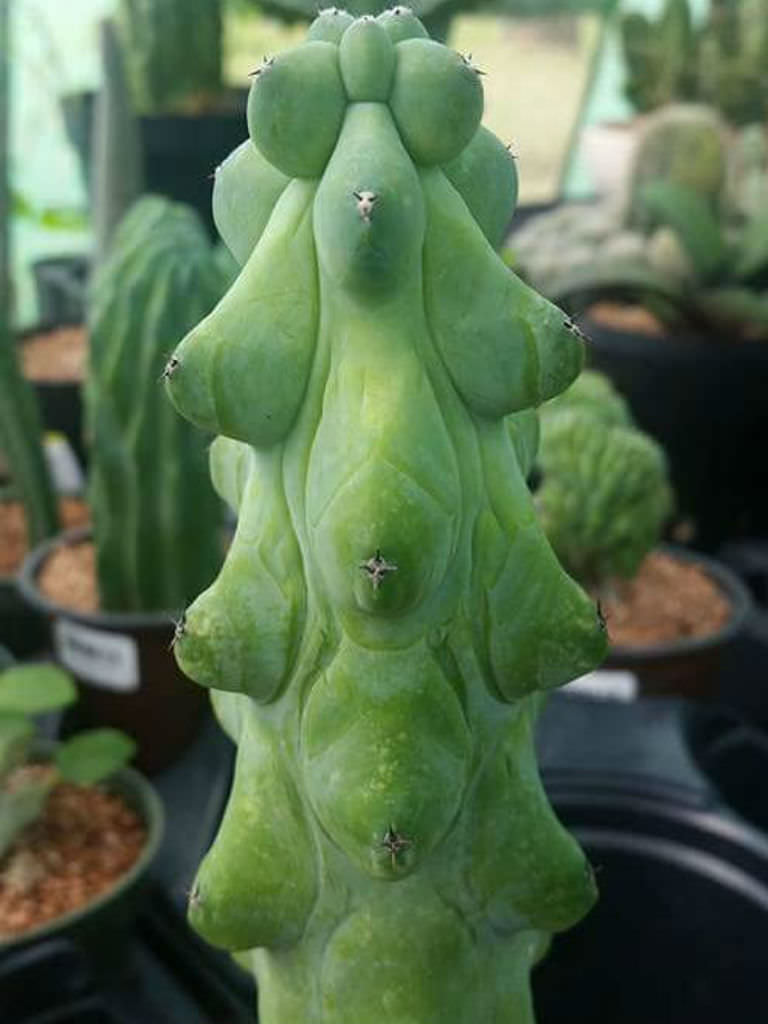
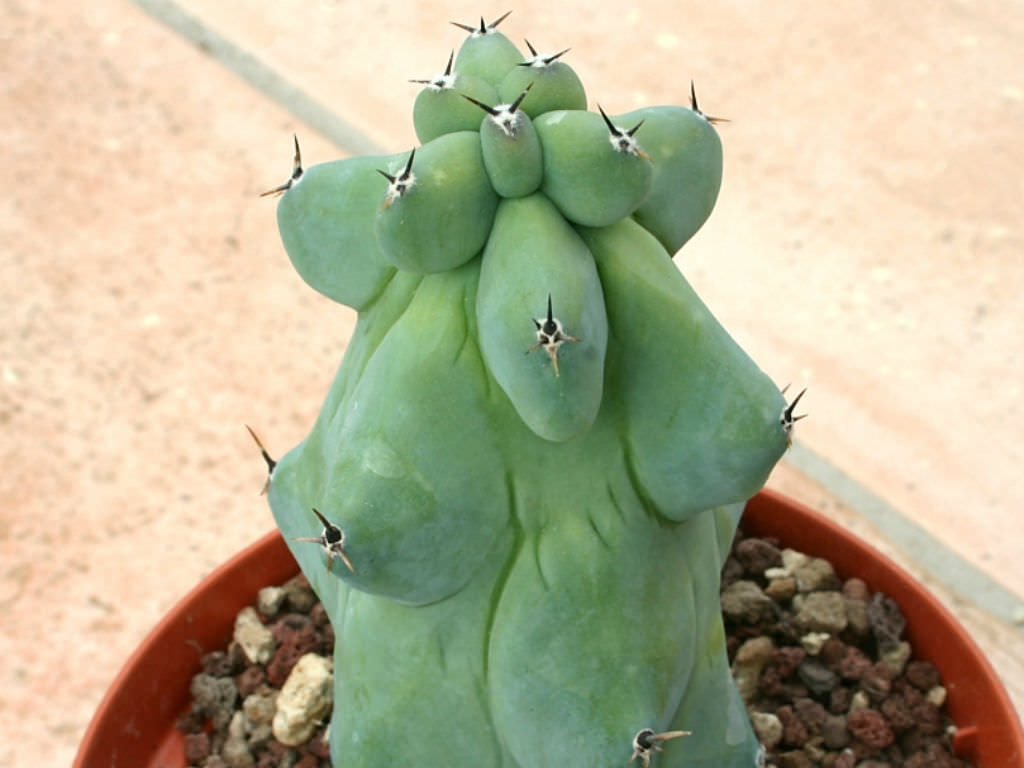
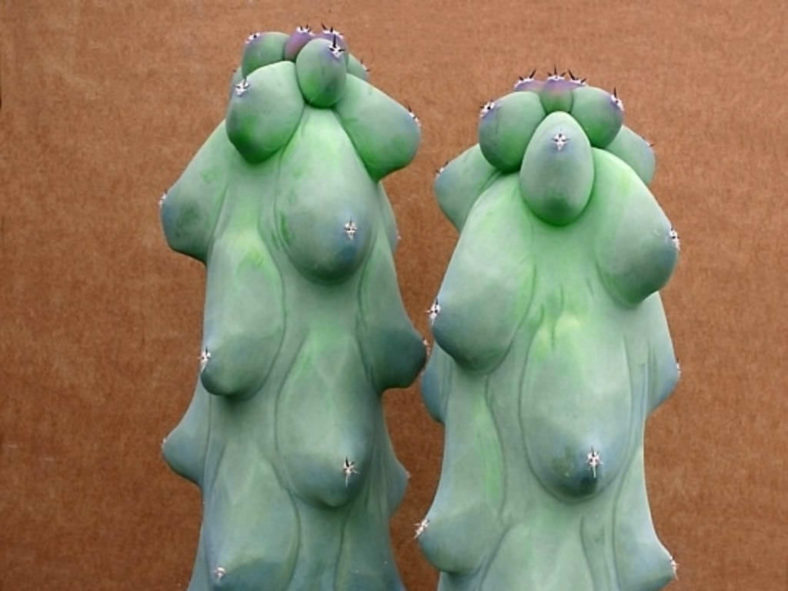
Myrtillocactus geometrizans 'Fukurokuryuzinboku' is a strange cactus with upright, glaucous green stems with 5 to 8 unusual ribs lined with tubercles that resemble women's breasts. The stems usually grow solitary or sometimes with a few branches, reaching a height of 14.8 feet (4.5 m) and a diameter of 4 inches (10 cm). Each areole may have up to 9 short spines, but they typically have 3 to 5.
How to Grow and Care for Myrtillocactus geometrizans 'Fukurokuryuzinboku'
Hardiness: USDA hardiness zone 9a to 10b: from 20°F (-6.7°C) to 40°F (4.4°C).
They are semi-hardy, so ensure your Myrtillocactus are not exposed to temperatures below 25°F (-4°C), or they may die. Nevertheless, it is good never to let nighttime temperatures fall below 50°F (10°C). In the summer, place Myrtillocactus in the sunshine (indoors or outdoors). In the winter, find a cooler, light spot. That will allow it to go into next spring well-rested, making it more likely to flower. This easy-care plant doesn't need much water. Allow the soil to dry out before you give it another drink. Keep the soil completely dry in winter. Treat it to special cactus food once a month in the spring and summer.
If the plant needs repotting, use fairly impoverished soil specially designed for cacti. By seed or cutting (allow the cut surface to dry out for 2-3 weeks before placing in an open rooting medium).
See more at How to Grow and Care for Myrtillocactus.
Links
- Back to genus Myrtillocactus
- Succupedia: Browse succulents by Scientific Name, Common Name, Genus, Family, USDA Hardiness Zone, Origin, or cacti by Genus
Photo Gallery
Click on a photo to see a larger version.