

Ever wonder why some of your succulents die after blooming? It may sound scary, but it is not. Your succulents may be monocarpic. "Mono" means "once," and "caprice" means "fruit." Therefore, once the single flower has come and gone, fruit or seeds are set, and the parent plant can die. A monocarpic succulent only flowers once and then dies.
Monocarpic is, in fact, a reproductive strategy used by many plants—most monocarpic succulents produce many new plants before they bloom. So, by the time they are ready to bloom, they have already created enough plants to replace them. Not only are succulents monocarpic, but many other species in different families are as well.
Common Monocarpic Succulents
Agave and Sempervivum are commonly grown monocarpic plants, but many more follow this life cycle strategy. Occasionally, as in the case of the Joshua Tree, just a stem dies after flowering, but the remainder of the plant still thrives. Not every plant in every genus is monocarpic, as in the case of Agave. Kalanchoe luciae and most Aeoniums are also monocarpic.
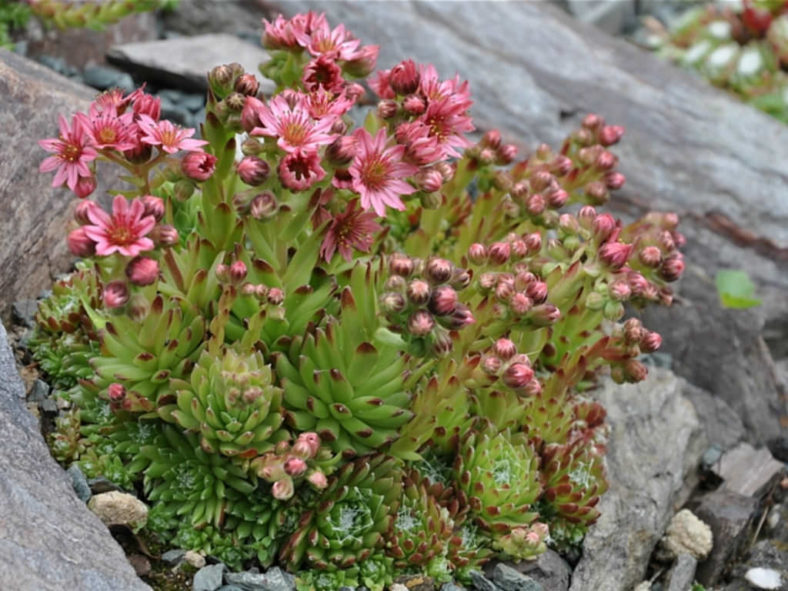
You can tell these are monocarpic because the parent plant will begin to wither and die after it flowers. This process may be pretty fast, as in Sempervivum, or very slow, as with Agave, which can take months or even years to die.
The plant uses all its energy for one final bloom and fruiting, leaving nothing to sustain itself.
General Care
Plants in the monocarpic category can still live a long life. However, once you see the flower appear, the amount of care you give the parent plant is up to you. Many growers prefer to harvest pups and continue the plant's life cycle that way. You may also wish to save seeds if you are a collector or enthusiast.
You will want to continue the care recommended for your species so the parent plant is healthy, unstressed, and has enough energy to produce seed. After the parent is gone, you can detach it and leave any pups in the soil. Allow the parent on succulents to dry out and become brittle before harvesting. That means the pups have used up their last of energy, and the old plant will easily detach. Pups may be dug up and dispersed elsewhere or left as they are.
Source: gardeningknowhow.com
Links
- Back to genus Crassula
- Succupedia: Browse succulents by Scientific Name, Common Name, Genus, Family, USDA Hardiness Zone, Origin, or cacti by Genus