Scientific Name
Maihuenia poeppigii (Otto ex Pfeiff.) F.A.C.Weber
Synonym(s)
Opuntia poeppigii, Pereskia poeppigii
Scientific Classification
Family: Cactaceae
Subfamily: Maihuenioideae
Genus: Maihuenia
Etymology
The specific epithet "poepigii" (pronounced "po-ep-PIG-ee-eye") honors Eduard Friedrich Poeppig (1798-1868), a German botanist, zoologist, and explorer.
Origin
The native range of Maihuenia poeppigii extends from southern Central Chile to the Neuquén province of Argentina.
Description
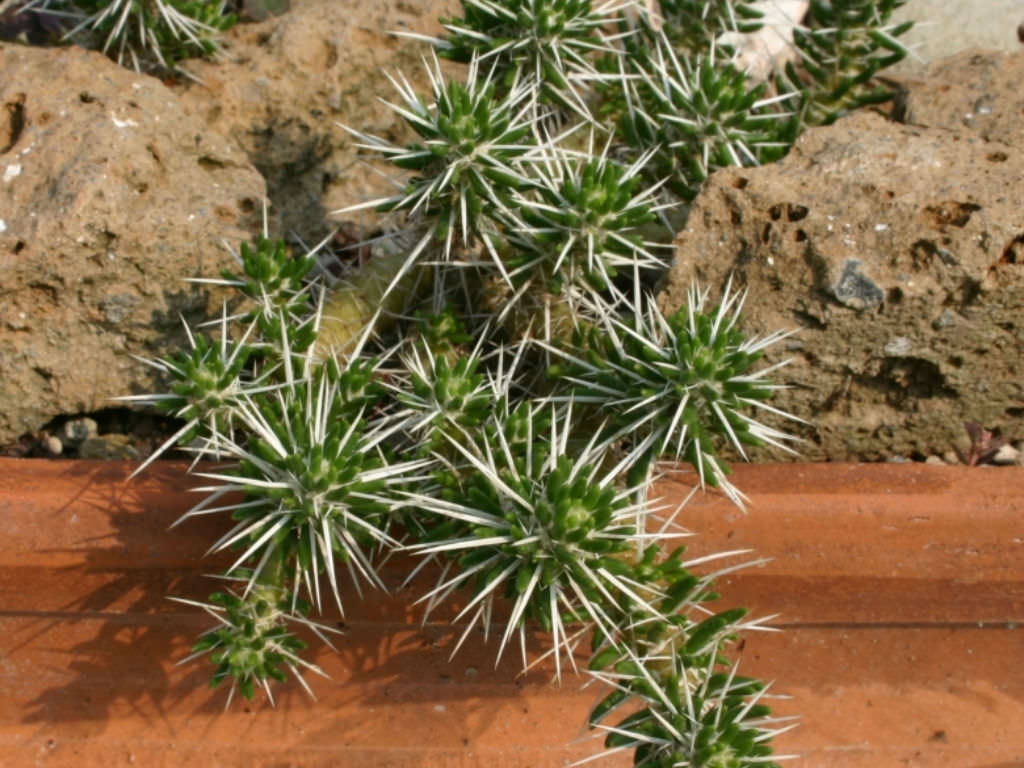
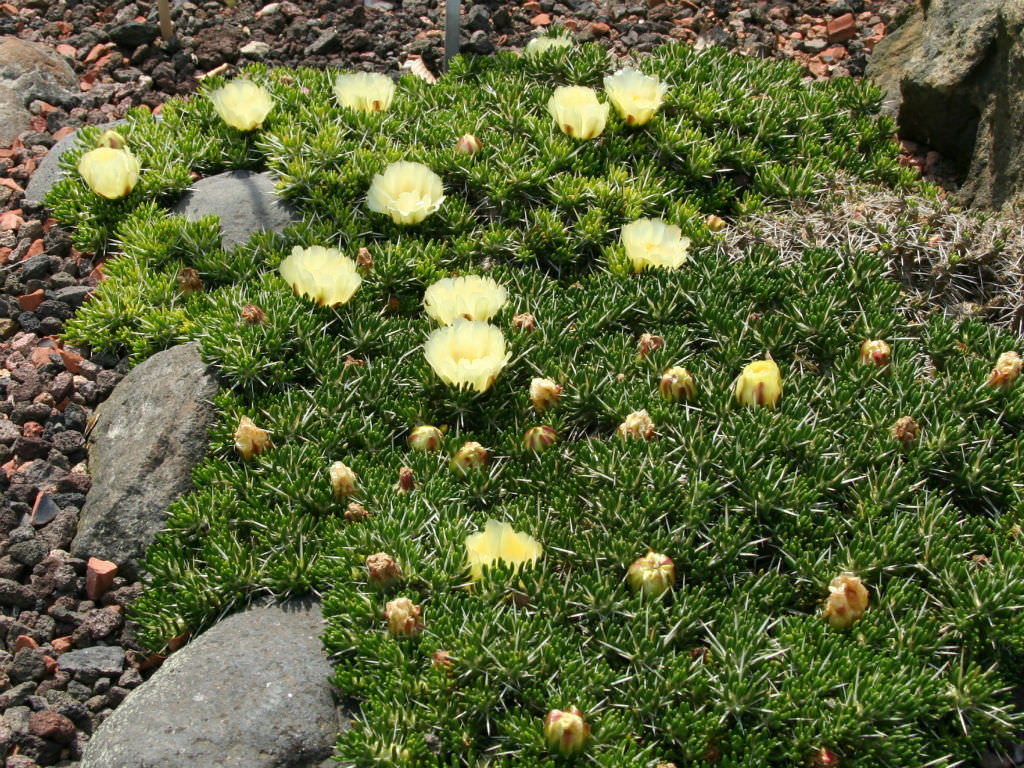
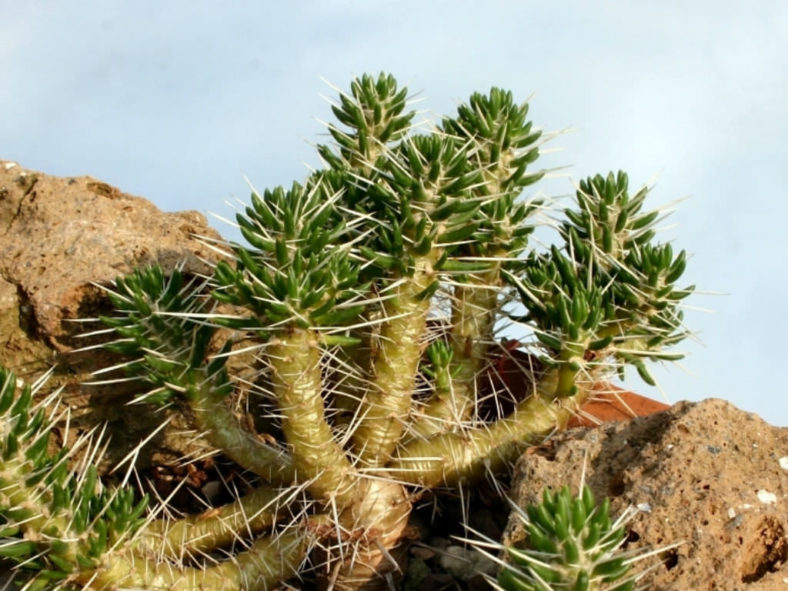
Maihuenia poeppigii is a low-growing cactus that forms dense cushions of cylindrical, much-branched stems with white spines and needle-like leaves in the upper part of the branches. It can grow only 8 inches (20 cm) tall but can spread to 6.6 feet (2 m) in diameter. The branches are oval, cylindrical, and club-shaped, and can grow up to 2.4 inches (6 cm) long and 0.4 inches (2 cm) in diameter. The fleshy dark green leaves are straight to slightly curved, with a pointed tip, measuring up to 0.4 inches (1 cm) long and 0.15 inches (0.2 cm) in diameter.
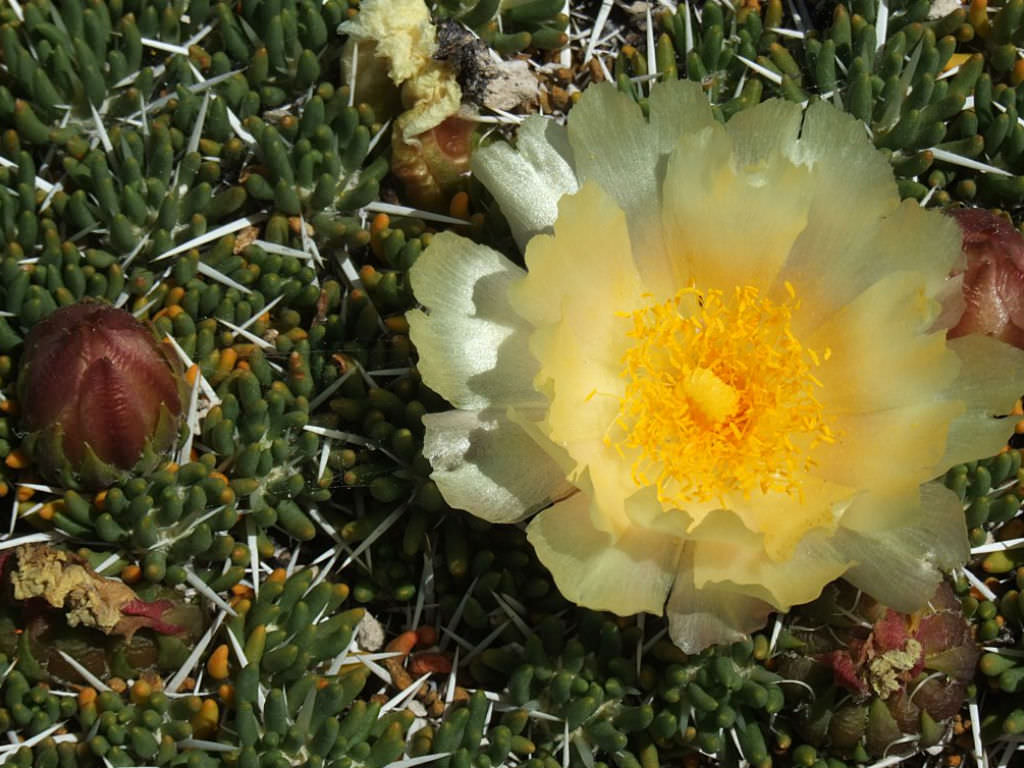
The flowers are lemon yellow, funnel-shaped, and appear at the end of the branches in late spring. The edible fruits are oblong, obovate, or club-shaped and can grow up to 2.2 inches (6 cm) long.
How to Grow and Care for Maihuenia poeppigii
Hardiness: USDA hardiness zone 6a to 11b: from 30°F (-1.1°C) to 50°F (10°C).
Maihuenia is an easy-to-grow plant. It can survive outside in the garden in the sunny rockery in a sheltered place, but only if it's protected with a sheet of glass during the wintertime. It is also very good for a large pot stored inside an unheated greenhouse or on a balcony, somewhat protected from moisture during the winter. Still, it is probably safest to grow it in the Alpine House or in a raised bed in an unheated greenhouse all year round, with plenty of ventilation. They should not be kept hot in summer, as they are from high elevations.
During the growing season, it's good to enrich the soil using a fertilizer rich in potassium and phosphorus but poor in nitrogen. It is best to place it in a position exposed to at least a few hours of direct sunlight for balanced development. Water these plants only occasionally if grown outdoors, but water them abundantly if grown in a pot or in the greenhouse during the summer. With a high-temperature swing between the day and night hours and frequent rains, the spring weather can favor the development of fungus diseases, which should be treated with a systemic fungicide. Repot it every 2 to 3 years.
See more at How to Grow and Care for Maihuenia.
Links
- Back to genus Maihuenia
- Succupedia: Browse succulents by Scientific Name, Common Name, Genus, Family, USDA Hardiness Zone, Origin, or cacti by Genus
Photo Gallery
Click on a photo to see a larger version.