Scientific Name
Kleinia stapeliiformis (E.Phillips) Stapf
Synonym(s)
Senecio stapeliiformis
Common Name(s)
Pickle Plant, Stapelia Stemmed Senecio, Stapelioid Kleinia, Trailing Jade, Spider Plant, Inch Worm, Candle Stick, Candle Plant
Scientific Classification
Family: Asteraceae
Subfamily: Asteroideae
Tribe: Senecioneae
Subtribe: Senecioninae
Genus: Kleinia
Etymology
The generic name "Kleinia" (pronounced "KLINE-ee-uh") honors Jacob Theodor Klein🡕 (1685–1759), also known as Plinius Gedanensium, a German jurist, historian, botanist, zoologist, mathematician, and diplomat in the service of Polish King August II the Strong.
The specific epithet "stapeliiformis" (pronounced "sta-pel-ee-ih-FORM-iss") means "Stapelia-like; resembling Stapelia". It refers to the stems of this species, which visually resemble those of some Stapelia species.
Description
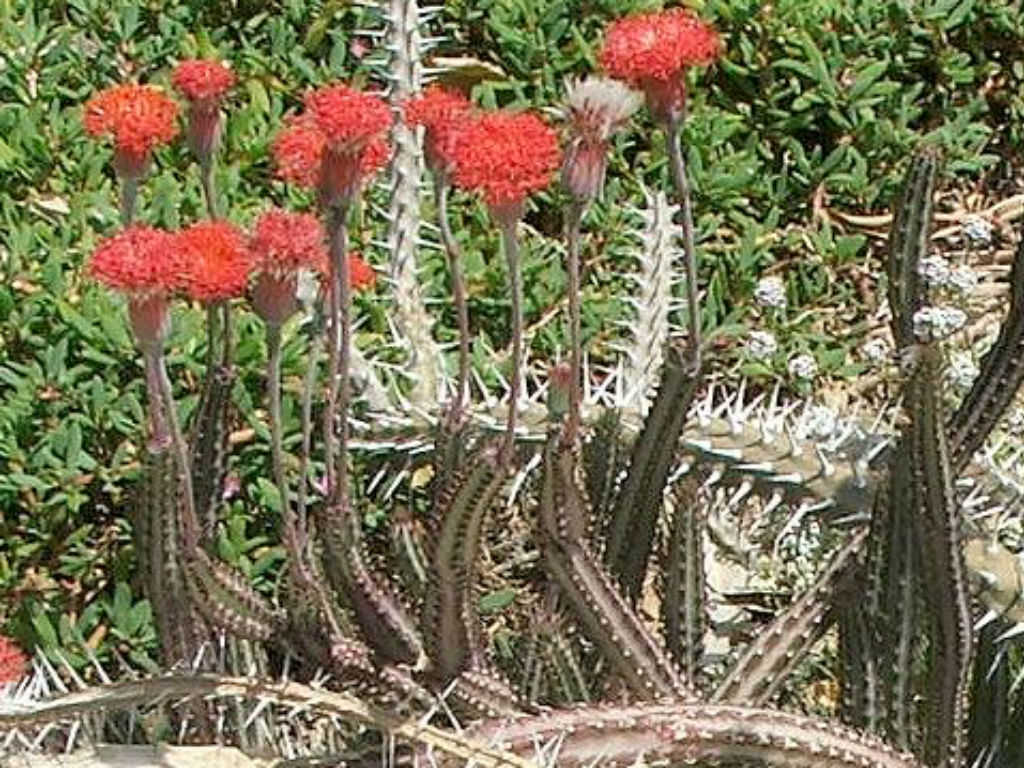
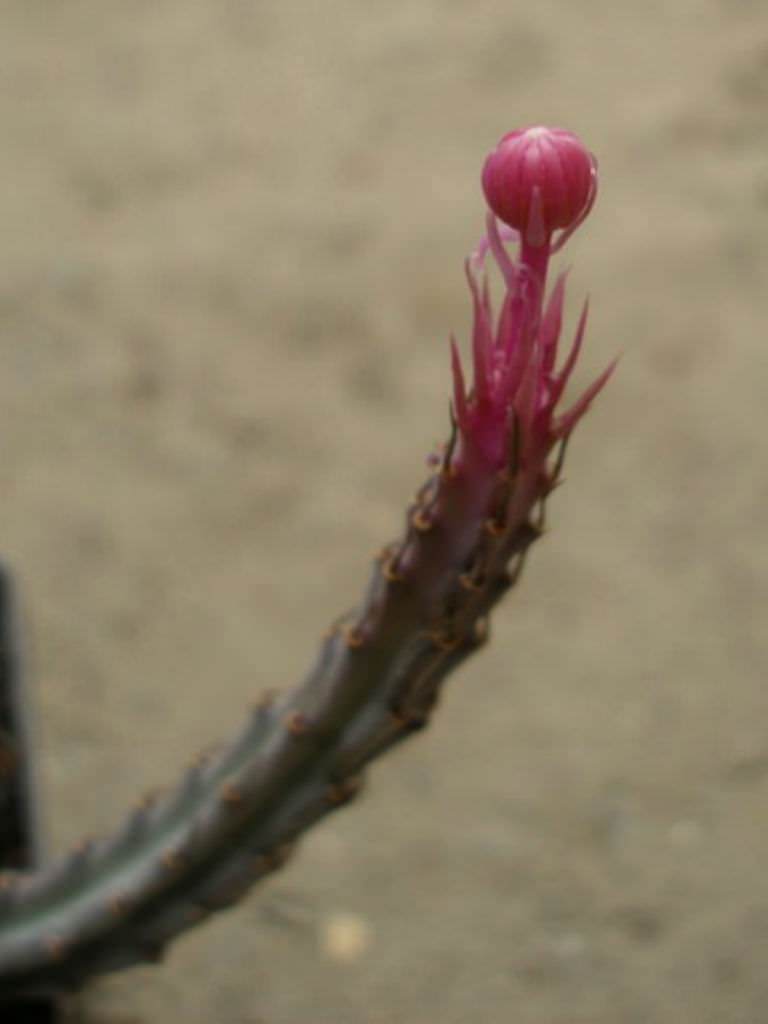
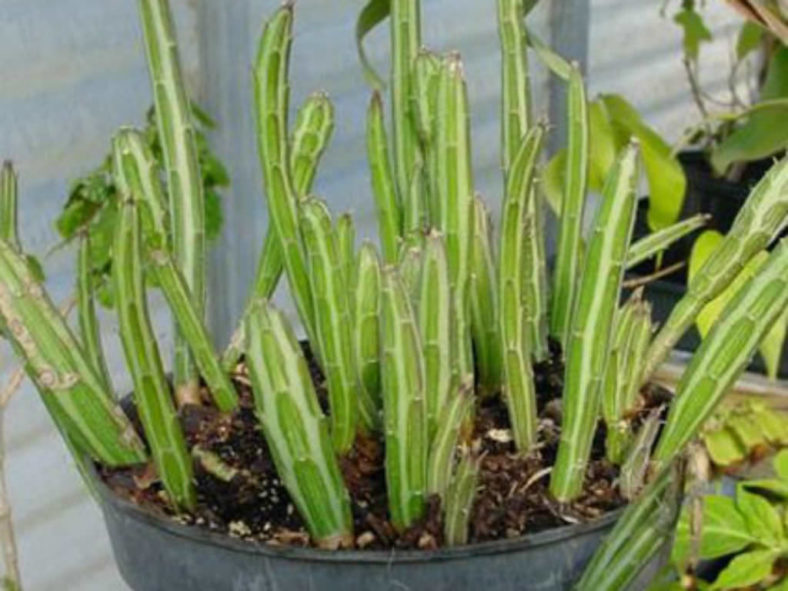
Kleinia stapeliiformis, also known as Senecio stapeliiformis, is an attractive succulent with green, pencil-like stems featuring a distinctive white pattern and often a unique pinkish tinge. The stems are soft, fleshy, smooth, and cylindrical, measuring up to 10 inches (25 cm) long and 0.8 inches (2 cm) in diameter. They have purple arrowhead markings below each node, with 4 to 6 grooves (or rarely more), and scale-like leaves arranged along the ribs.
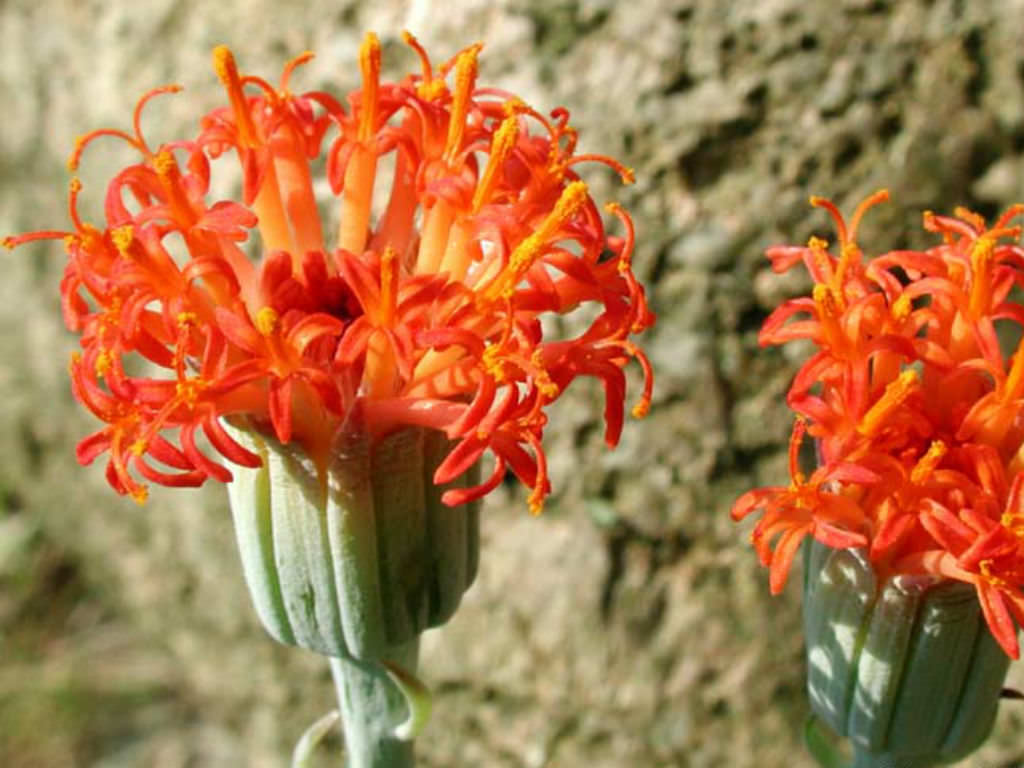
The flowers are large, hawkweed-like, and range from red to orange.
Origin
Kleinia stapeliiformis is native to South Africa (Eastern Cape).
How to Grow and Care for Kleinia stapeliiformis
Hardiness: USDA hardiness zones 9b to 11b: from 25°F (-3.9°C) to 50°F (10°C).
Established Senecios are extremely drought-tolerant. They need some water in summer, but do not leave the soil wet for long periods. Allow the soil to dry out between waterings in winter, when plants are somewhat dormant. Since they grow in sandy soil, they need their nutrients replenished. Fertilize annually, but lightly. Too much fertilizer can cause excessive, leggy growth.
Taller varieties can get floppy. You can prune them back to where the stem is firm in early spring. You can even root the cuttings.
You can divide or repot plants in early spring. If you are growing them in containers, they enjoy spending the summer outdoors. Wait until there is no danger of frost and move them back indoors in the fall.
You can grow Senecio from seed or cuttings. Seeds prefer warm temperatures and constant moisture to germinate. Cuttings are easier and faster. Cut during the growing season, from early spring to fall. Root in sandy soil in containers.
Learn more at How to Grow and Care for Senecio.
Links
- Back to genus Kleinia
- Succupedia: Browse succulents by Scientific Name, Common Name, Genus, Family, USDA Hardiness Zone, Origin, or cacti by Genus
Photo Gallery
Click on a photo to see a larger version.