Scientific Name
Kimnachia ramulosa (Salm-Dyck) S.Arias & N.Korotkova
Synonym(s)
Cactus ciliare, Cereus ramulosus, Disocactus ramulosus, Epiphyllum ciliare, Hariota ramulosa, Pseudorhipsalis ramulosa, Rhipsalis ramulosa
Common Name(s)
Red Mistletoe Cactus, Red Rhipsalis
Scientific Classification
Family: Cactaceae
Subfamily: Cactoideae
Tribe: Hylocereeae
Genus: Kimnachia
Etymology
The specific epithet "ramulosa" (pronounced "ram-yoo-LOH-suh") means "full of small branches" and refers to the branching habit of this species.
Origin
Kimnachia ramulosa has a wide distribution. It grows as an epiphyte in Mexico, Guatemala, Belize, Honduras, Nicaragua, Costa Rica, Colombia, Venezuela, Ecuador, Peru, Brazil, Bolivia, Haiti, and Jamaica.
Description
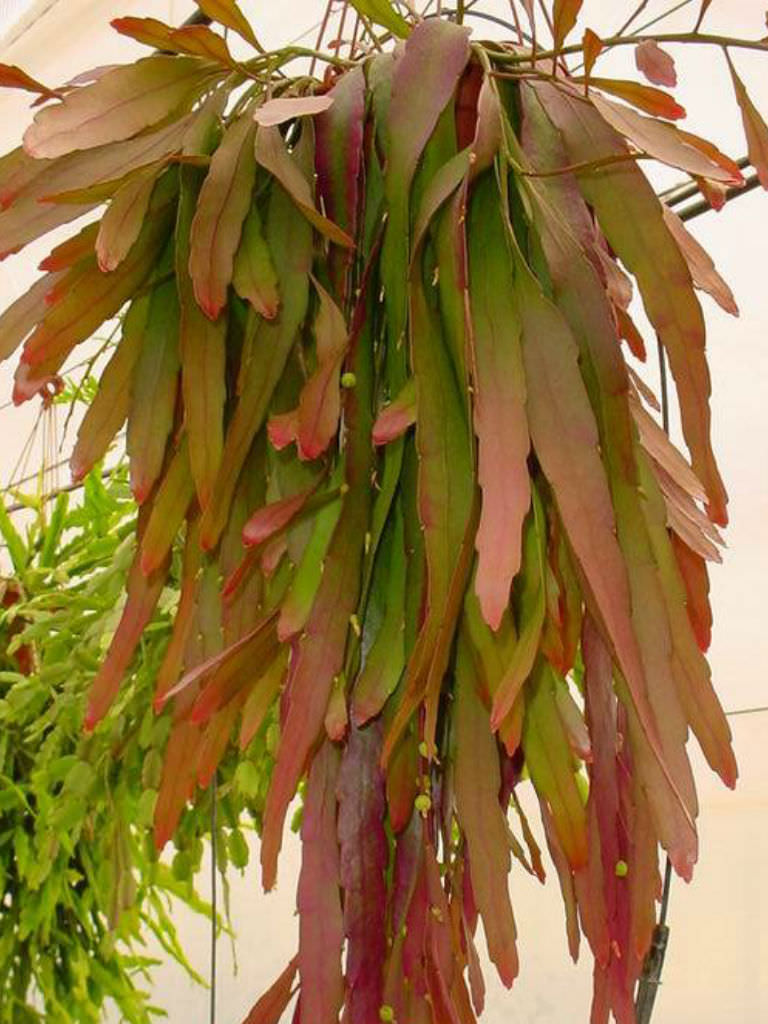
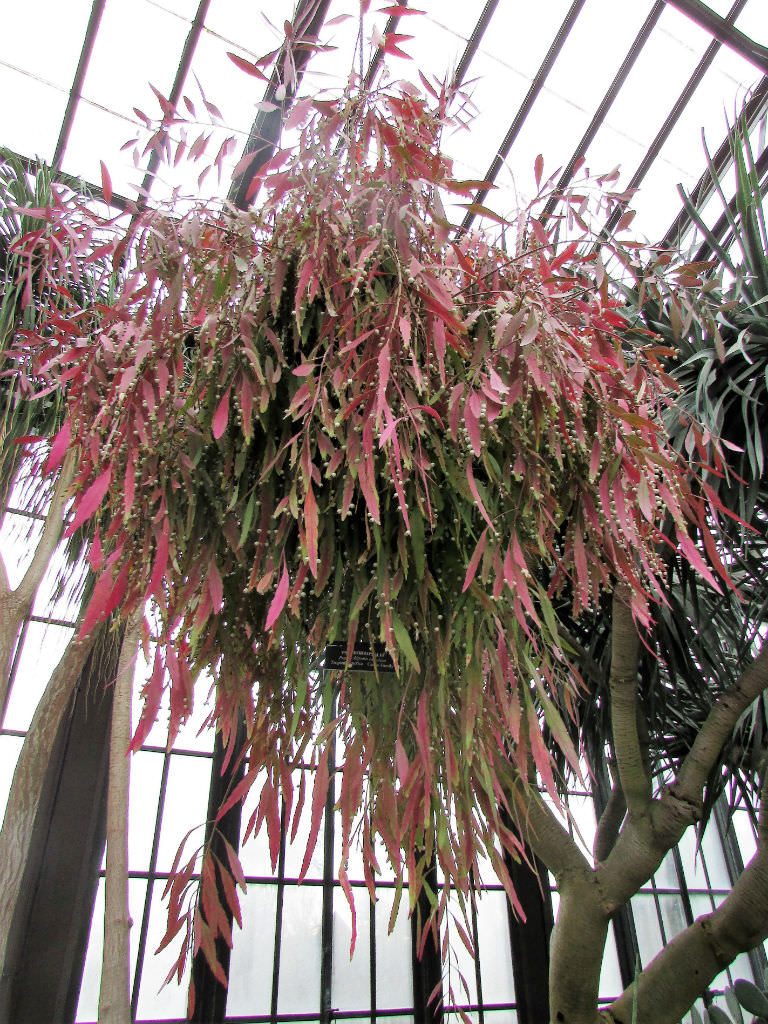
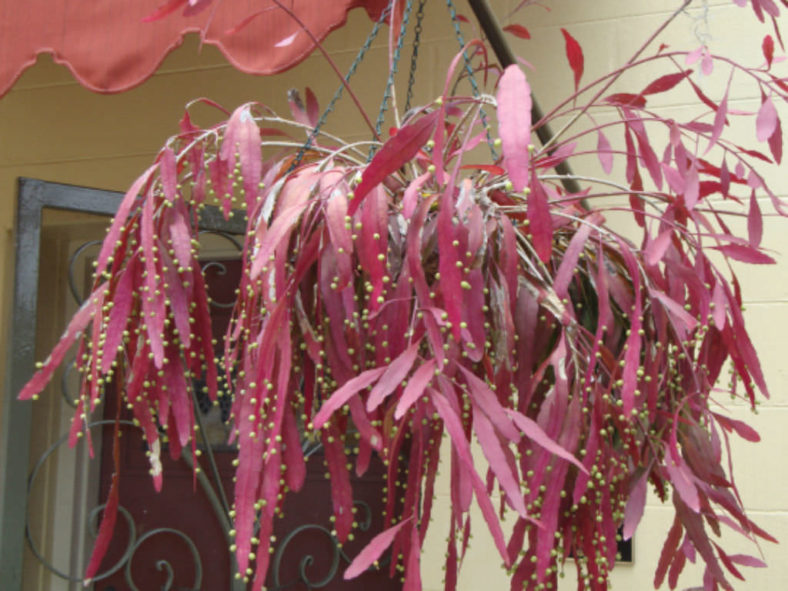
Kimnachia ramulosa, formerly known as Pseudorhipsalis ramulosa, is a spineless, highly branched cactus with pendent, cylindrical, basally woody stems and flattened lateral branches with scalloped edges. The stems can grow up to 3.3 feet (1 m) long. The branches are green with reddish tips, turning deep violet-red in intense sunlight. They can measure up to 10 inches (25 cm) long and 0.6 inches (1.5 cm) wide.
The flowers are greenish-white or pinkish and appear from the areoles in summer. They can reach a length of 0.5 inches (1.2 cm) and a diameter of 0.6 inches (1.5 cm). The ornamental fruits are ovoid, white to pinkish-white berries that can grow up to 0.3 inches (0.8 cm) in diameter.
Subspecies of Kimnachia ramulosa
- Kimnachia ramulosa subsp. angustissima
- Kimnachia ramulosa subsp. jamaicensis
- Kimnachia ramulosa subsp. ramulosa
How to Grow and Care for Kimnachia ramulosa
Hardiness: USDA hardiness zone 10a to 11b: from 30°F (-1.1°C) to 50°F (10°C).
Rhipsalis do not thrive in direct sunlight. Exposure to the afternoon sun can burn the leaves, turn them yellow, or lead to spotting. However, without sufficient sunlight, they will not bloom, and their growth can be stunted. Therefore, Rhipsalis does best with morning sun and afternoon shade.
Because Rhipsalis is commonly grown indoors, care must be taken with the placement of the plants. They should be kept at least 20 inches (50 cm) from windows that receive midday or afternoon sun. The glass in the windows can reflect the sun's heat, causing sunburned leaves. Keep in mind that in its native environment, Rhipsalis is accustomed to receiving light filtered through dense, overhanging tree branches. Picturing this environment can help you adjust your lighting accordingly.
Rhipsalis is not drought-resistant, so regular watering is essential. Over-watering, however, can cause weak stems and rotted roots. Using a watering can helps you measure how much water you are providing. The pot size relative to the plant, the home's humidity, and the type of potting soil can all affect watering frequency.
See more at How to Grow and Care for Rhipsalis.
Links
- Back to genus Kimnachia
- Succupedia: Browse succulents by Scientific Name, Common Name, Genus, Family, USDA Hardiness Zone, Origin, or cacti by Genus
Photo Gallery
Click on a photo to see a larger version.