Scientific Name
Kalanchoe millotii Raym.-Hamet & H. Perrier
Common Name(s)
Millot Kalanchoe
Scientific Classification
Family: Crassulaceae
Subfamily: Sedoideae
Tribe: Kalanchoeae
Genus: Kalanchoe
Etymology
The specific epithet "millotii" (pronounced "mil-LOT-ee-eye") honors Adolphe Philippe Millot🡕 (1857-1921), a French painter, lithographer, and entomologist.
Origin
Kalanchoe millotii is native to Madagascar.
Description
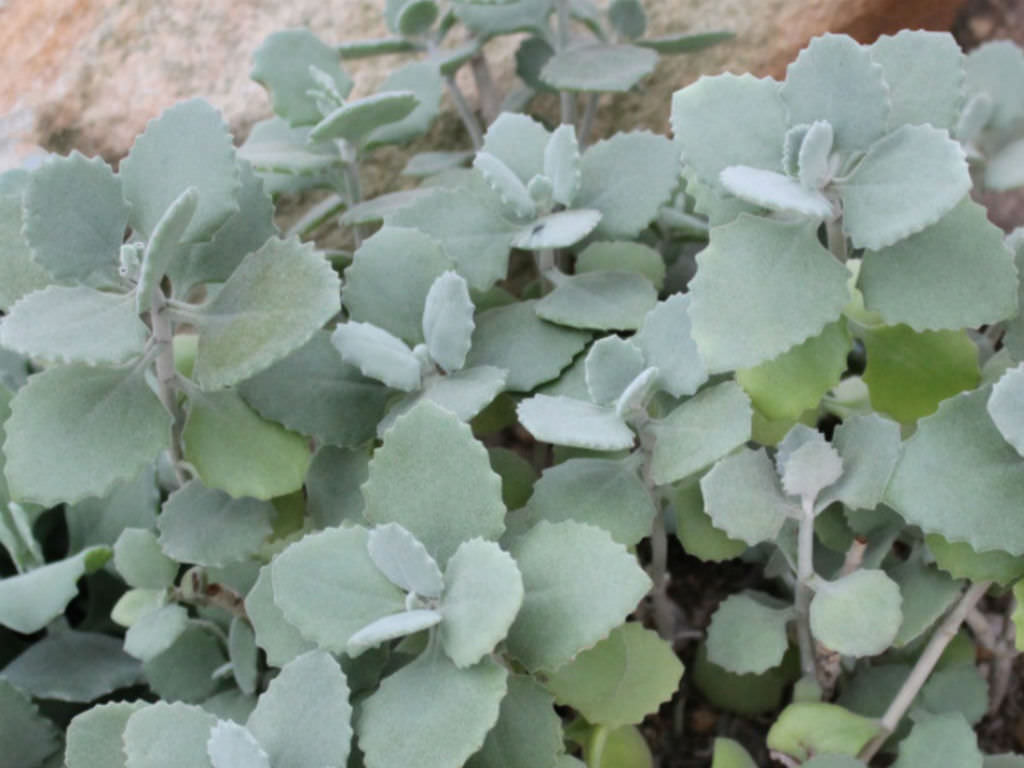
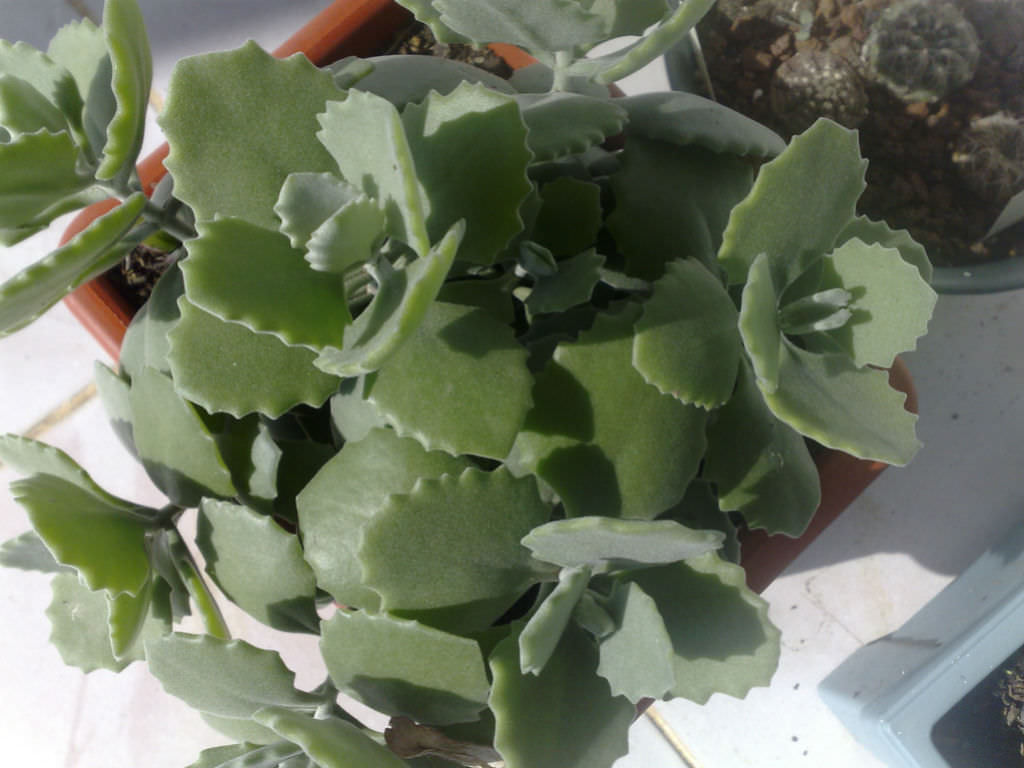
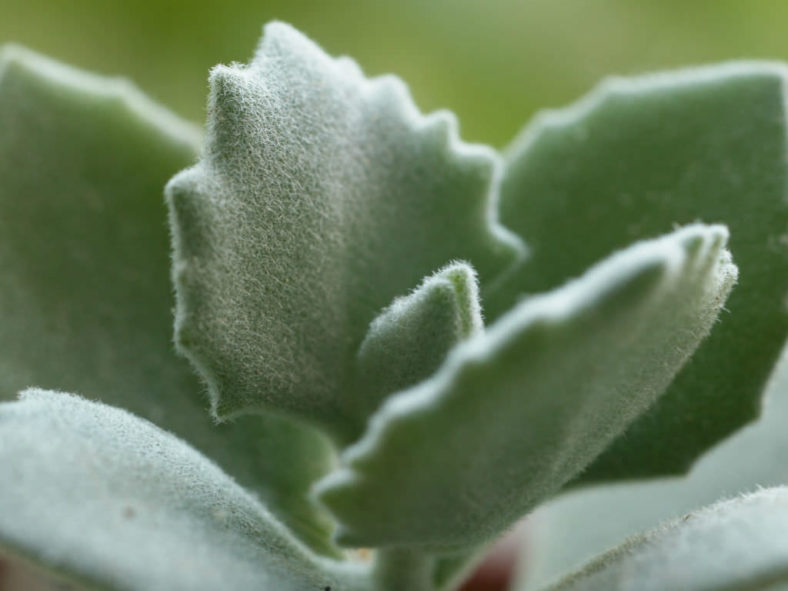
Kalanchoe millotii is a succulent shrublet with erect, woody branches and fleshy, green to greyish-green leaves, all densely covered with tiny whitish hairs. It can grow up to 3.3 feet (1 m) tall. The leaves are ovate to orbicular with scalloped edges and can measure up to 1.6 inches (6.5 cm) long and nearly equal in width.
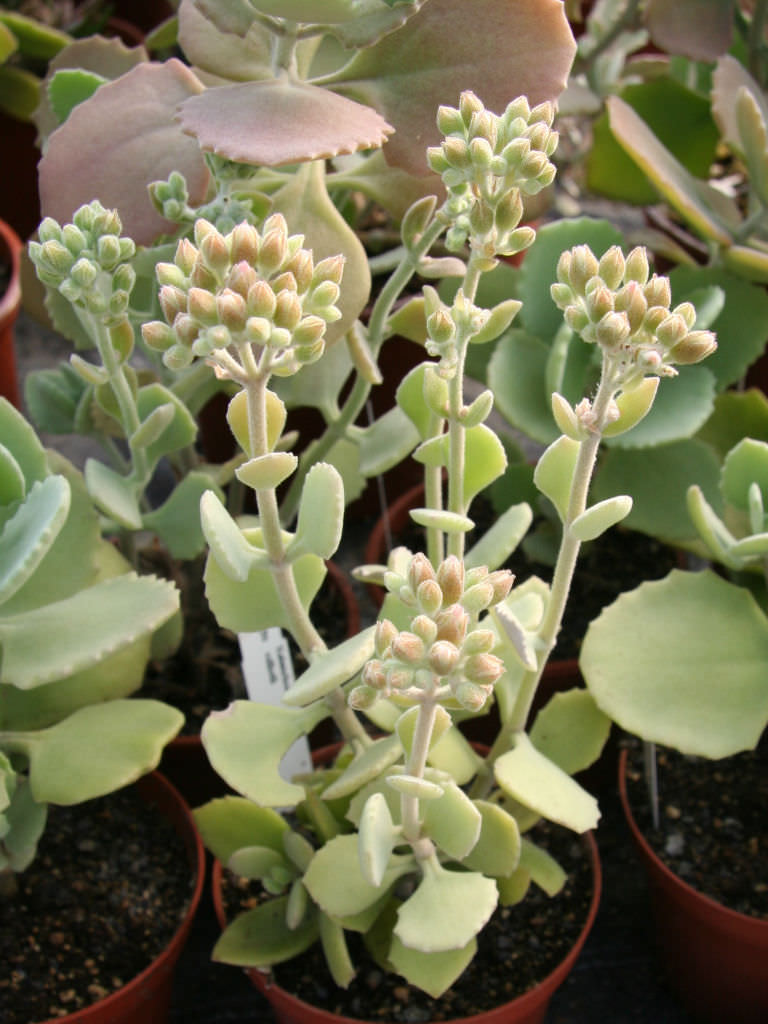
The flowers are small, with a hairy calyx that ranges from yellow-green to orange and a corolla that ranges from yellow-green to yellow-orange. In summer, they appear in dense clusters on stalks that can grow up to 4 inches (10 cm) long.
Hybrids of Kalanchoe millotii
How to Grow and Care for Kalanchoe millotii
Hardiness: USDA hardiness zone 10b to 11b: from 35°F (1.7°C) to 50°F (10°C).
Kalanchoe care is minimal, but be cautious about light levels. Intense sunlight can burn the tips of the leaves. When growing Kalanchoes, place pots in partial sun to light shade areas.
The flowering varieties are highly rewarding for their colorful, long-lasting blooms. They prefer bright, sunny locations, especially in the growing season. Water moderately from fall to winter when the growth is most active. Reduce watering during the hottest summer months, when the plants are mostly dormant, and in winter, when growth slows significantly. Let the soil surface dry out between waterings. Watch the fleshy leaves for signs of water distress. An ordinary potting soil mix is fine. Feed bi-weekly during the growing season with a liquid fertilizer, or use slow-release pellets.
These small plants require repotting every few years. When repotting, take extra care when handling, as the leaves are somewhat brittle and can snap easily. Clay pots work exceptionally well for planting Kalanchoes. Ensure pots can drain well and saucers empty easily.
Learn more at How to Grow and Care for Kalanchoe.
Links
- Back to genus Kalanchoe
- Succupedia: Browse succulents by Scientific Name, Common Name, Genus, Family, USDA Hardiness Zone, Origin, or cacti by Genus
Photo Gallery
Click on a photo to see a larger version.