Scientific Name
Huernia hystrix (Hook.f.) N.E.Br.
Synonym(s)
Stapelia hystrix, Ceropegia hystrix
Common Name(s)
Porcupine Huernia, Toad Plant
Scientific Classification
Family: Apocynaceae
Subfamily: Asclepiadoideae
Tribe: Stapeliae
Genus: Huernia
Origin
Huernia hystrix is native to South Africa (KwaZulu-Natal, Mpumalanga, Limpopo), Swaziland, Zimbabwe, and Mozambique.
Description
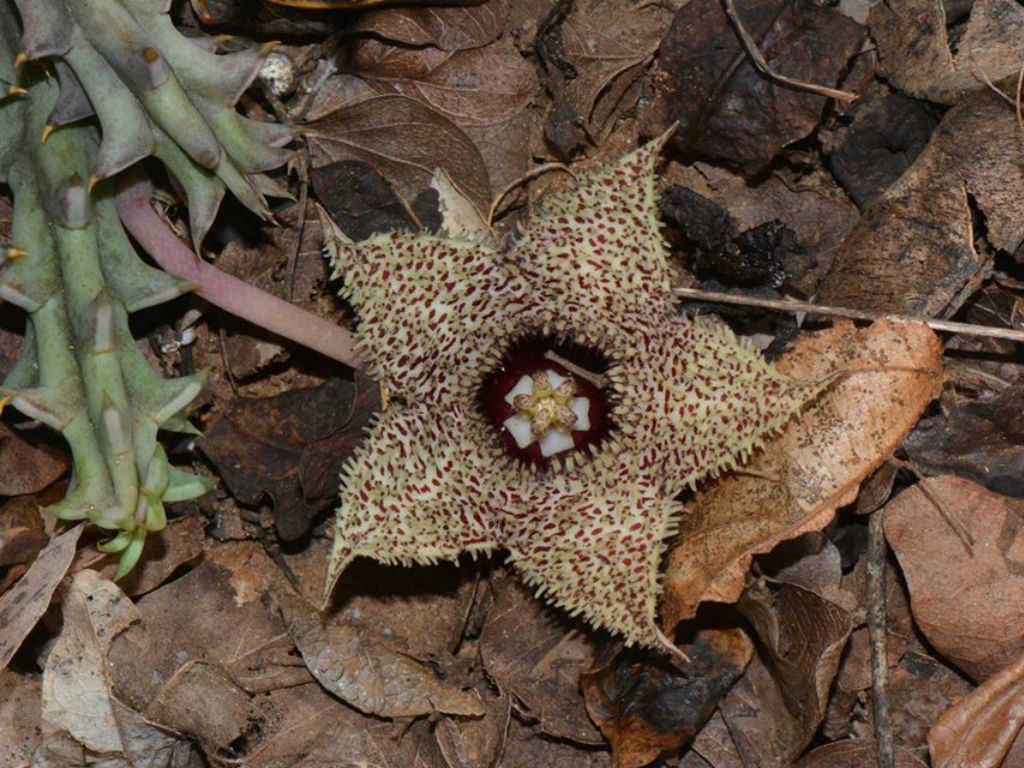
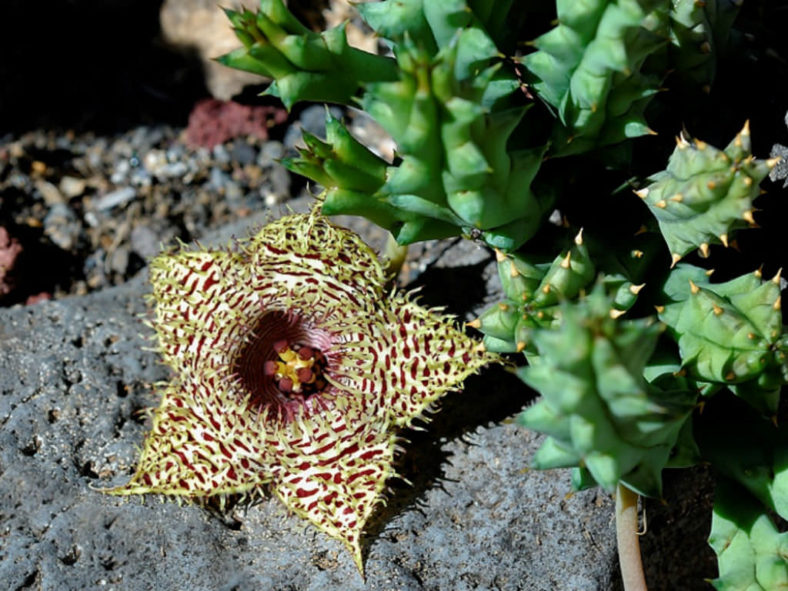
Huernia hystrix is a small succulent with 5-angled, erect to prostrate stems with spaced, swollen tubercles along the ridges. The tubercles are tipped with sharp, conical teeth pointing outwards. The thick, fleshy stems are usually pale green, occasionally glaucous, and mottled with purple. They can grow up to 4.8 inches (12 cm) long and 0.5 inches (1.2 cm) wide (excluding teeth).
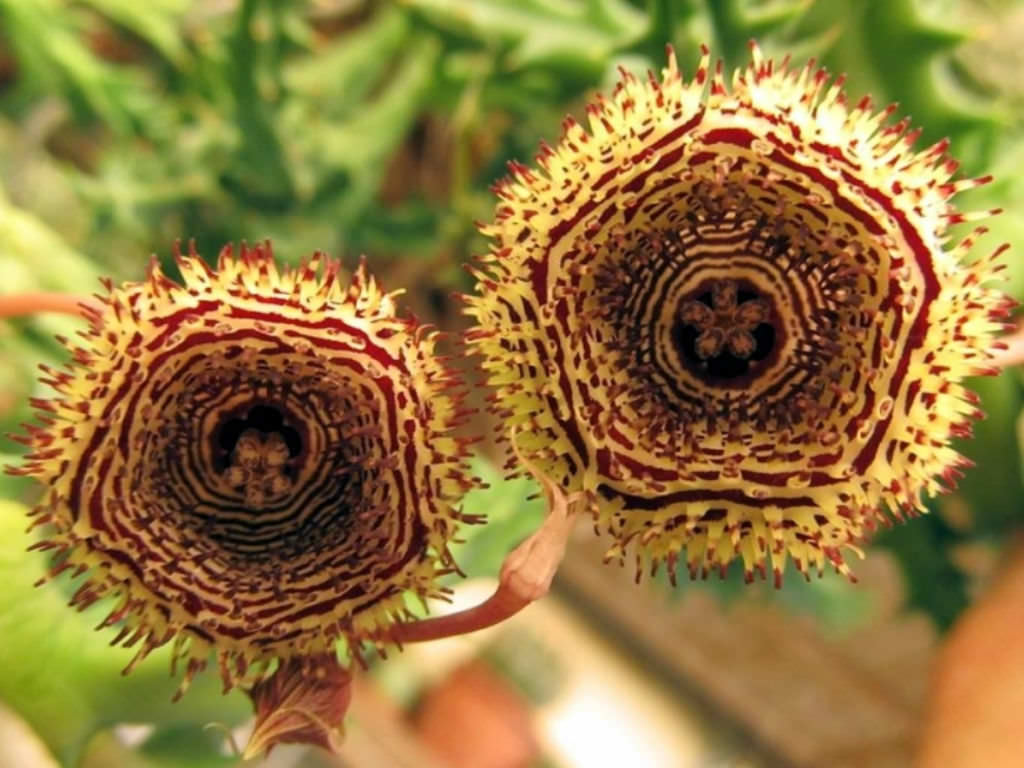
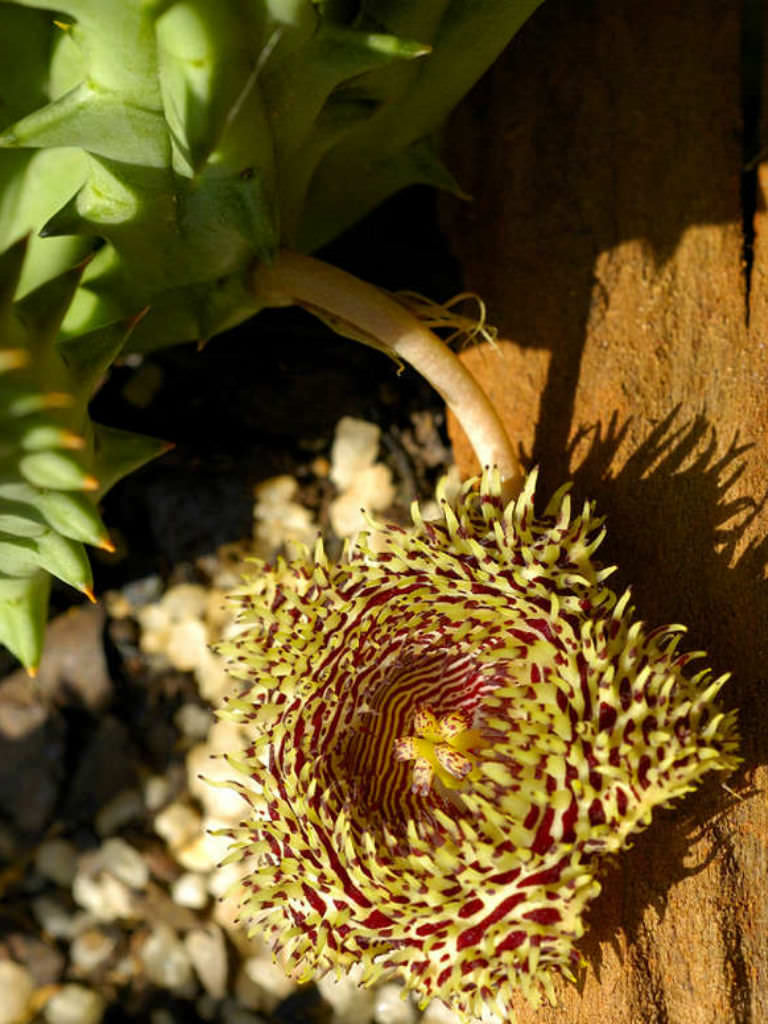
The bell-shaped flowers are pale yellow to cream-colored with crimson to maroon spots. They appear in clusters of 2 to 5 on long stalks from the axils of the tubercles in the lower stem parts.
Subspecies of Huernia hystrix
- Huernia hystrix subsp. hystrix
- Huernia hystrix subsp. parvula
How to Grow and Care for Huernia hystrix
Hardiness: USDA hardiness zones 10b to 11b: from 35°F (1.7°C) to 50°F (10°C).
Huernias require a potting mix with excellent drainage. A succulent plant mix of 50 percent pumice or perlite, 25 percent peat or organic mulch, and 25 percent sand helps prevent rotting and overwatering. Roots experience dieback in cool-season dormancy, so plants grow best in shallow containers that allow the soil to dry out quickly. Using clay pots further prevents the soil from staying too wet. An underlayment of coarse gravel below the soil mix also improves drainage. A layer of gravel between the plant and the soil mix in climates with damp, cool summers also prevents the stems from staying too moist.
Outdoor plantings do well in raised beds. Huernias prefer bright light or partial shade. In nature, they grow underneath shrubs or other plants. Too much sun causes stems to develop a reddish or purplish protective pigmentation and can actually scald them. Too little light leads to weak, thin growth with decreased flower production. These plants grow best between 50°F and 80°F (10°C and 27°C). Protect them from freezing weather.
Learn more at How to Grow and Care for Huernia.
Links
- Back to genus Huernia
- Succupedia: Browse succulents by Scientific Name, Common Name, Genus, Family, USDA Hardiness Zone, Origin, or cacti by Genus
Photo Gallery
Click on a photo to see a larger version.