Scientific Name
Hoya obscura Elmer ex C.M.Burton
Common Name(s)
Red Wax Plant, Porcelain Flower
Scientific Classification
Family: Apocynaceae
Subfamily: Asclepiadoideae
Tribe: Marsdenieae
Genus: Hoya
Etymology
The specific epithet "obscura" (pronounced "ob-SKEW-ruh") means "dark," "dim," or "inconspicuous." It refers to the inconspicuous nature of this species in its natural habitat and its somber leaf color.
Origin
Hoya obscura is native to the Philippines. It was first collected by Adolph Daniel Edward Elmer🡕 (1870–1942) in 1916 at Mount Bulusan in the province of Sorsogon on the island of Luzon, but can be found throughout the Philippines.
Description
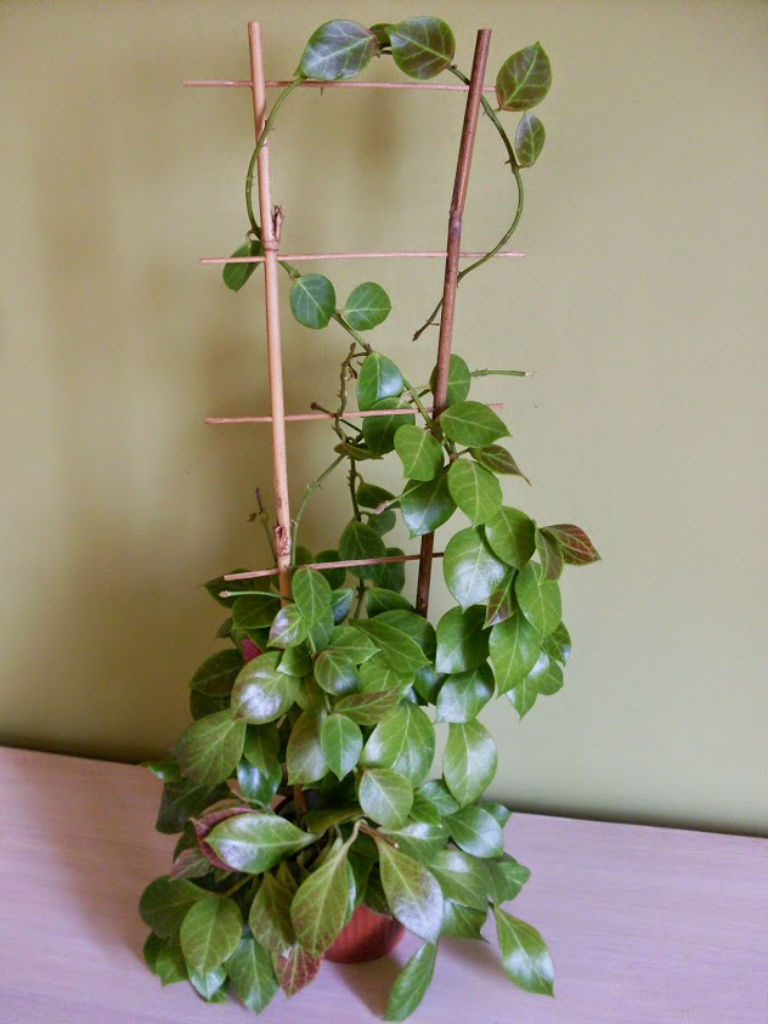
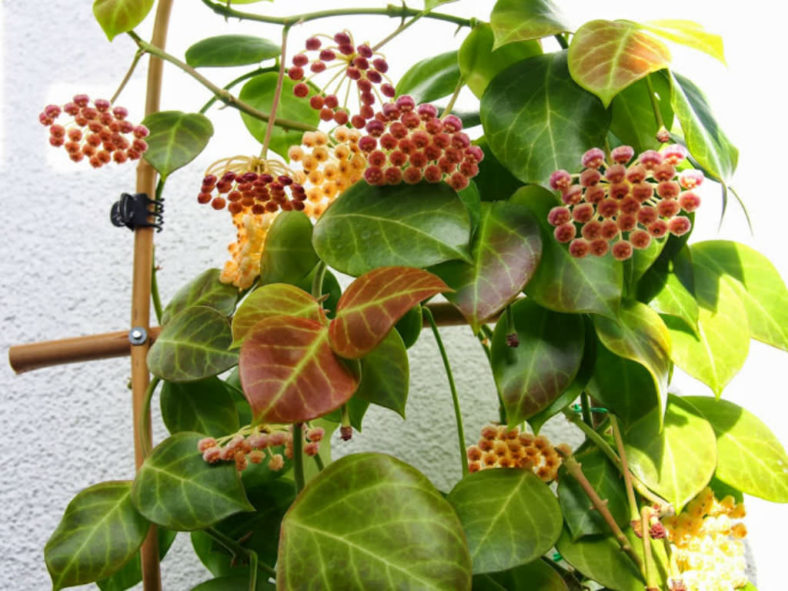
Hoya obscura is a fast-growing, vining plant with long, branching stems and veined, nearly elliptical leaves that range from deep green in shade to deep red in bright sunlight. The stems are green, becoming dull yellow as they age. They are branched, woody at the base, winged at the tip, and can grow up to 6.6 feet (2 M0 long and 0.3 inches (0.8 cm) in diameter. The leaves can measure up to 4 inches (10 cm) long and 1.6 inches (4 cm) wide, and they are attached to the stem by a petiole up to 0.6 inches (1.5 cm) long.
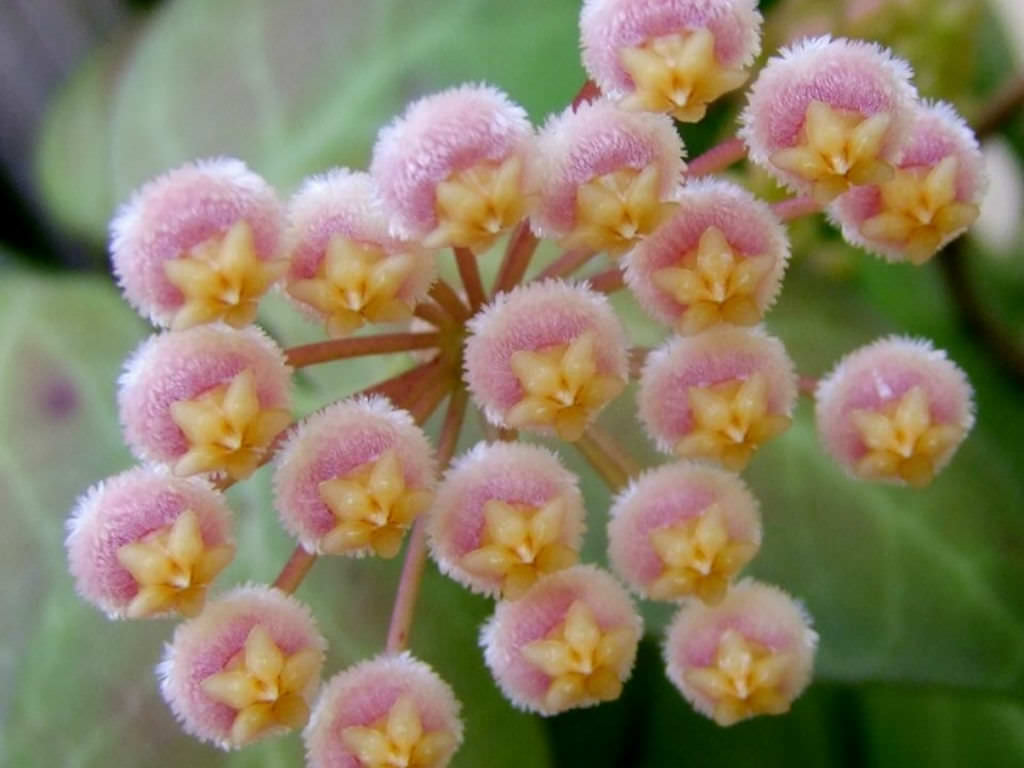
The fragrant flowers are salmon pink and appear in clusters, usually in spring and summer. The flower clusters can reach a diameter of 2 inches (5 cm), each with 20 to 30 flowers. The linear seed pods can grow up to 3.2 inches (8 cm) long.
Subspecies of Hoya obscura
- Hoya obscura subsp. lagunaensis
- Hoya obscura subsp. obscura
Hybrids of Hoya obscura
How to Grow and Care for Hoya obscura
Hardiness: USDA hardiness zones 10b to 11b: from 35°F (1.7°C) to 50°F (10°C).
Hoyas don't ask for much beyond the well-draining soil and the warm, humid conditions many tropical flowers crave. They don't like wet feet or heavy soil, and many grow as epiphytes in nature. Give them at least a half-day of sunshine, and bring them indoors when temperatures drop below 50°F (10°C).
Hoya finishes blooming, leave the flower stalk, as it may produce new flowers. Removing the stalk forces the plant to produce a new stalk, delaying blooming and wasting the plant's energy. They are light feeders, and a monthly drink of compost tea or dilute fish emulsion provides all the nutrition these tropicals need. Hoyas like the security of a snug pot, and plants that are a bit root-bound will flower more prolifically than those swimming around in a giant pot.
Propagate Hoyas by cuttings of top growth or by leaf cuttings. The average cutting or leaf start will produce a blooming plant in 2 years or less. The easiest method of propagation is by layering.
See more at How to Grow and Care for Hoya.
Links
- Back to genus Hoya
- Succupedia: Browse succulents by Scientific Name, Common Name, Genus, Family, USDA Hardiness Zone, Origin, or cacti by Genus
Photo Gallery
Click on a photo to see a larger version.