Scientific Name
Gasteria glomerata van Jaarsv.
Common Names
Kouga Gasteria, Ox Tongue
Scientific Classification
Family: Asphodelaceae
Subfamily: Asphodeloideae
Tribe: Aloeae
Genus: Gasteria
Etymology
The specific epithet "glomerata" (pronounced "glahm-er-AH-tuh") means "glomerate; clustered or gathered into a ball or cluster" and refers to the growth habit of this species that produces many offsets, forming a dense, compact clump over time.
Origin
Gasteria glomerata is native to South Africa. It grows on sheer, vertical, shady, south-facing rocky ledges in the Kouga Dam area in the Eastern Cape province.
Description
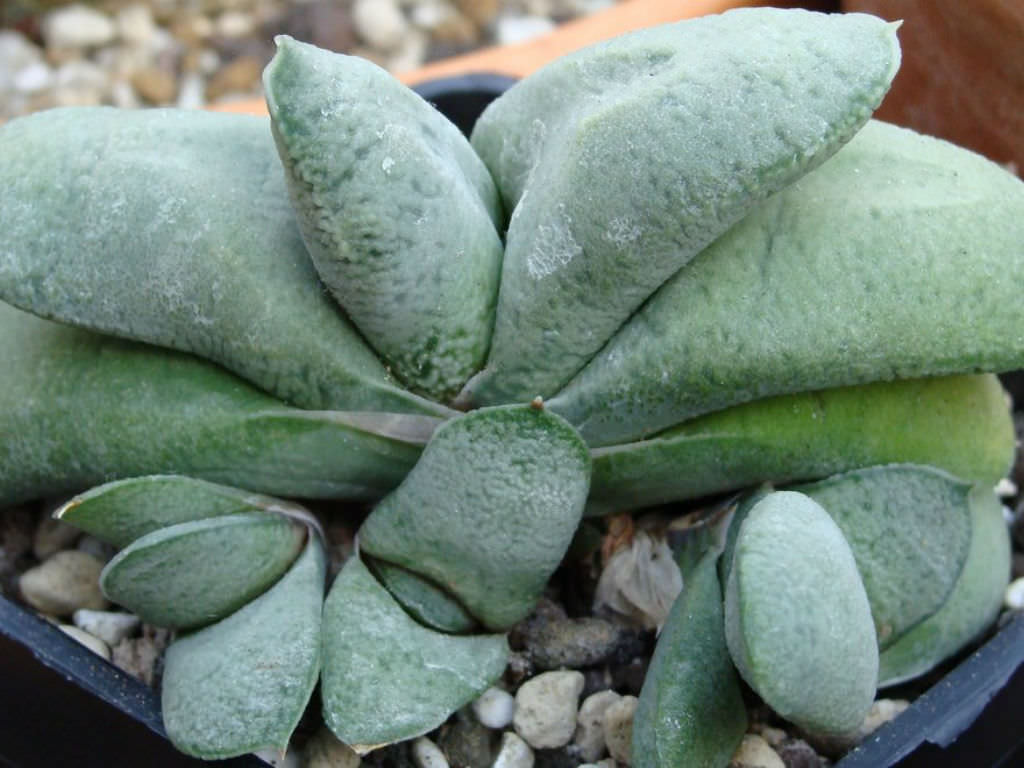
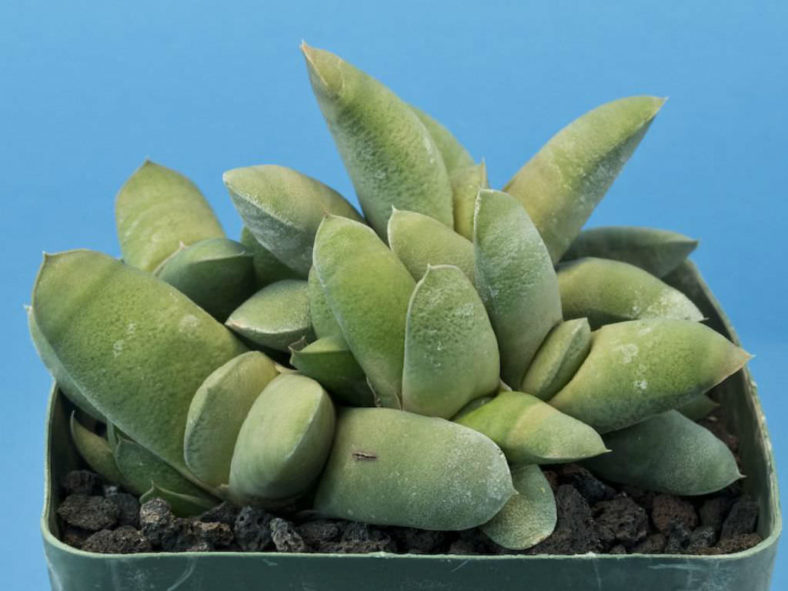
Gasteria glomerata is a small, stemless succulent with tongue-shaped, gray-green leaves arranged in two opposite vertical rows. It can grow up to 1.6 inches (4 cm) tall and 3.2 inches (8 cm) in diameter, offsetting from the base to form a dense cluster that can reach 8 inches (20 cm) in diameter. The leaves are slightly rough in texture, and often strongly recurved, measuring up to 2 inches (5 cm) long and 1 inch (2.5 cm) wide.
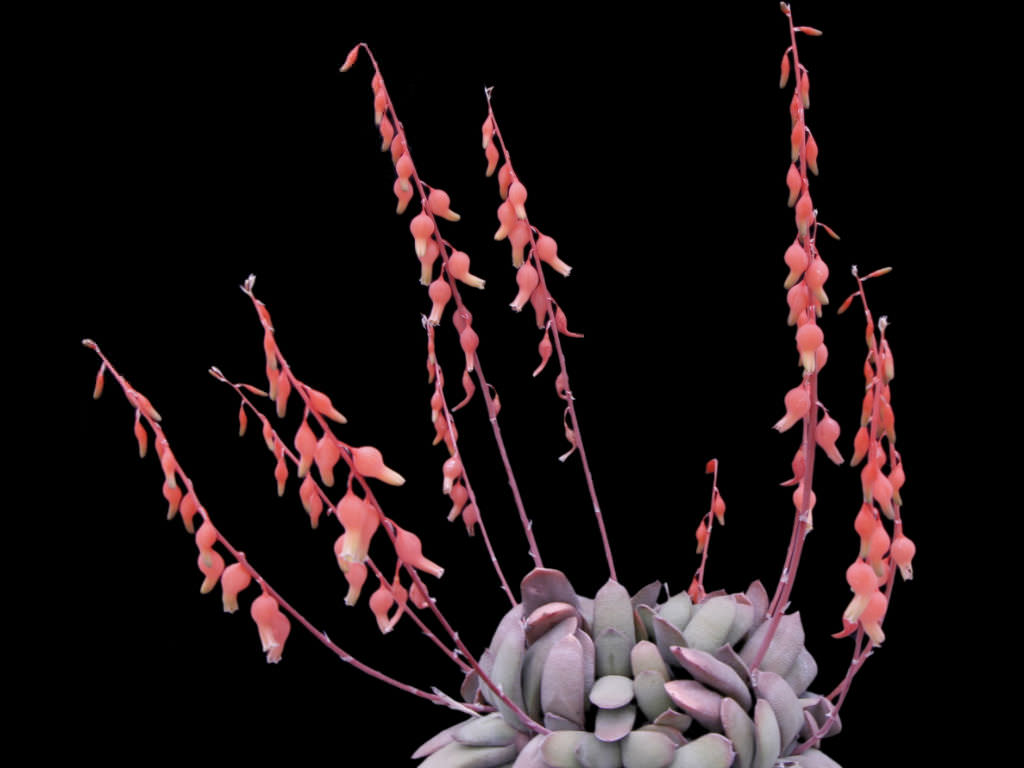
Erectly spreading racemes, which can measure up to 8 inches (20 cm) long, appear primarily in spring, bearing 8 to 20 flowers with reddish-pink gasteriform portions and white petals with centric green striations. The seed capsules can grow up to 0.6 inches (1.5 cm) long and 0.25 inches (0.6 cm) in diameter.
How to Grow and Care for Gasteria glomerata
Hardiness: USDA hardiness zone 9b to 11b: from 25°F (-3.9°C) to 50°F (10°C).
Gasterias are often grouped with Haworthia because the plants have similar cultural requirements. Both are attractive, small succulents that tolerate more shade than many others, making them more suitable as houseplants. However, Gasterias are susceptible to fungal infections, which usually appear as black spots on the leaves. These result from too much humidity or water on the leaves, but they should not spread too quickly. Gasterias have a natural defense mechanism against such fungal attacks, and attack the invading organism and seal off the wounded spot. Generally, any place where Haworthia and Aloe thrive will be hospitable to a Gasteria.
Gasterias are small, shallow-rooted, and relatively slow-growing. Therefore, they are often grown in small clusters in wide, shallow dishes. Over time, clusters will naturally enlarge as the mother plant sends off small plantlets.
See more at How to Grow and Care for Gasteria.
Links
- Back to genus Gasteria
- Succupedia: Browse succulents by Scientific Name, Common Name, Genus, Family, USDA Hardiness Zone, Origin, or cacti by Genus
Photo Gallery
Click on a photo to see a larger version.