

Euphorbia tithymaloides 'Variegata' is an eye-catching succulent shrub with beautiful variegated foliage. Formerly classified in the genus Pedilanthus, now a synonym of Euphorbia, it was known as Pedilanthus tithymaloides 'Variegatus'.
Taxonomy of Euphorbia tithymaloides 'Variegata'
Scientific Name
Euphorbia tithymaloides 'Variegata'
Accepted Scientific Name
Euphorbia tithymaloides L.
Synonym(s)
Euphorbia tithymaloides f. variegata, Pedilanthus tithymaloides f. variegatus, Pedilanthus tithymaloides 'Variegatus'
Common Name(s)
Japanese Poinsettia, Redbird Cactus, Slipper Spurge, Variegated Devil's Backbone
Scientific Classification
Family: Euphorbiaceae
Subfamily: Euphorbioideae
Tribe: Euphorbieae
Subtribe: Euphorbiinae
Genus: Euphorbia
Etymology
The specific epithet "tithymaloides" (pronounced "tith-ee-mal-OY-deez") means "resembling Tithymalus" and refers to the ancient name used by Gaius Plinius Secundus🡕 (AD 23/24-79), known in English as Pliny the Elder, to describe spurge (Euphorbia).
The cultivar epithet 'Variegata' (pronounced "var-ee-GAY-tuh") means "variegated; having a pattern of different colors or marks" and refers to the variegated leaves of this plant.
Origin of Euphorbia tithymaloides 'Variegata'
Euphorbia tithymaloides 'Variegata' is a form of Euphorbia tithymaloides selected in cultivation for its variegated foliage.
Description of Euphorbia tithymaloides 'Variegata'
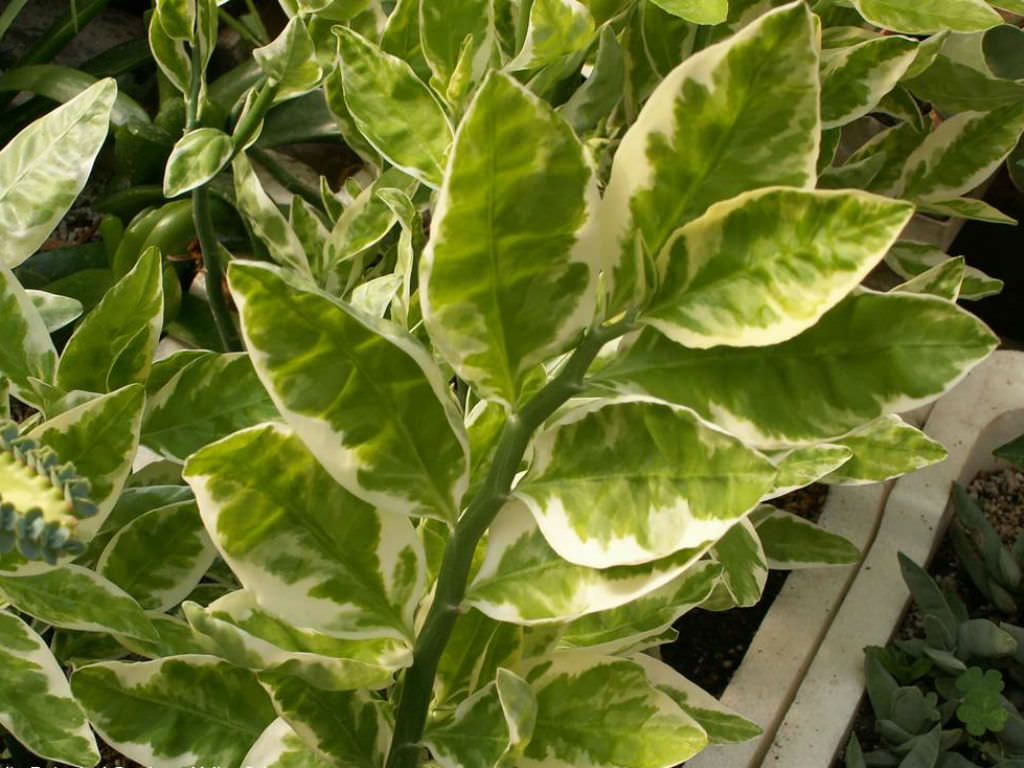
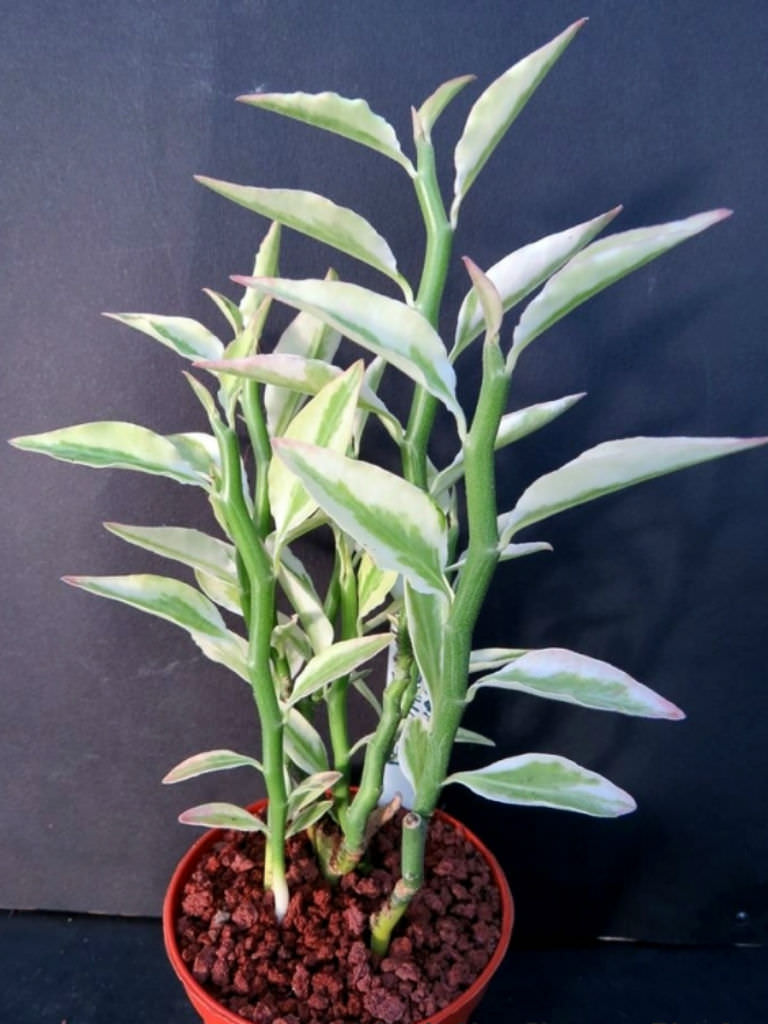
Euphorbia tithymaloides 'Variegata', formerly known as Pedilanthus tithymaloides 'Variegatus', is a succulent shrub with green, white-edged leaves arranged alternately on green branches with a zigzag shape. It can grow up to 8 feet (2.4 m ) tall, branching profusely from the base. The leaves are ovate and pointed at the tip, measuring up to 3.2 inches (8 cm) long and 2 inches (5 cm) wide. They turn pink or red when flowering or when cool winter temperatures occur.
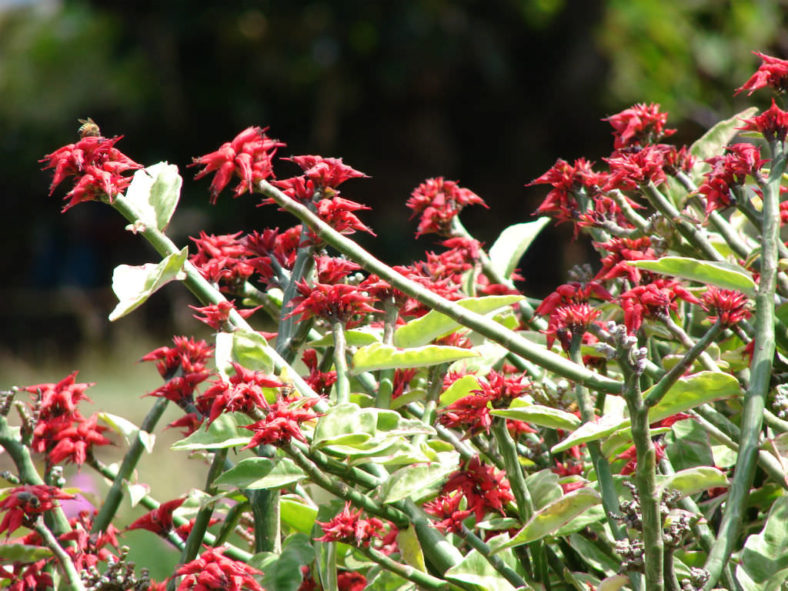
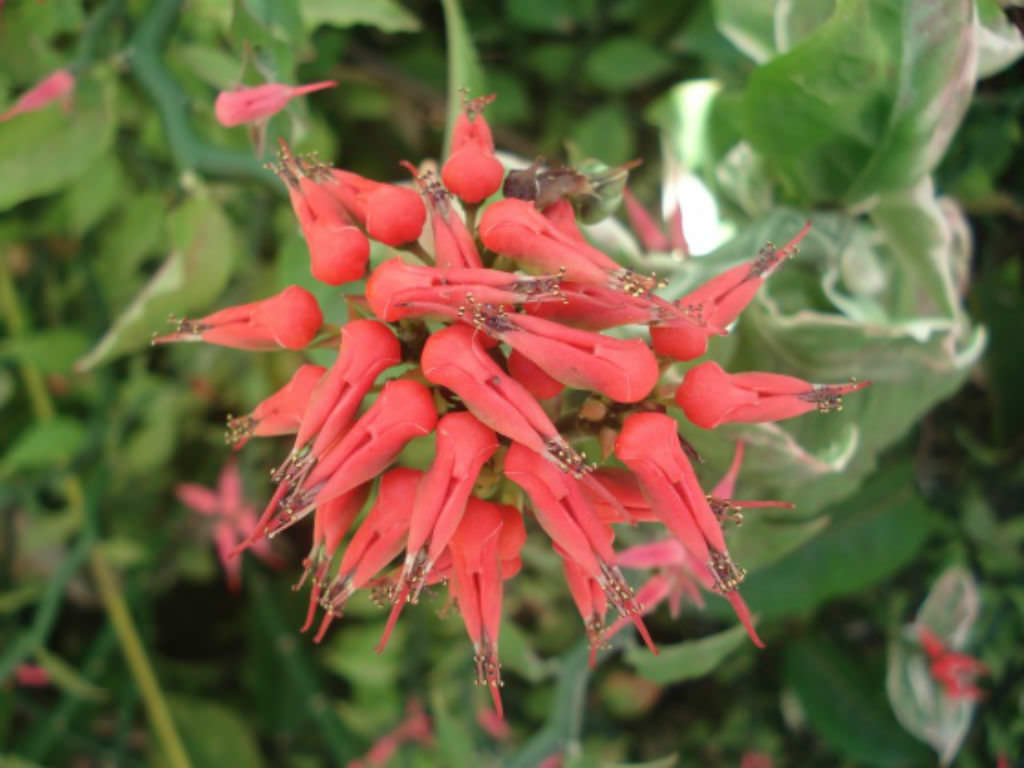
The branches terminate in dichotomous clusters with a short stalk supporting each flower. The floral leaves are bifid and ovate, while the involucral bracts are bright red, irregularly acuminate in shape, with a long, thin tube. The male pedicel is hairy, while the female is glabrous. Flowers generally appear in mid-spring.
How to Grow and Care for Euphorbia tithymaloides 'Variegata'
Hardiness: USDA hardiness zone 9b to 11b: from 25°F (-3.9°C) to 50°F (10°C).
Euphorbias are very easy to care for. They require a little pampering to become established, but once they are, they are self-sufficient. In fact, more die from too much care and watering than from neglect. Euphorbias need well-draining soil and lots of sunlight. They are not particular about soil pH, but they cannot tolerate wet soil. Unlike most succulents, Euphorbia does not handle long periods of drought well. It may need weekly watering during the summer. Water whenever the soil is dry several inches below the surface. Water deeply, but don't let them sit in wet soil, which can cause root rot. Add some organic matter or fertilizer to the planting hole. If you are growing them in containers or your soil is poor, feed with a half-strength fertilizer monthly.
Euphorbia can be grown from seed, but they can be difficult to germinate (or even find). It is usually propagated by cuttings. This can be tricky because of the exuding sap. Rooting hormone is recommended with Euphorbia. They tend to grow problem-free, but there are a few pests and diseases to be alert for.
See more at How to Grow and Care for Euphorbia.
Photo Gallery
Click on a photo to see a larger version.
Internal Links
- Explore all plants within the genus Euphorbia.
- Explore all plants within the family Euphorbiaceae.