Scientific Name
Euphorbia alluaudii Drake
Synonym(s)
Tirucalia alluaudii
Common Name(s)
Bush Euphorbia, Cat Tails Euphorbia, Milk Bush, Pencil Tree, Sausage Tree, Stick Cactus, Stick Euphorbia, Stick Plant, Yellow-leaf
Scientific Classification
Family: Euphorbiaceae
Subfamily: Euphorbioideae
Tribe: Euphorbieae
Subtribe: Euphorbiinae
Genus: Euphorbia
Etymology
The specific epithet "alluaudii" (pronounced "al-loo-WAH-dee-eye") honors Charles A. Alluaud (1861–1949), a French explorer and entomologist.
Origin
Euphorbia alluaudii is native to Madagascar. It grows in subtropical or tropical dry forests, subtropical or tropical dry shrubland, and rocky areas.
Description
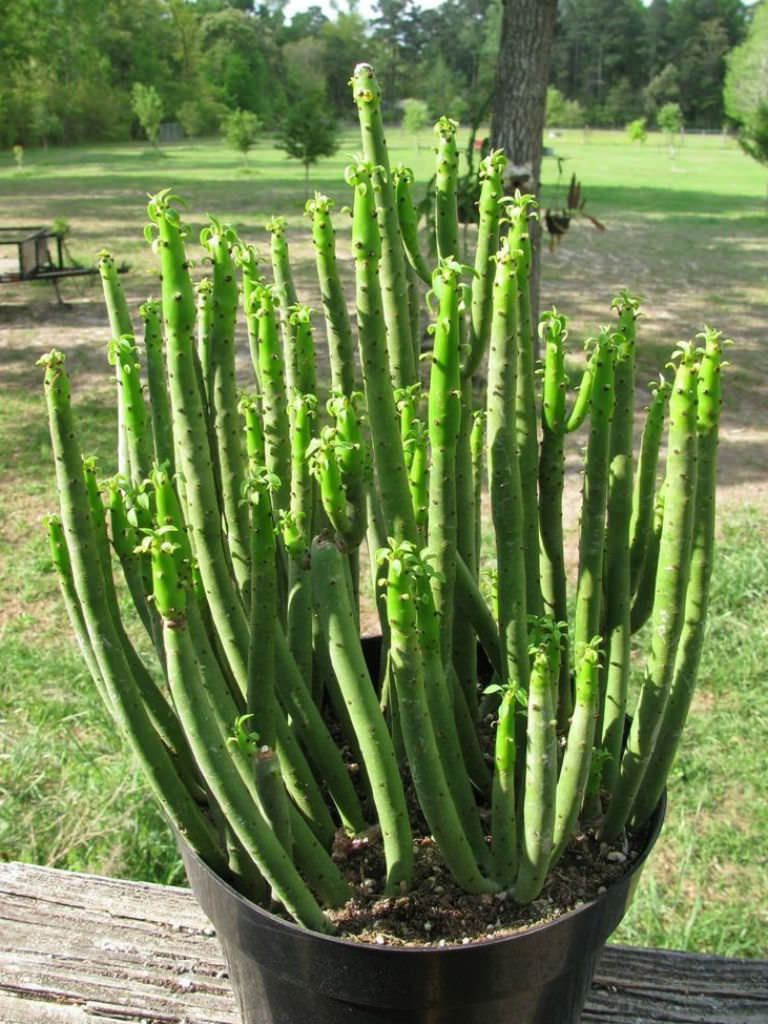
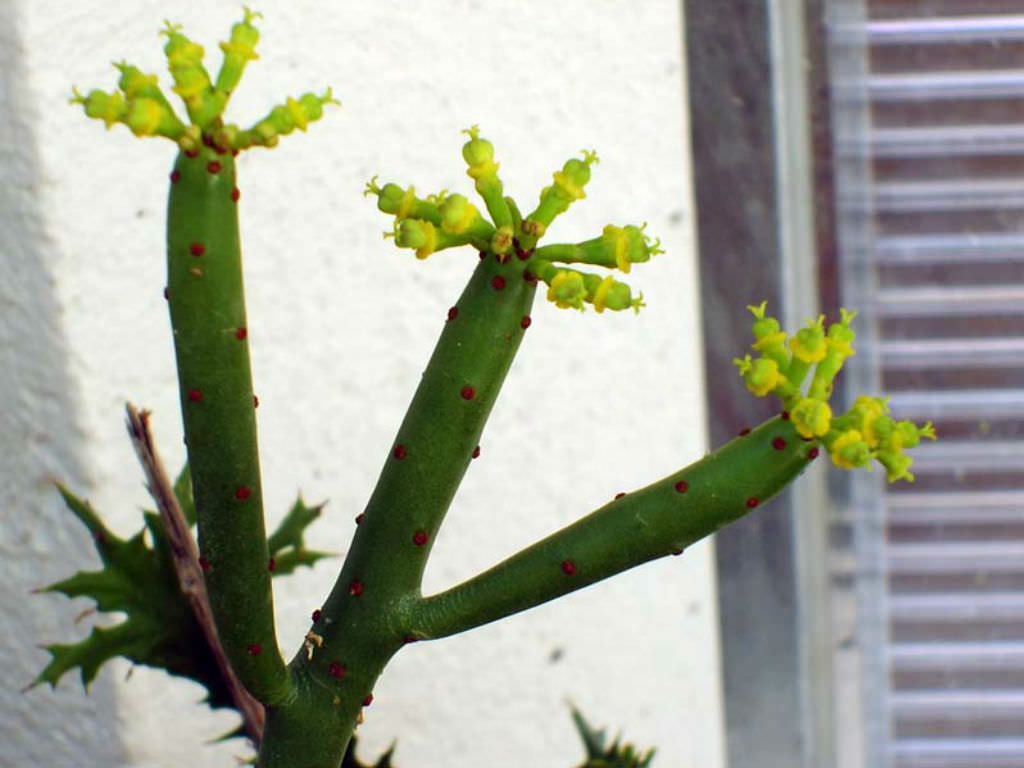
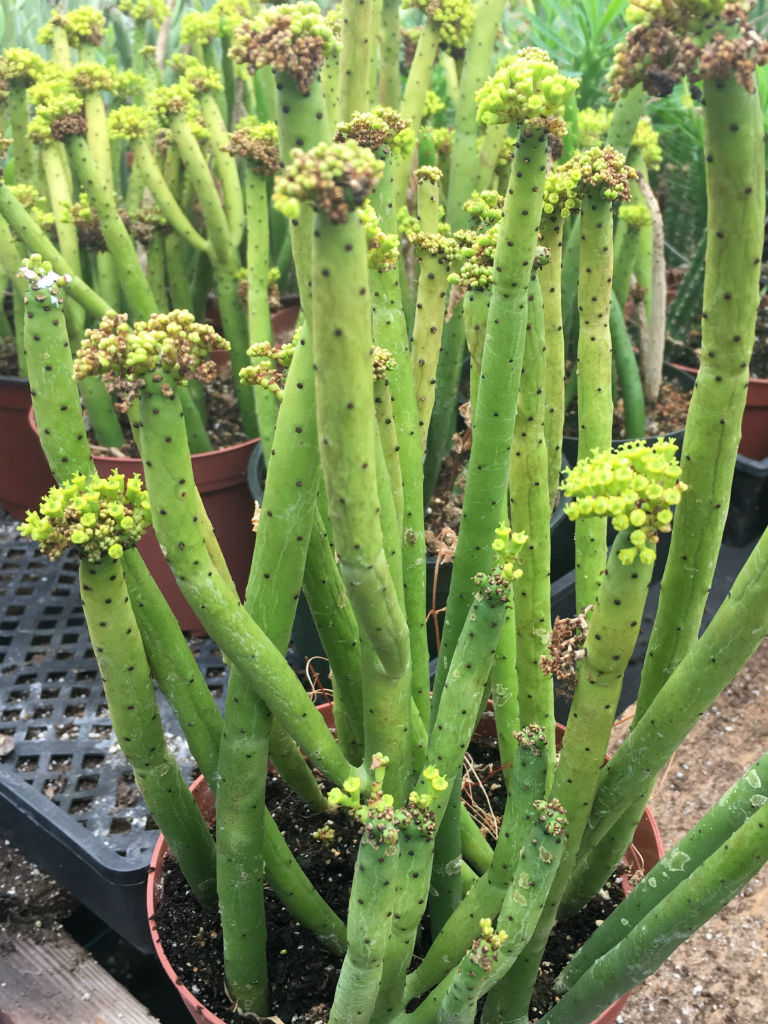
Euphorbia alluaudii, also known as Euphorbia leucodendron, is a densely branched succulent shrub or small tree with narrow, yellowish-green, cylindrical branches. It can grow up to 13.1 feet (4 m) tall. The branches are initially erect, then arch outwards, reaching a diameter of 0.6 inches (1.5 cm). They have many green leaves at the tips in summer, and brown dots where the leaves were previously attached. The leaves can measure up to 0.5 inches (1.3 cm) long.
Tiny, yellow-green flower structures (cyathia) that hold the even smaller flowers appear in spring and summer, loosely clustered towards the ends of the branches. The fruits are red, somewhat heart-shaped capsules with three locules, each containing one seed.
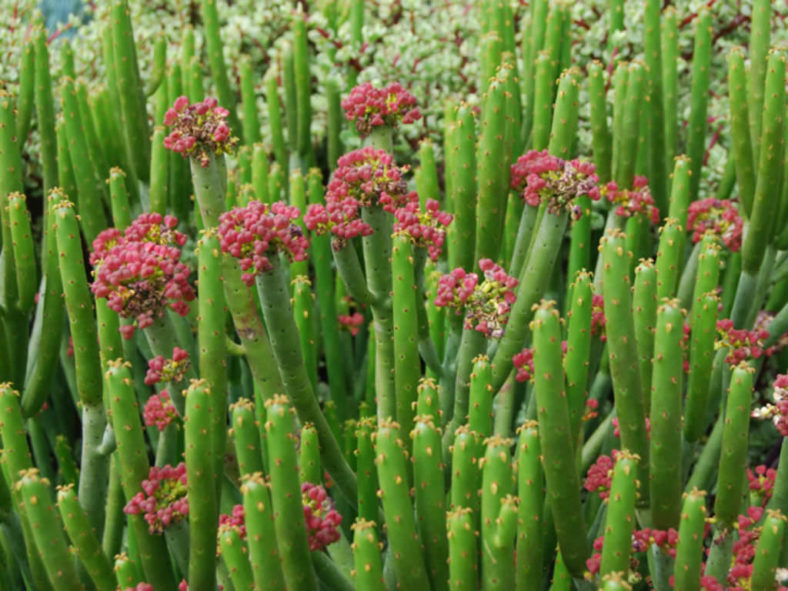
Subspecies and Forms of Euphorbia alluaudii
- Euphorbia alluaudii subsp. alluaudii
- Euphorbia alluaudii subsp. oncoclada
- Euphorbia alluaudii (crested)
How to Grow and Care for Euphorbia alluaudii
Hardiness: USDA hardiness zone 9a to 11b: from 20°F (-6.7°C) to 50°F (10°C).
Euphorbias are very easy to care for. They require a little pampering to become established, but once they are, they are self-sufficient. More die from too much care and watering than from neglect. Euphorbias need well-draining soil and lots of sunlight. They are not particular about soil pH, but cannot tolerate wet soil. Unlike most succulents, Euphorbia does not handle prolonged drought well. It may need weekly watering during the summer. Water whenever the soil is dry several inches below the surface. Water deeply, but don't let them sit in wet soil, which can cause root rot. Add some organic matter or fertilizer to the planting hole. Feed with a half-strength fertilizer monthly if you are growing them in containers or your soil is poor.
Euphorbia can be grown from seed, but they can be difficult to germinate (or even find). It is usually propagated by cuttings. This can be tricky because of the exuding sap. Rooting hormone is recommended with Euphorbia. They tend to grow problem-free, but there are a few pests and diseases to be alert for.
See more at How to Grow and Care for Euphorbia.
Links
- Back to genus Euphorbia
- Succupedia: Browse succulents by Scientific Name, Common Name, Genus, Family, USDA Hardiness Zone, Origin, or cacti by Genus
Photo Gallery
Click on a photo to see a larger version.