Scientific Name
Echinopsis chamaecereus (crested) – an informal descriptive name
This plant is not found in the wild and therefore cannot be classified as a distinct form. Its crested growth (fasciation) is stable in cultivation; however, it has not been formally named as a cultivar under the ICNCP🡕.
Accepted Scientific Name
Echinopsis chamaecereus H. Friedrich & Glaetzle
Synonym(s)
Chamaecereus silvestrii (crested), Lobivia silvestrii (crested)
Scientific Classification
Family: Cactaceae
Subfamily: Cactoideae
Tribe: Trichocereeae
Genus: Echinopsis
Origin
Echinopsis chamaecereus (crested) is a sport of Echinopsis chamaecereus selected in cultivation for its crested growth (fasciation).
Description
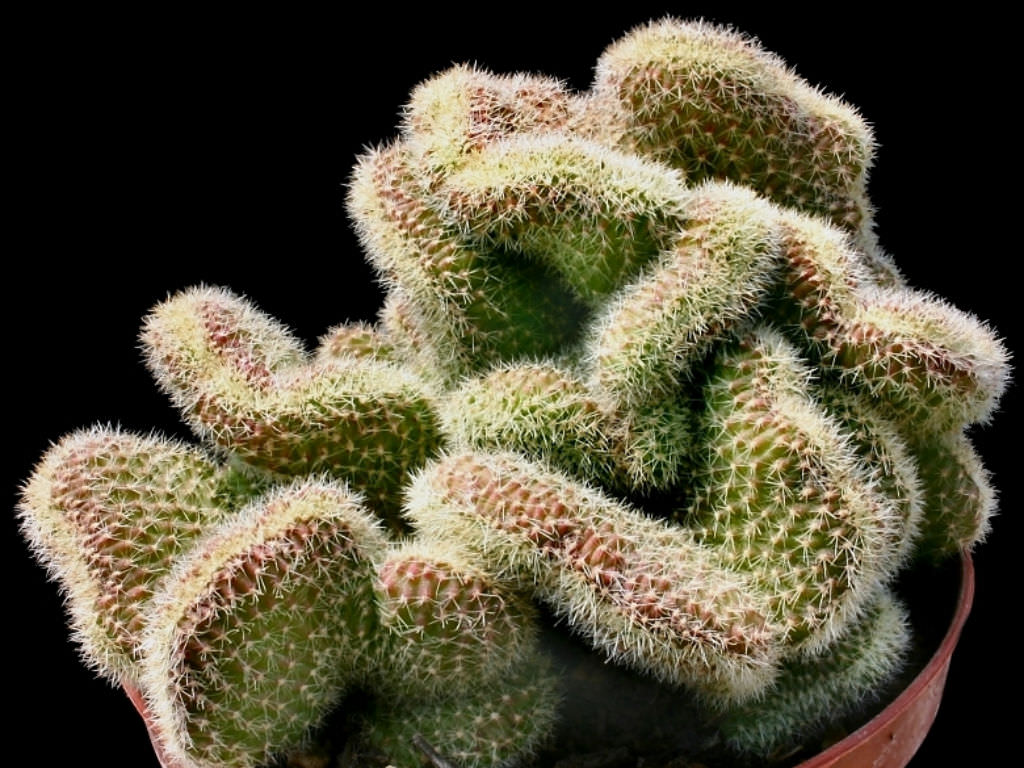
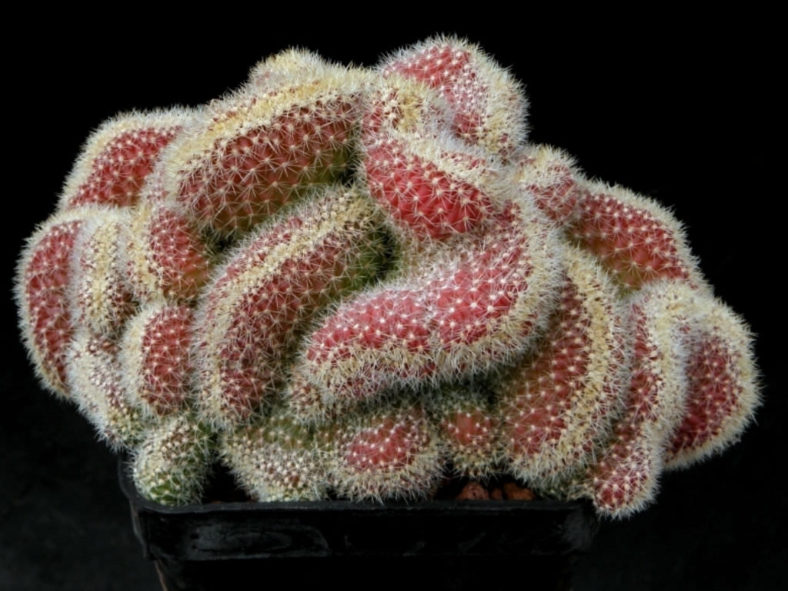
Echinopsis chamaecereus (crested), also known as Chamaecereus silvestrii (crested), is a rare, fascinating cactus with pale green fan-shaped stems covered with clusters of white, bristle-like spines. It can grow up to 6 inches (15 cm) tall and up to 12 inches (30 cm) wide. The stems take on a nice purple tinge during the winter rest period.
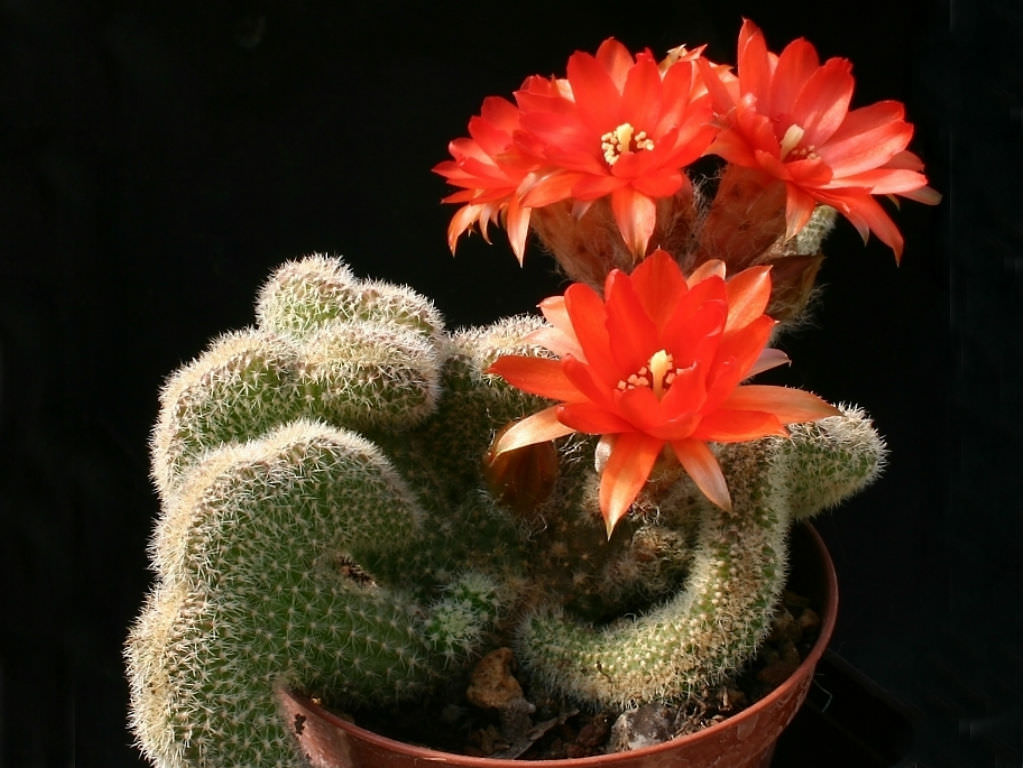
While the crested form of this cactus does not produce flowers, it can occasionally develop normal stems that produce orange-red flowers from late spring to early summer.
How to Grow and Care for Echinopsis chamaecereus (crested)
Hardiness: USDA hardiness zone 10a to 11b: from 30°F (-1.1°C) to 50°F (10°C).
Peanut Cactus needs a well-draining potting mix. Water the plant thoroughly until water comes out of the pot's holes, and let the soil dry at least halfway down the pot before watering again. In winter, decrease or withhold water. The plant will look shriveled, and stems can take on a reddish tinge, but the Peanut Cactus will plump up again and return to its normal color in spring.
The plants grow well in hanging baskets or shallower, 4-inch (10 cm) nursery containers because the cactus is shallow-rooted. Hybrids can take deeper pots. It is difficult to transplant older clumps of Peanut Cactus because the stems break apart so easily. Fertilize the cactus once a year during the growing season using a balanced fertilizer at half the recommended strength. In areas with hot, dry summers, like the Southwest, grow Peanut Cactus in partial shade. In areas with cool summers or temperate climates, grow it in full sun.
Learn more at How to Grow and Care for Echinopsis.
Links
- Back to genus Echinopsis
- Succupedia: Browse succulents by Scientific Name, Common Name, Genus, Family, USDA Hardiness Zone, Origin, or cacti by Genus
Photo Gallery
Click on a photo to see a larger version.