

Are you looking for unique succulents? Check out Echeveria 'Ramillete Crested'! This charming little plant creates beautiful, sculptural shapes as it grows, making it a perfect addition to your collection.
Taxonomy of Echeveria 'Ramillete Crested'
Scientific Name
Echeveria 'Ramillete Crested'
Accepted Scientific Name
Echeveria 'Ramillete'
Scientific Classification
Family: Crassulaceae
Subfamily: Sempervivoideae
Tribe: Sedeae
Genus: Echeveria
Etymology
The generic name "Echeveria" (pronounced "ech-eh-VER-ee-a") honors Atanasio Echeverría y Godoy🡕 (fl.1771-1803), an 18th-century botanical artist and naturalist from New Spain who trained at the Royal Art Academy in Mexico City.
Description of Echeveria 'Ramillete Crested'
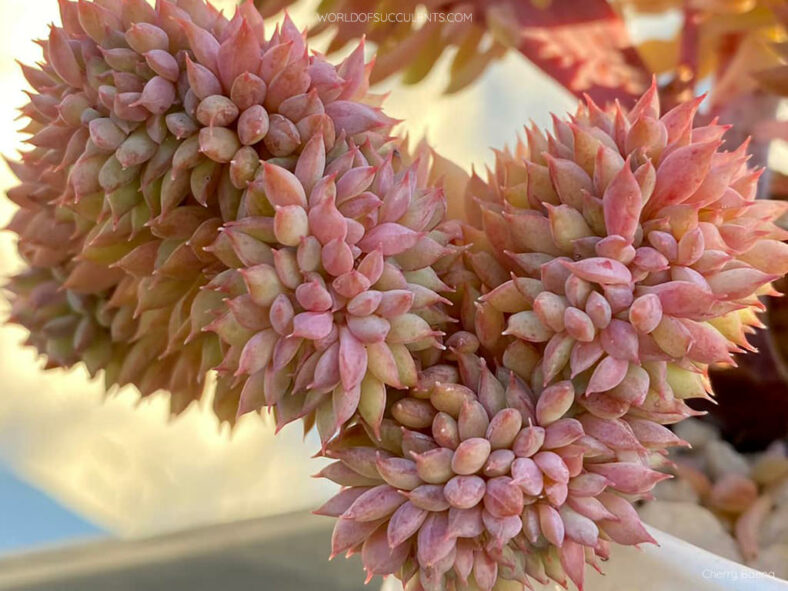
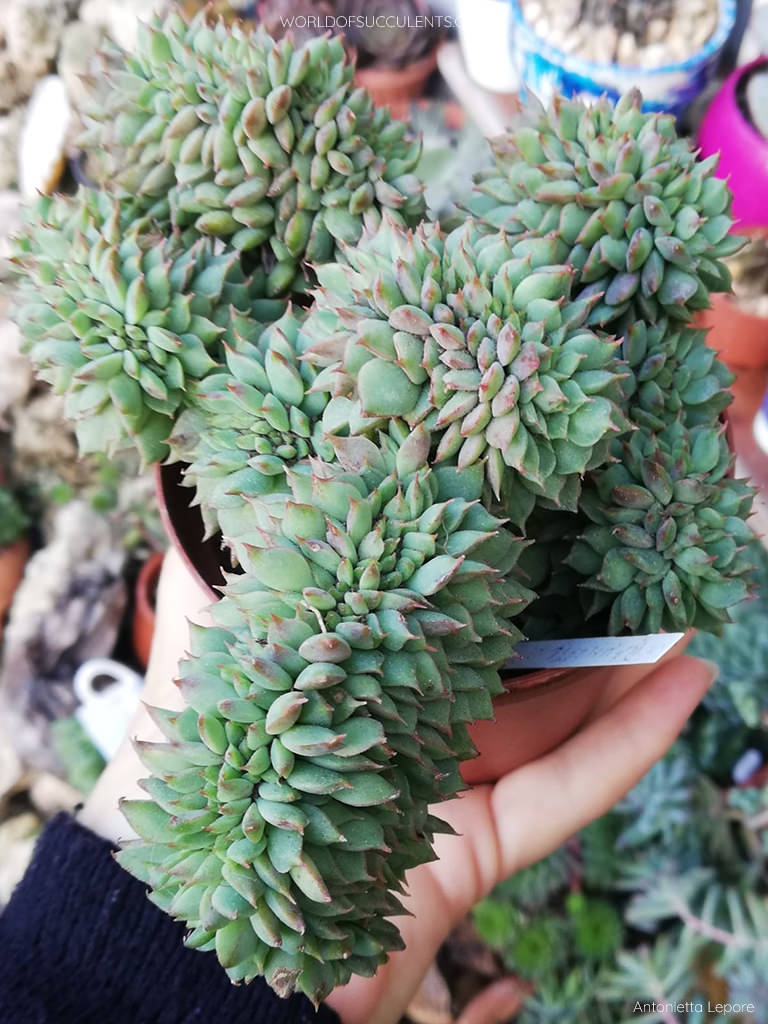
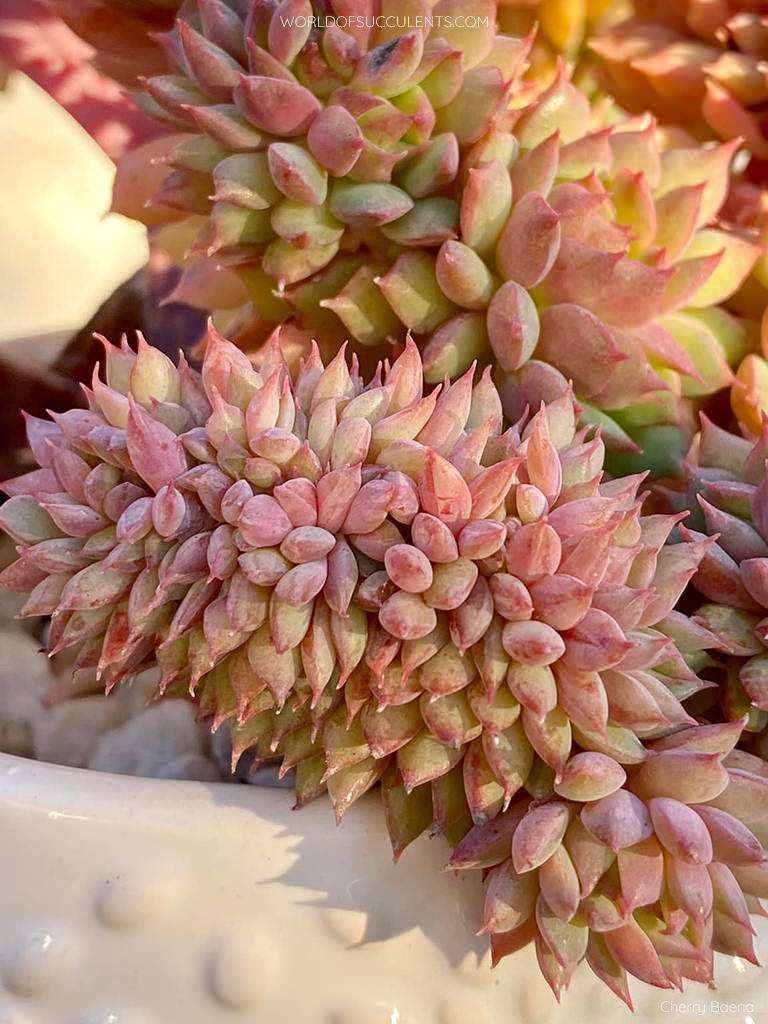
Echeveria 'Ramillete Crested' is a captivating succulent with tightly packed, frosty apple-green leaves that grow along flattened stems. Each specimen has a unique and fascinating shape. Unlike the normal form of Echeveria 'Ramillete', the crested form's leaves are shorter and narrower. In cooler weather, the leaves develop striking red tips.
Origin of Echeveria 'Ramillete Crested'
Echeveria 'Ramillete Crested' is a form of Echeveria 'Ramillete' selected in cultivation for its mutated growth.
How to Grow and Care for Echeveria 'Ramillete Crested'
Light: Echeveria 'Ramillete Crested' requires full sun to partial shade for optimal growth. Therefore, place it near the brightest window in your home. If you move the plant outside in spring, gradually acclimate it to full sun.
Soil: Having soil that drains quickly is most important for growing a healthy succulent. While many growers prefer to create their own soil mix, commercial soil mixes for succulents will work fine.
Temperature: High temperatures are not a problem as long as there is plenty of fresh air, but Echeveria 'Ramillete Crested' is a tender succulent and must be brought indoors if there is a risk of freezing temperatures. It grows best in USDA Plant Hardiness Zones 10a to 11b, with average minimum winter temperatures ranging from 30°F to 50°F (-1.1°C to 10°C).
Watering: This plant prefers the "soak and dry" method during the growing season. Water deeply and then let the soil completely dry out before watering again. Water sparingly during the winter, only enough to keep the plant from shriveling. Above all, if you have a saucer under the pot, do not forget to empty the excess water.
Fertilizing: Although it can grow well without fertilizer, Echeveria 'Ramillete Crested' may benefit from extra nutrients. Feed only during the growing season and use a water-soluble fertilizer diluted to half-strength.
Repotting: If growing it in a container, repot as needed in spring or early summer, but ensure the soil is dry before you start. Also, always use a container with drainage holes.
Propagation: Echeveria 'Ramillete Crested' can be propagated by leaves or offsets during the growing season.
Learn more at How to Grow and Care for Echeveria.
Toxicity of Echeveria 'Ramillete Crested'
Echeveria 'Ramillete Crested' has no reported toxic effects and is safe for growing around children and pets.
Photo Gallery
Click on a photo to see a larger version.

Internal Links
- Explore all plants within the genus Echeveria.
- Explore all plants within the family Crassulaceae.