Scientific Name
Echeveria 'Linguas'
Scientific Classification
Family: Crassulaceae
Subfamily: Sempervivoideae
Tribe: Sedeae
Genus: Echeveria
Etymology
The generic name "Echeveria" (pronounced "ech-eh-VER-ee-a") honors Atanasio Echeverría y Godoy🡕 (fl.1771–1803), an 18th-century botanical artist and naturalist from New Spain who trained at the Royal Art Academy in Mexico City.
The cultivar epithet 'Linguas' is an Interlingua noun meaning "tongues" and refers to the leaves' appearance in this hybrid.
Description
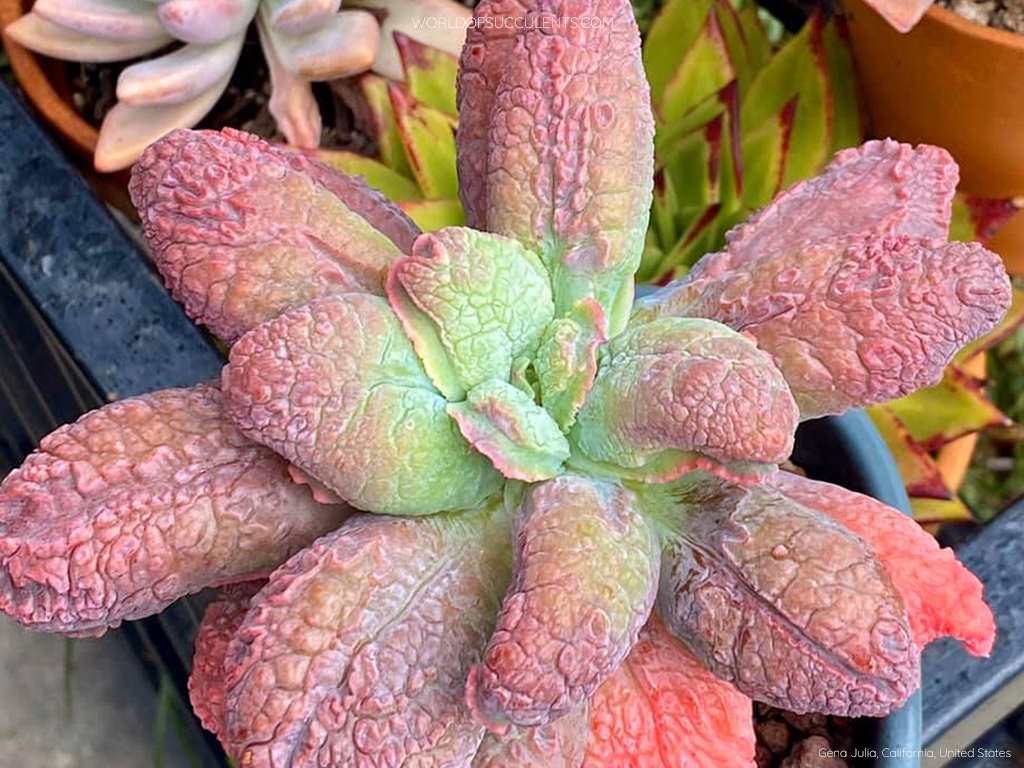
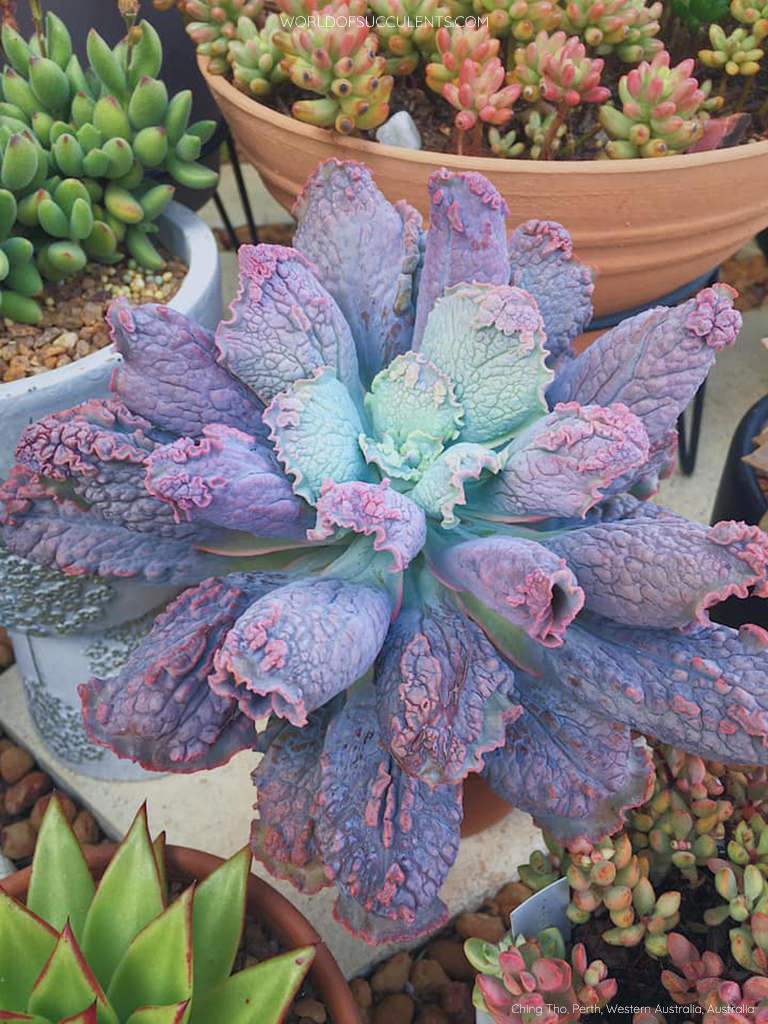
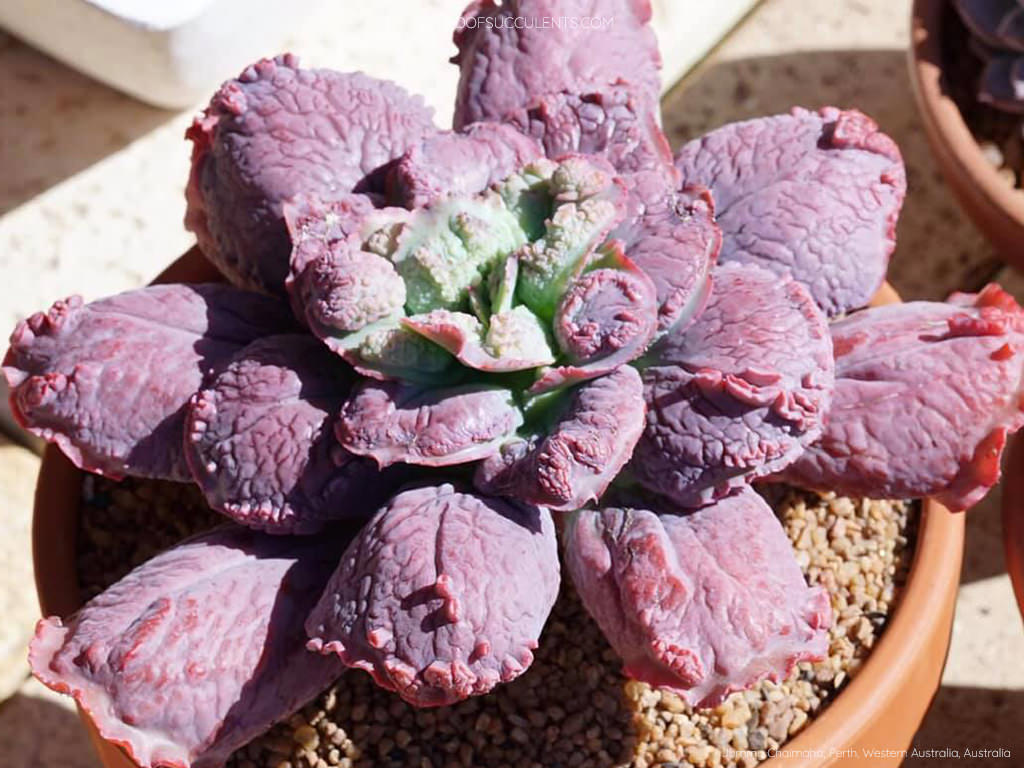
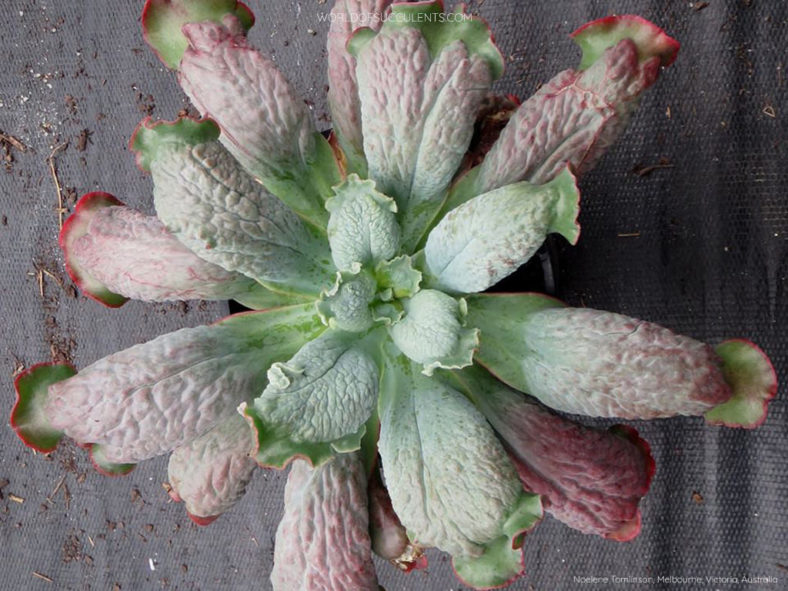
Echeveria 'Linguas' is a spectacular succulent that forms a short-stemmed rosette of fleshy leaves covered in heavy caruncles on the upper surface. The rosette can grow up to 10 inches (25 cm) in diameter, usually remaining solitary, though it may occasionally produce a few offsets with age. The leaves vary in color, ranging from coral blue in winter to reddish-pink in summer. The margins of the leaves are pink and wavy. The caruncles cause the leaves to curl down.
The flowers are pink and appear on long, branched stalks in summer.
Origin
Echeveria 'Linguas' is a hybrid created by Dick Wright in 2008.
How to Grow and Care for Echeveria 'Linguas'
Light: E. 'Linguas' prefers full sun to partial shade. If you move your plant outside in the spring, do it gradually. The intense afternoon sun can cause sunburn. During the winter, when your E. 'Linguas' is inside, put it near the brightest window in your home. It will stretch if it does not have enough sunlight.
Soil: This succulent needs a potting soil mix that drains quickly. Many growers create their own mix, but commercial succulent potting mixes will work fine.
Hardiness: This plant is a tender succulent, which means it must be brought indoors for the winter to survive. E. 'Linguas' can withstand temperatures as low as 30°F to 50°F (-1.1°C to 10°C), USDA hardiness zones 10a to 11b.
Watering: Provide moderate amounts of water from spring to fall. The "soak and dry" method is the preferred schedule for watering E. 'Linguas'. If you have saucers under the pots, briefly empty the water from them. Water your plant just enough to keep it from shriveling during winter.
Fertilizing: E. 'Linguas' grows well without fertilizer but may benefit from extra nutrients. Use a slow-release fertilizer in spring, or a liquid fertilizer diluted 2 to 4 times more than usual and applied less often than recommended.
Repotting: Repot the plant only as needed in spring or early summer, when it is actively growing. To repot your E. 'Linguas', ensure the soil is dry.
Propagation: Like all Echeverias, this succulent is usually propagated from leaves and offsets, but it can also be grown from stem cuttings. Spring is the best time to take cuttings and separate offsets.
Learn more at How to Grow and Care for Echeveria.
Toxicity of Echeveria 'Linguas'
E. 'Linguas has no reported toxic effects. It is safe for pets and humans, although it is not advisable to eat it.
Links
- Back to genus Echeveria
- Succupedia: Browse succulents by Scientific Name, Common Name, Genus, Family, USDA Hardiness Zone, Origin, or cacti by Genus
Photo Gallery
Click on a photo to see a larger version.