

Dracaena pinguicula, commonly known as Walking Sansevieria, is a very slow-growing succulent native to Kenya. It is valued for its unique, "walking" growth habit. Once the plant reaches a specific size and develops attractive aerial roots, it becomes an excellent choice for a potted specimen. This species was first described as Sansevieria pinguicula in 1964 by Peter René Oscar Bally🡕, based on specimens he discovered in the Tana River region of Kenya.
Taxonomy of Dracaena pinguicula
Scientific Name
Dracaena pinguicula (P.R.O.Bally) Byng & Christenh.
Synonym(s)
Sansevieria pinguicula
Common Name(s)
Walking Sansevieria
Scientific Classification
Family: Asparagaceae
Subfamily: Nolinoideae
Genus: Dracaena
Etymology
The specific epithet "pinguicula" (pronounced "ping-WIK-yoo-la") means "somewhat thick" or "slightly fleshy" and refers to the chunky, succulent leaves of this species.
Subspecies of Dracaena pinguicula
- Dracaena pinguicula subsp. disticha
- Dracaena pinguicula subsp. nana
- Dracaena pinguicula subsp. pinguicula
Origin of Dracaena pinguicula
Dracaena pinguicula is endemic to the Coast Province in eastern Kenya. It occurs on sandy plains with open bushland at elevations ranging from 395 to 755 feet (120 to 230 m).
Description of Dracaena pinguicula
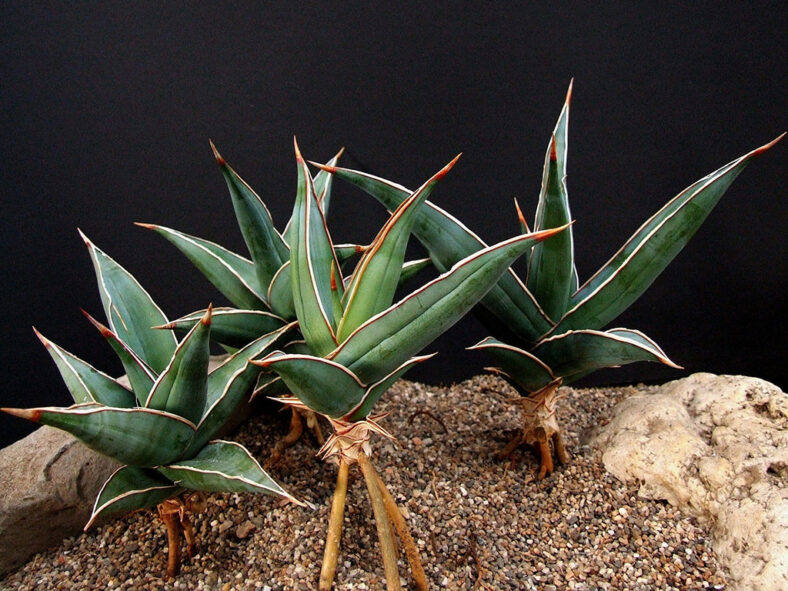
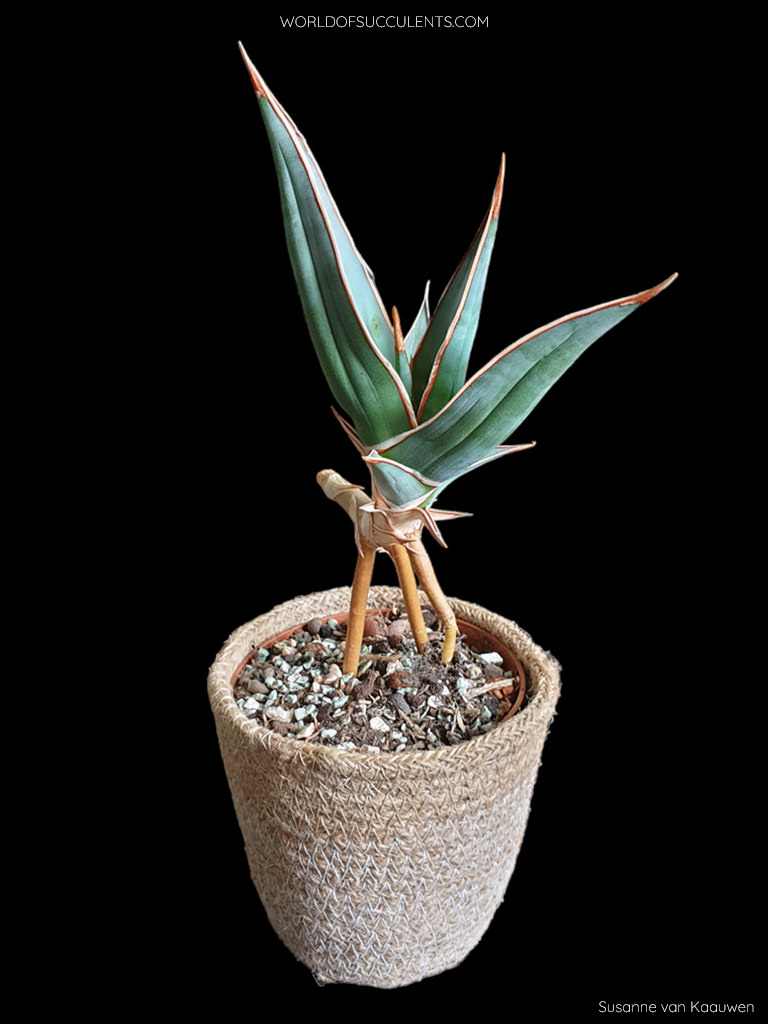
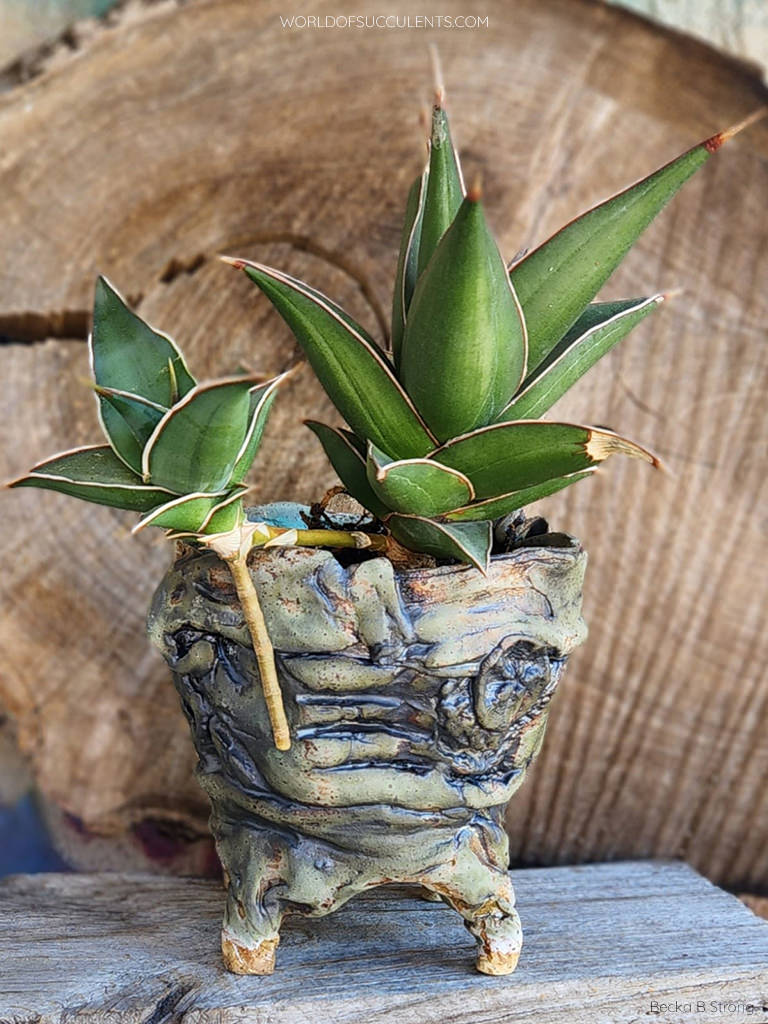
Dracaena pinguicula, formerly known as Sansevieria pinguicula, is a small, attractive succulent with short stems that terminate in rosettes of chunky, fleshy leaves. It branches via aerial runners, which develop into new rosettes that produce several stilt-like roots that extend downward, giving the appearance that the new plant is walking away from its parent.
The leaves have a broad channel running the full length of the upper surface and have reddish-brown margins bordered by a rigid, papery white cuticle. Each leaf ends in a short but very sharp terminal spine, and can measure up to 12 inches (30 cm) in length, 1.4 inches (3.5 cm) in width, and nearly equal in thickness. The undersides of the leaves are typically convex and smooth when the plant has sufficient water, but may develop 2 to 7 well-defined longitudinal grooves in drier conditions, as the plant uses the water stored in its leaves to survive in arid environments. The leaves are blue-green, fading with age.
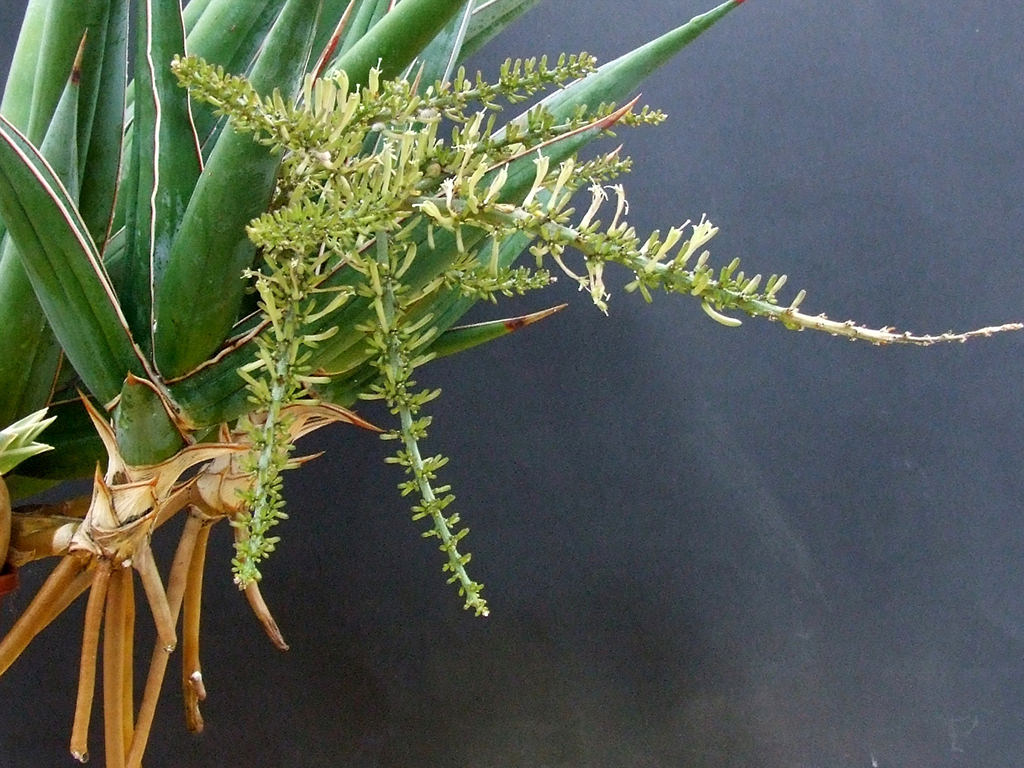
In late summer and fall, Dracaena pinguicula produces small, brownish, bottle-shaped flowers with white anthers and stamens. The flowers appear in clusters of 5 to 6 on an erect, branched panicle that can grow up to 12.8 inches (32 cm) long. However, flowering is rare indoors and occurs only when the plant has reached maturity.
How to Grow and Care for Dracaena pinguicula
Light: Dracaena pinguicula thrives in moderately bright or filtered light. An ideal location is in front of a bright, sunny window with a sheer curtain covering it.
Soil: This plant prefers well-draining, porous soil. A suitable option is a commercial potting mix designed for cacti and succulents, or you can create your own mix.
Temperature: Dracaena pinguicula grows best in warm daytime temperatures ranging from 77°F to 95°F (25°C to 35°C) and cooler night temperatures from 50°F to 68°F (10°C to 20°C). It is hardy in USDA Plant Hardiness Zones 10b-11b, which have average annual extreme minimum winter temperatures ranging from 35°F to 50°F (1.7°C to 10°C).
Watering: To keep this plant healthy, allow the soil to dry completely before watering again. Water deeply until water drips through the drainage hole, then discard any excess water in the saucer. Never let the soil become soggy, and avoid allowing the pot to stand in water. Water sparingly during the winter.
Fertilizing: Feed Dracaena pinguicula every 3 weeks during the growing season with a general-purpose houseplant fertilizer, diluted to half-strength as recommended on the label.
Repotting: Repot the plant into a larger container when the roots outgrow the pot. It thrives and may produce blooms when its roots are slightly crowded.
Propagation: Propagating Dracaena pinguicula through seeds is inefficient due to its slow growth rate. Therefore, the preferred methods of propagation are by division or leaf cuttings.
See more at How to Grow and Care for Sansevieria.
Toxicity of Dracaena pinguicula
Dracaena pinguicula is mildly to moderately toxic if ingested due to saponins, which can cause nausea, vomiting, and diarrhea in both humans and pets.
Photo Gallery
Click on a photo to see a larger version.
Internal Links
- Explore all plants within the genus Dracaena.
- Explore all plants within the family Asparagaceae.