Scientific Name
Dasylirion acrotrichum (Schiede) Zucc.
Synonym(s)
Dasylirion robustum, Roulinia acrotricha, Yucca acrotricha
Common Name(s)
Great Desert Spoon, Green Sotol, Spoon Yucca
Scientific Classification
Family: Asparagaceae
Subfamily: Nolinoideae
Genus: Dasylirion
Etymology
The specific epithet "acrotrichum" (pronounced "ak-roh-TRIK-um") means "having hairy tips" and refers to the leaves of this species, which have a tuft of fibres at the tips.
Origin
Dasylirion acrotrichum is native to the Chihuahuan Desert and other xeric habitats in northern and central Mexico.
Description
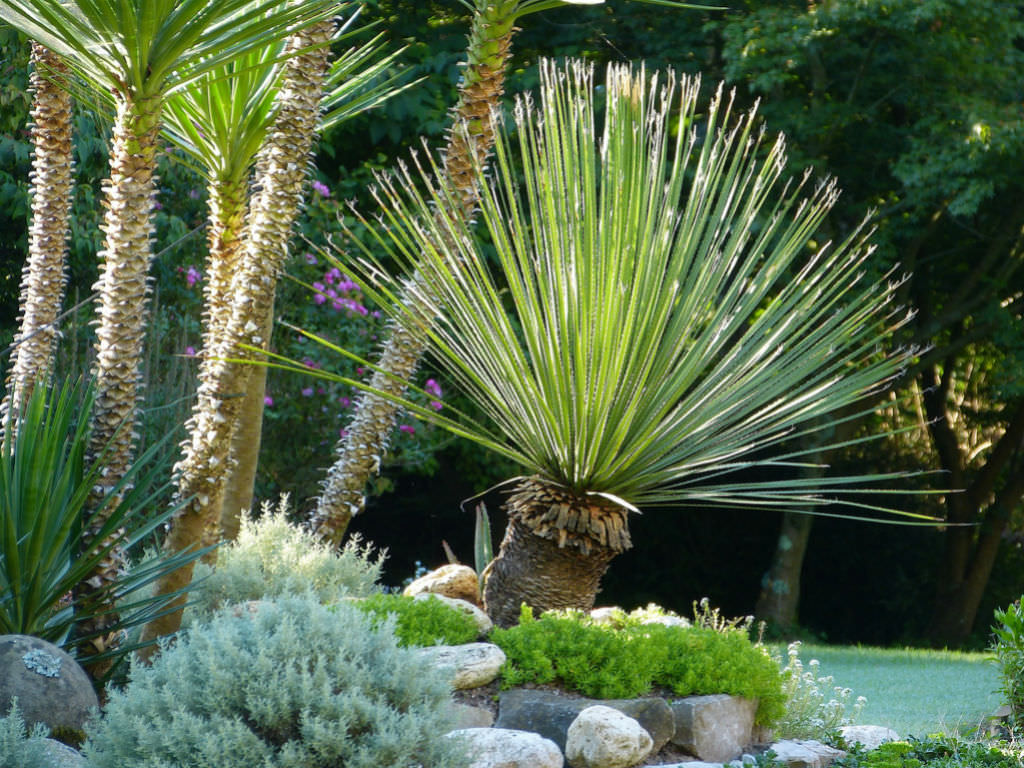
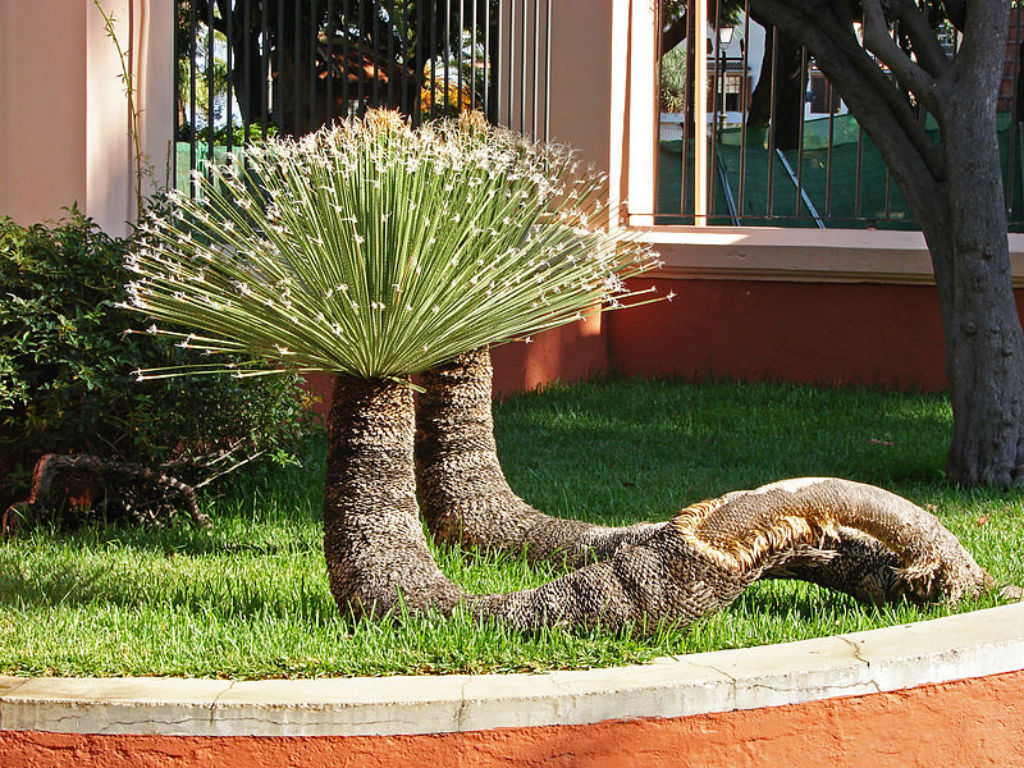
Dasylirion acrotrichum is an ornamental, slow-growing succulent shrub with grasslike leaves that radiate symmetrically from a central core or decumbent trunk, forming a perfectly rounded rosette. The rosette can reach a diameter of 6 feet (1.8 m). The leaves are green, narrow, and have prominent marginal spines and a tuft of fibres at the tips, measuring up to 3.3 feet (1 m) long and 0.4 inches (1 cm) wide.
A dramatic, up to 15 feet (4.6 m) tall spike with small, white to cream-colored flowers appears in mid-summer. The plant will only bloom after 7 to 10 years and then will not bloom every year after that.
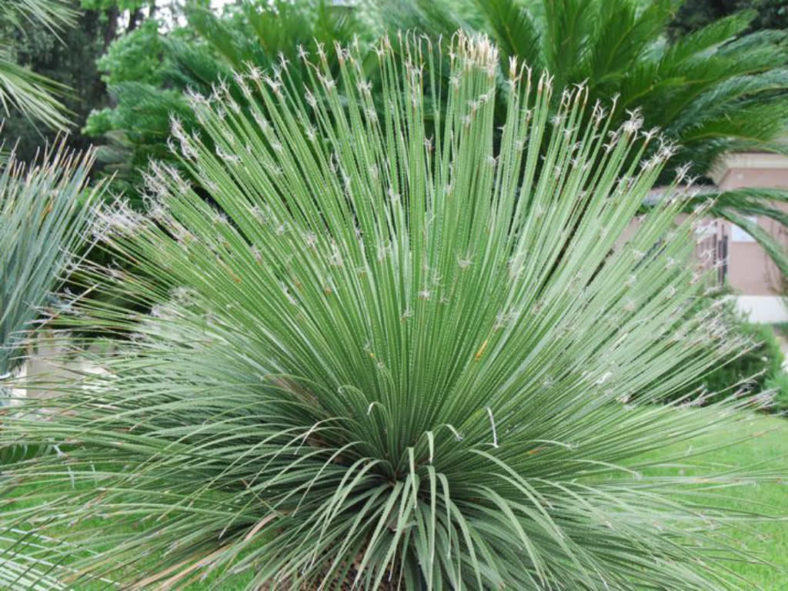
How to Grow and Care for Dasylirion acrotrichum
Hardiness: USDA hardiness zone 9a to 11b: from 20°F (-6.7°C) to 50°F (10°C).
Dasylirions are slow-growing, carefree, and durable, drought-tolerant plants. However, they grow faster when watered well (don't water the crown, as it can rot easily). In the garden, they should be placed in a sunny, well-drained area with additional summer water in dry climates.
These make great specimen plants for xeriscape gardens and blend well in either tropical or arid gardens. Small plants are relatively inexpensive, but larger ones are a fortune. These make excellent potted specimens, and their symmetrical form provides a striking focal point.
They thrive best in full sun but can be grown with some shade and humidity. Plant in very fast-draining soil and provide little or no water in winter. Treat it like a succulent. Best where winter temperatures stay above 50°F (10°C), though some frost can occur. Plants in containers can be moved inside during longer cold spells.
See more at How to Grow and Care for Dasylirion.
Links
- Back to genus Dasylirion
- Succupedia: Browse succulents by Scientific Name, Common Name, Genus, Family, USDA Hardiness Zone, Origin, or cacti by Genus
Photo Gallery
Click on a photo to see a larger version.