Scientific Name
Crassula obovata var. dregeana (Harv.) Toelken
Synonym(s)
Crassula dregeana, Sedum dregeanum
Common Name(s)
Hairy Crassula
Scientific Classification
Family: Crassulaceae
Subfamily: Crassuloideae
Genus: Crassula
Etymology
The generic name "Crassula" (pronounced "KRASS-oo-la") means "somewhat thick" and refers to the thick, fleshy, and succulent nature of the leaves and stems that are characteristic of nearly every species in this genus.
The specific epithet "obovata" (pronounced "ob-oh-VAY-tuh") means "obovate; inversely egg-shaped" and refers to the shape of the leaves of this species.
The varietal epithet "dregeana" (pronounced "dreh-geh-AH-na") honors Johann Fran(t)z Drège🡕 (or Jean François Drège) (1794–1881), a German horticulturalist and plant collector who extensively explored South Africa between 1826 and 1834.
Origin of Crassula obovata var. dregeana
Crassula obovata var. dregeana is native to South Africa. It occurs in a few local outcrops in southern KwaZulu-Natal and extends into the Eastern Cape province.
Description of Crassula obovata var. dregeana
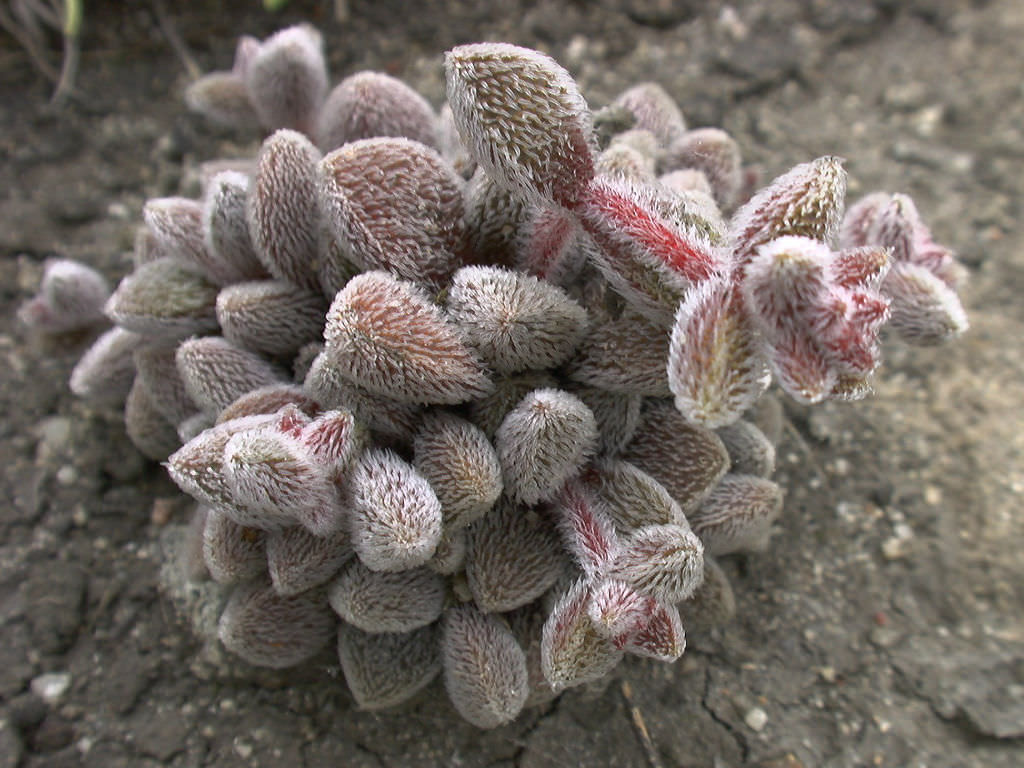
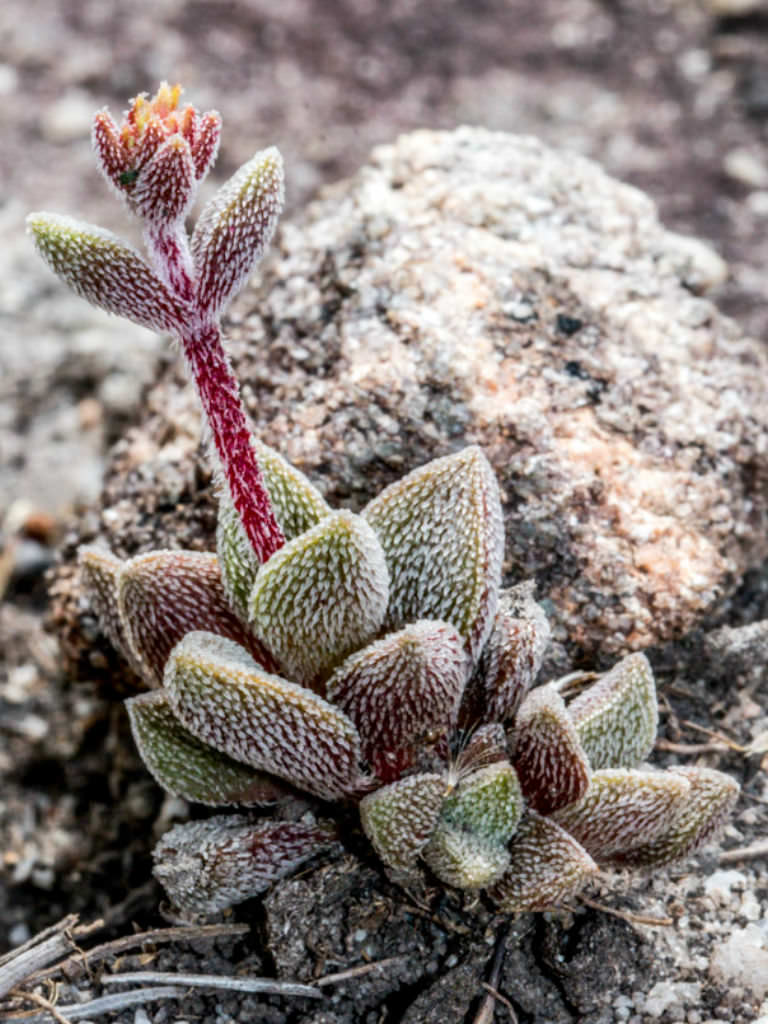
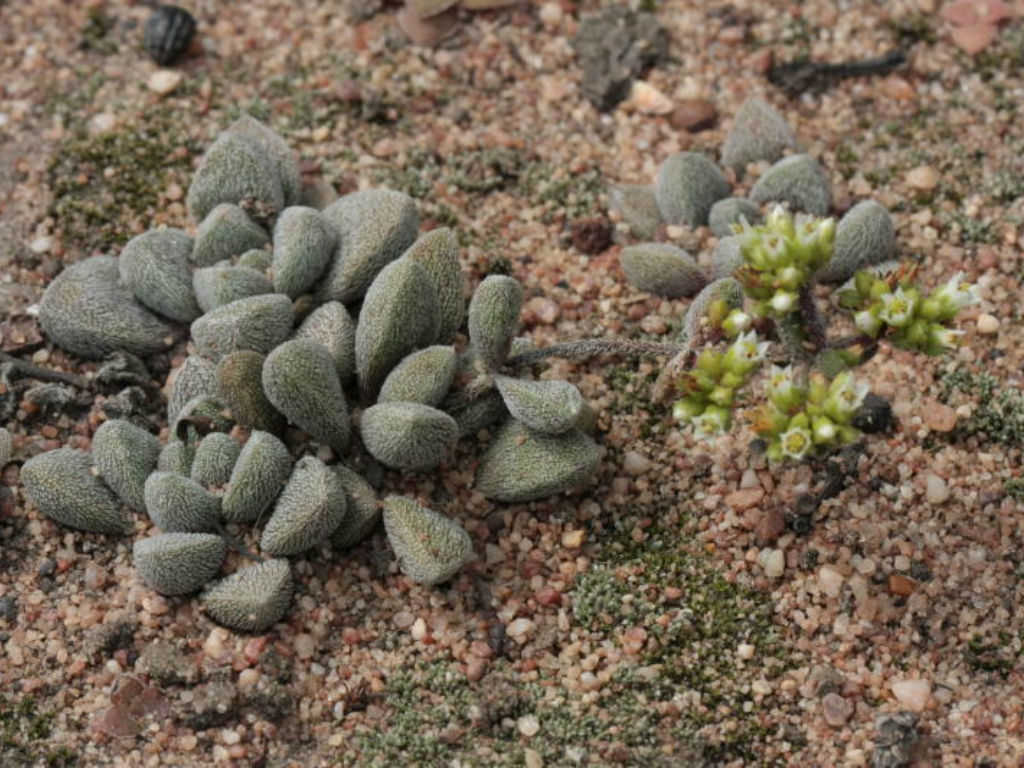
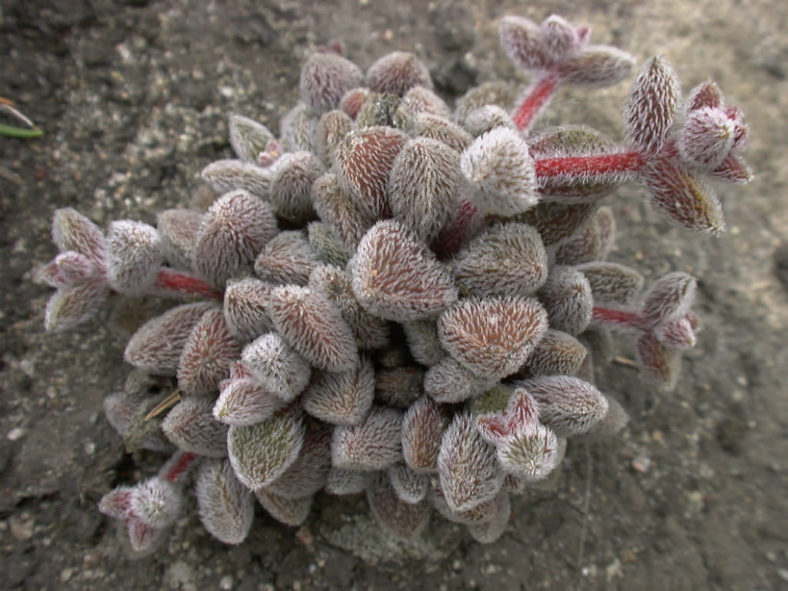
Crassula obovata var. dregeana is a succulent with erect or decumbent stems and fleshy leaves densely covered with recurved hairs that are swollen towards the base and usually branched into a second point. The stems can grow to 12 inches (30 cm) long and are often woody at the base. The leaves are 4-ranked, obovate to almost spathulate, and they are arranged in rosettes when young.
The inflorescence is a round to flat-topped terminal dichasium with usually 4 to 8 tubular flowers clustered into a dense head. The flowers have white or cream-colored (rarely pink) petals and bloom from fall to midwinter.
How to Grow and Care for Crassula obovata var. dregeana
Hardiness: USDA hardiness zone 10a to 11b: from 30°F (-1.1°C) to 50°F (10°C).
Crassulas are easy to grow but susceptible to mealy bugs and fungal diseases. Overwatering is sure to be fatal, as with all succulents, so err on the side of too dry rather than too wet. Never let your Crassula sit in water. If you water from beneath by letting the plant sit in a saucer of water, ensure to pour off any excess water after a few minutes.
Crassulas are generally started by division, offsets, or leaf cuttings. Plants can be easily propagated from a single leaf: sprout leaves by placing them into a succulent or cacti mix, then covering the dish until they sprout.
Repot as needed, preferably during the warm season. To repot a succulent, ensure the soil is dry, then gently remove the pot. Knock away the old soil from the roots, removing any rotted or dead roots. Treat any cuts with a fungicide. Place the plant in its new pot and backfill it with potting soil, spreading the roots out as you repot. Leave the plant dry for a week or so, then begin to water lightly to reduce the risk of root rot.
See more at How to Grow and Care for Crassula.
Links
- Back to genus Crassula
- Succupedia: Browse succulents by Scientific Name, Common Name, Genus, Family, USDA Hardiness Zone, Origin, or cacti by Genus
Photo Gallery
Click on a photo to see a larger version.