Scientific Name
Cheiridopsis purpurea L.Bolus
Synonym(s)
Cheiridopsis splendens
Scientific Classification
Family: Aizoaceae
Subfamily: Ruschioideae
Tribe: Ruschieae
Genus: Cheiridopsis
Etymology
The specific epithet "purpurea" (pronounced "pur-PUR-ee-uh") means "purple, including reddish, violet, and brownish" and refers to the color of the flowers of this species.
Origin
Cheiridopsis purpurea is native to South Africa. It occurs on quartzite outcrops or flats from Karrachab to Maerfontein in the Northern Cape.
Description
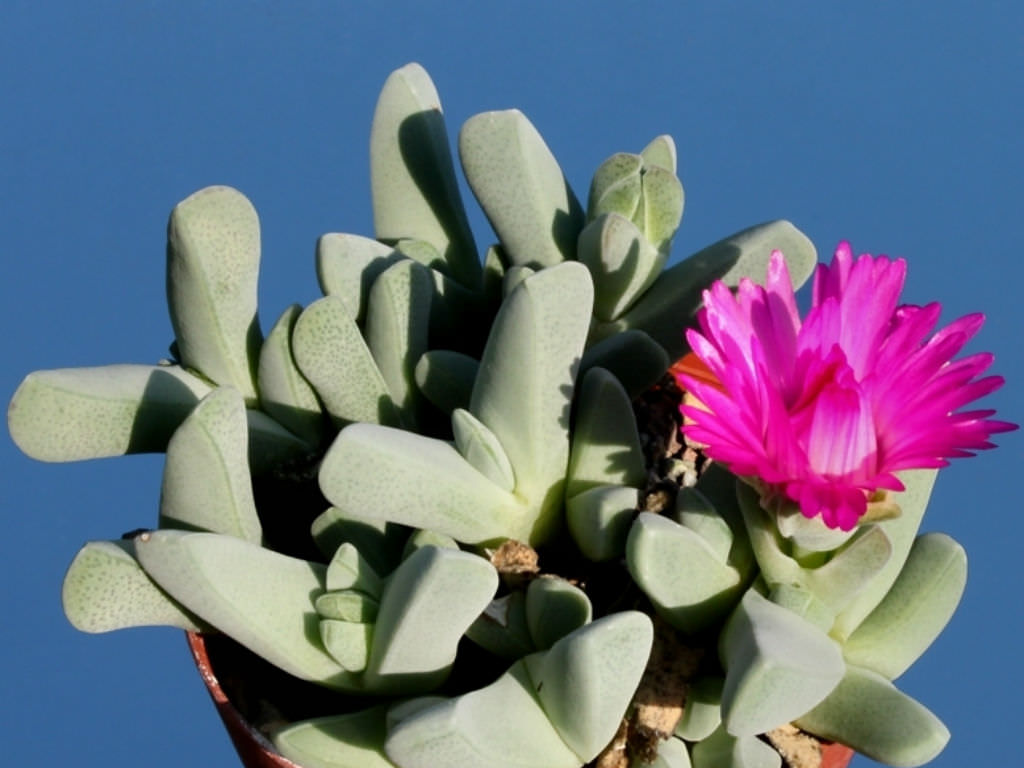
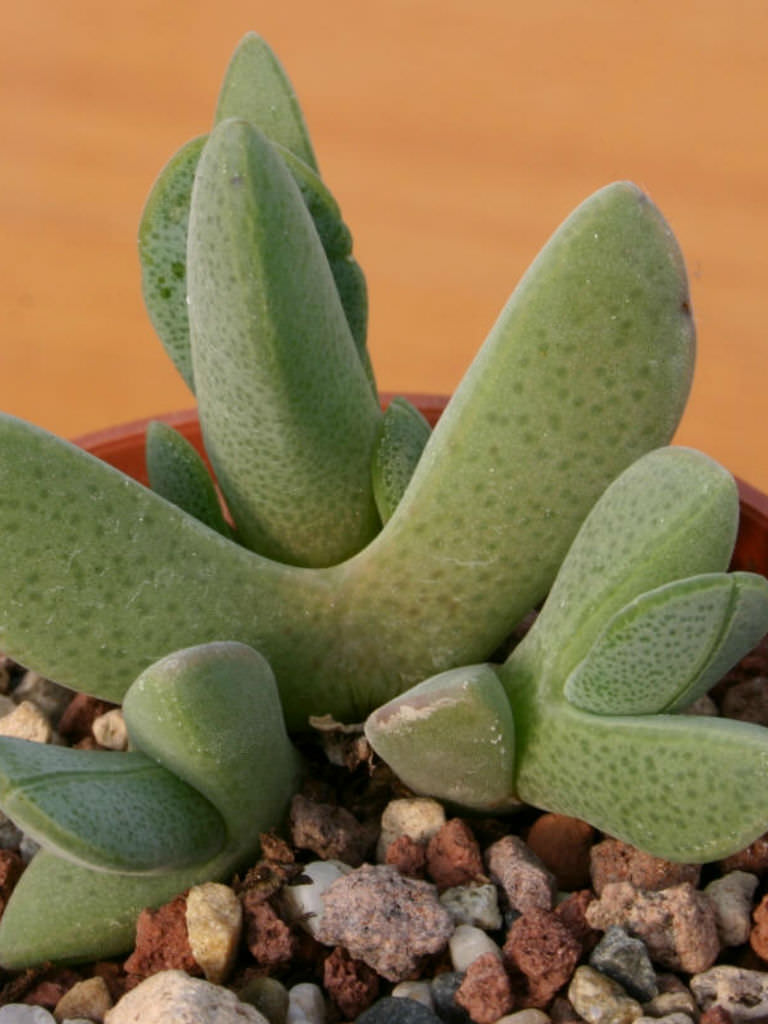
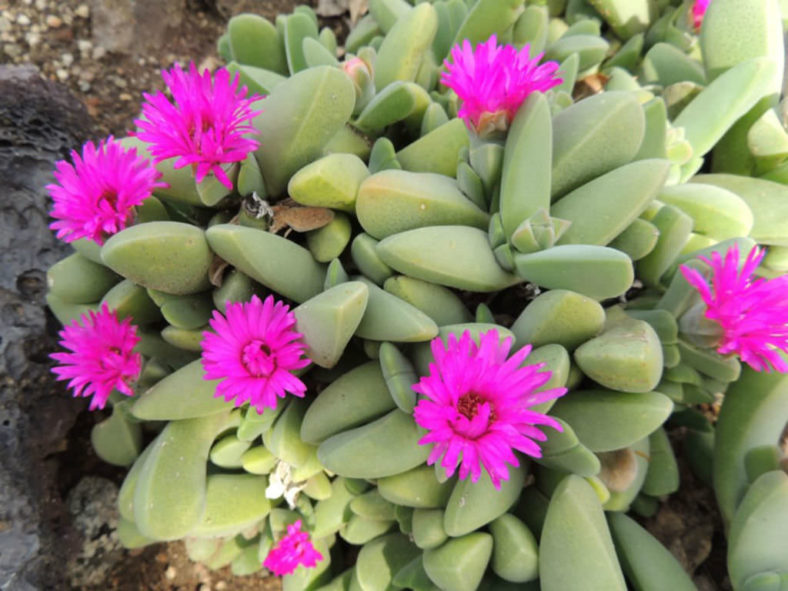
Cheiridopsis purpurea is a small, clump-forming succulent with leaves arranged in one or two (sometimes three in cultivation) pairs per branch. It can grow up to 4.8 inches (12 cm) tall and 16 inches (40 cm) in diameter, often becoming raggedly stemmed with age. The leaves are triangular and keeled, sometimes with teeth along the keel, joined when young, separated as they mature, and can measure up to 2 inches (5 cm) long. They are pale grey-green and slightly spotted. The old leaves persist, forming corky brown sheaths that protect the new growth.
The showy flowers are solitary, brilliant magenta, and appear in winter. They can reach a diameter of 1.6 inches (4 cm), open around midday, and close at sunset. The fruits are 10-locular, globose capsules.
How to Grow and Care for Cheiridopsis purpurea
Hardiness: USDA hardiness zones 9b to 11b: from 25°F (-3.9°C) to 50°F (10°C).
The basics of Mesemb care are very simple, with free-draining soil, plenty of sun and ventilation, and regular light watering in the right season. Yet the difficulties are endless, trying to adapt to the Mesembs' adaptability and follow their growth habits in your particular conditions.
Mesembs require a loam-based compost with extra drainage material such as horticultural grit or perlite. They all like good light conditions and plenty of ventilation.
Some are relatively cold-hardy and can even survive mild winters outside. Most will survive temperatures down to the freezing point. Some Mesembs begin to grow in the autumn as temperatures drop and days get shorter.
Because different genera within the Mesemb family have different growing conditions, care must be taken with watering. Some genera will benefit from a light spray of water to prevent shriveling during their dormant period.
See more at How to Grow and Care for Mesembs.
Links
- Back to genus Cheiridopsis
- Succupedia: Browse succulents by Scientific Name, Common Name, Genus, Family, USDA Hardiness Zone, Origin, or cacti by Genus
Photo Gallery
Click on a photo to see a larger version.