Scientific Name
Ceropegia linearis E. Mey.
Common Name(s)
String of Needles
Scientific Classification
Family: Apocynaceae
Subfamily: Asclepiadoideae
Tribe: Ceropegieae
Genus: Ceropegia
Etymology
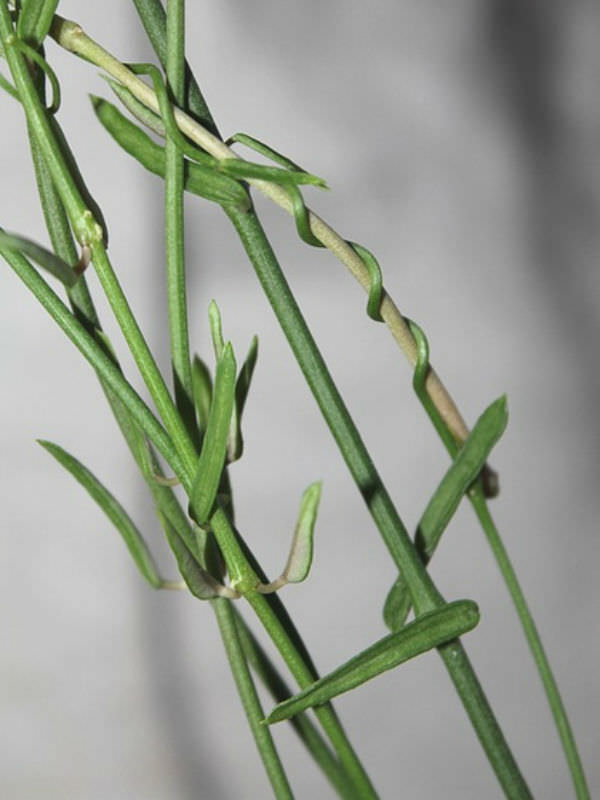
The specific epithet "linearis" (pronounced "lin-AIR-iss") means "linear; long and narrow, with nearly parallel sides" and refers to the leaves of this species, which are typically narrow to linear in the upper part of the stems.
Origin
Ceropegia linearis is native to South Africa.
Description
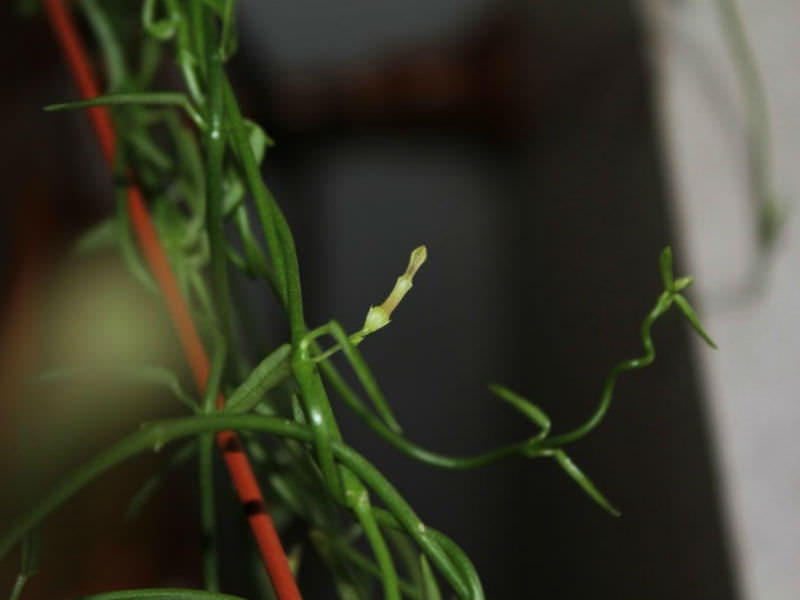
Ceropegia linearis is a climbing semi-succulent plant that produces a cluster of slender stems from a tuberous rootstock. The tuber can reach a diameter of 1.2 inches (3 cm), while the stems, which can be annual or perennial, can grow up to 6.6 feet (2 m) long. The leaves are green, glabrous, somewhat fleshy, shortly petiolate, measuring up to 2 inches (5 cm) long and about 0.25 inches (0.6 cm) wide. The leaves are ovate-lanceolate at the base of the stems and become narrower and more linear higher up, although broader forms have also been recorded.
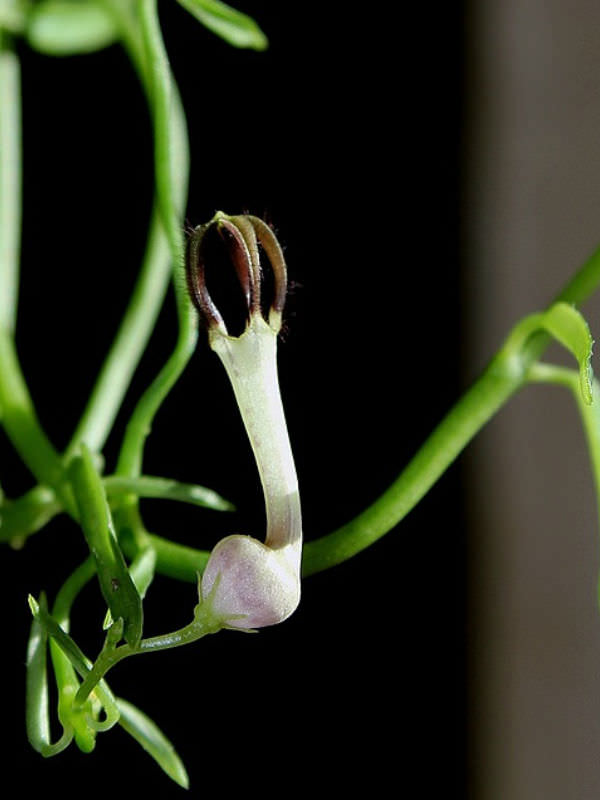
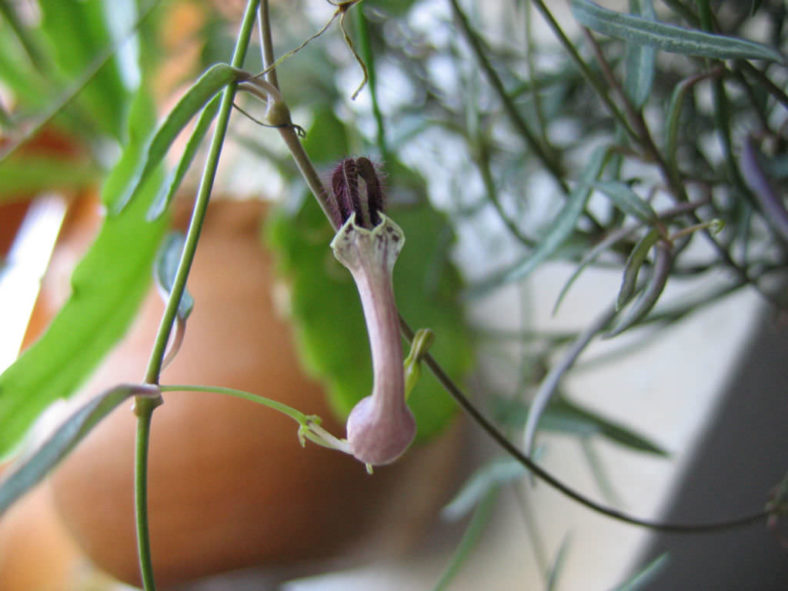
The flowers are white to pale magenta and usually appear from late summer to early fall, lasting up to 6 weeks. They can reach up to 1.2 inches (3 cm) in length.
Subspecies of Ceropegia linearis
- Ceropegia linearis subsp. linearis
- Ceropegia linearis subsp. tenuis
How to Grow and Care for Ceropegia linearis
Hardiness: USDA hardiness zones 11a to 11b: from 40°F (4.4°C) to 50°F (10°C).
A gritty compost is suitable, and clay pots help with drainage, especially for species with white, thickened roots and species that form large tubers. Ceropegias appreciate water and a little fertilizer during warm weather, although some watering care is required for the more delicate species. The vine-like species can suffer from prolonged drought.
Typically, many of these species grow and climb naturally among bushes, which provide shade and moisture at the base, while their vegetative growth is in the light. Where tubers occur, they are best planted on the surface of the compost, and the vegetative growth allows them to twine around supports or trail down from a hanging pot. The latter mode of growth has the advantage of not using valuable bench space. Small tubers formed at joints in the thin stems of some species can be used for propagation. If the tuber rots or dries out, don't panic. As long as some of the top growth is still in reasonable condition, it may be possible to save the plant by re-rooting stems in damp gravel.
Learn more in "How to Grow and Care for Ceropegia."
Links
- Back to genus Ceropegia
- Succupedia: Browse succulents by Scientific Name, Common Name, Genus, Family, USDA Hardiness Zone, Origin, or cacti by Genus
Photo Gallery
Click on a photo to see a larger version.