

Cakile edentula, commonly known as American Searocket, is a succulent plant native to the coastal dunes and beaches of North America. It is a source of potassium, calcium, various B vitamins, beta-carotene, and fiber. While the leaves and young stems are edible, it is advisable to cook them before consumption and to avoid eating them in large quantities. The roots are dried, ground into a powder, and mixed with cereal flour to make bread.
Taxonomy of Cakile edentula
Scientific Name
Cakile edentula (Bigelow) Hook.
Synonym(s)
Bunias edentula, Cakile edentula var. typica, Cakile lanceolata subsp. edentula, Cakile lanceolata var. edentula
Common Name(s)
American Searocket, Sea Kale, Sea Rocket
Scientific Classification
Family: Brassicaceae
Tribe: Brassiceae
Genus: Cakile
Etymology
The specific epithet "edentula" (pronounced "e-DEN-tuh-luh") means "toothless; without teeth" and refers to the fruit segments of this species, which lack the sharp, tooth-like projections present in related species such as Cakile maritima.
Subspecies and Varieties of Cakile edentula
- Cakile edentula subsp. edentula
- Cakile edentula subsp. harperi
- Cakile edentula var. lacustris
Origin of Cakile edentula
Cakile edentula is native to North America. It grows on the dunes of coastal beaches and shorelines of freshwater lakes from North Carolina to Labrador along the Atlantic coast. This species has also been naturalized in a similar latitudinal range on the Pacific coast and in Australia.
Description of Cakile edentula
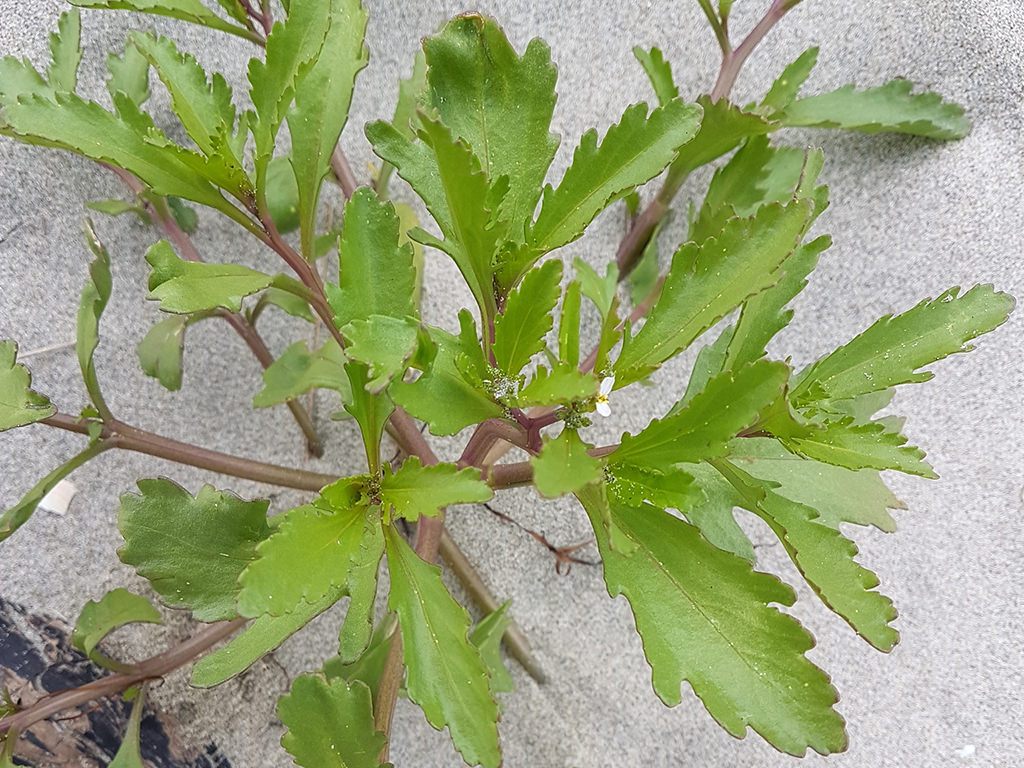
Cakile edentula is an annual succulent with fleshy green leaves that grow alternately on much-branched stems and have various teeth and lobe patterns. It can grow up to 32 inches (80 cm) tall and sometimes grows as a perennial, in which case it is usually compact in form and rarely sprawling. The stems are erect or rarely prostrate. The leaves are spoon-shaped with alternate, rounded notches and lobes. They may have lobes arranged pinnately or be subentire.
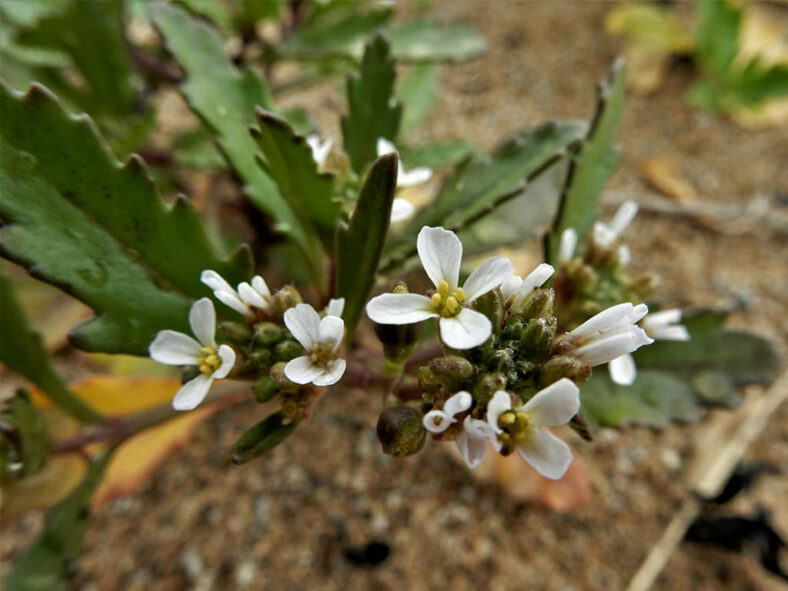
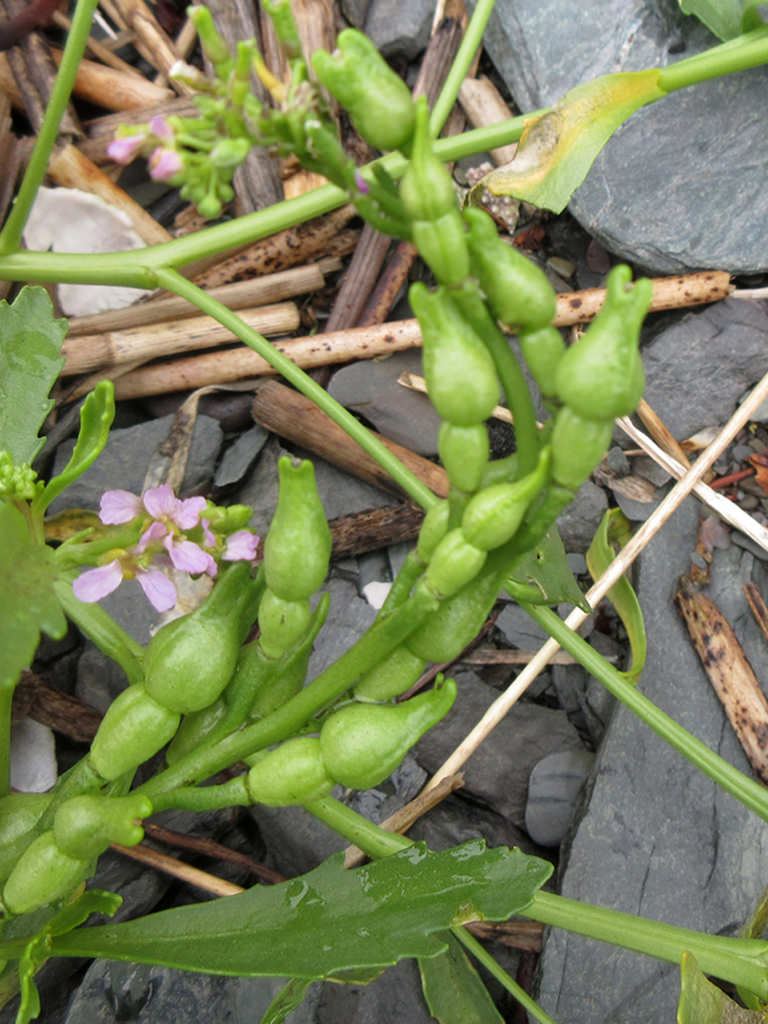
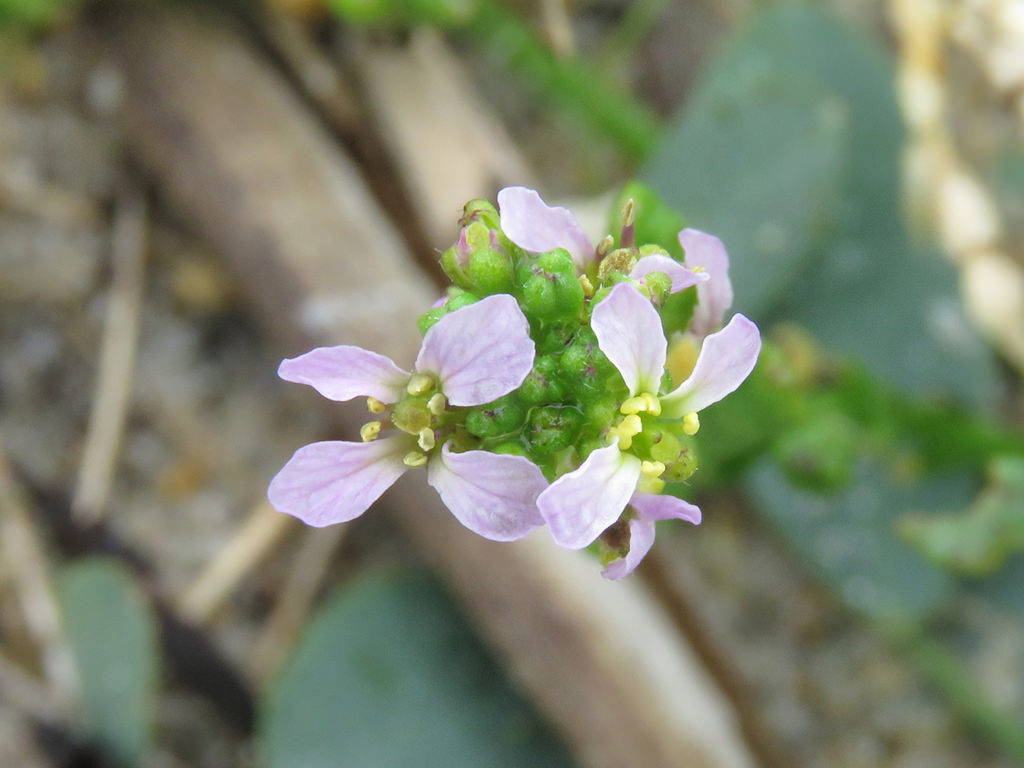
From summer to fall, Cakile edentula produces many-flowered racemes of flowers with white to pale lavender petals and shorter green sepals. The flowers can reach up to 0.4 inches (1 cm) in length. The fruits are green and do not split open when ripe. The lower joint of the fruits can be cylindrical or slightly tapering, measuring up to 0.5 inches (1.2 cm) long. In contrast, the upper joint is 4-angled or obscurely 8-angled, usually spindle-shaped, and always notably larger than the lower, measuring up to 0.6 inches (1.5 cm) long.
How to Grow and Care for Cakile edentula
Cakile edentula grows in sandy soil closer to the ocean than beach grass. As a succulent, it holds water, making it easy to grow.
When growing this plant, do not include it in a vegetable garden. Companions for its cultivation must be of the same family of plants. If Cakile edentula detects roots of other plants close to it, an "allelopathic" action occurs. It releases a substance into the root zone that stunts or otherwise deters other plant types.
Cakile edentula puts a long taproot into the soil and does not like to be moved. Start it from the double-jointed seed pods when they appear on the plant and mature, following the small purple blooms.
Photo Gallery
Click on a photo to see a larger version.
Internal Links
- Explore all plants within the genus Cakile.
- Explore all plants within the family Brassicaceae.