Scientific Name
Aylostera muscula (F.Ritter & P.Thiele) Backeb.
Synonym(s)
Rebutia muscula
Common Name(s)
Orange Snowball, Little Mouse, White-haired Crown
Scientific Classification
Family: Cactaceae
Subfamily: Cactoideae
Tribe: Trichocereeae
Genus: Aylostera
Etymology
The specific epithet "muscula" (pronounced "klav-ih-FOH-lee-us") means "little mouse" and refers to the small, cute, fuzzy, mouse-like stems of this species.
Origin
Aylostera muscula are native to Bolivia (Narvaez, Tarija).
Description
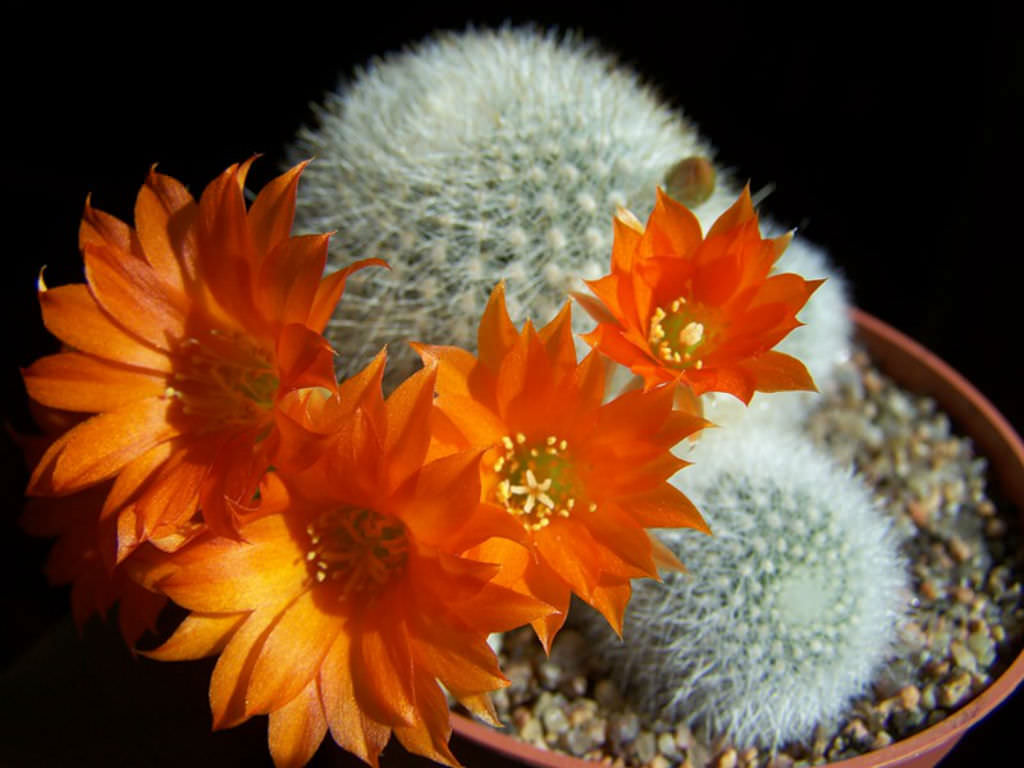
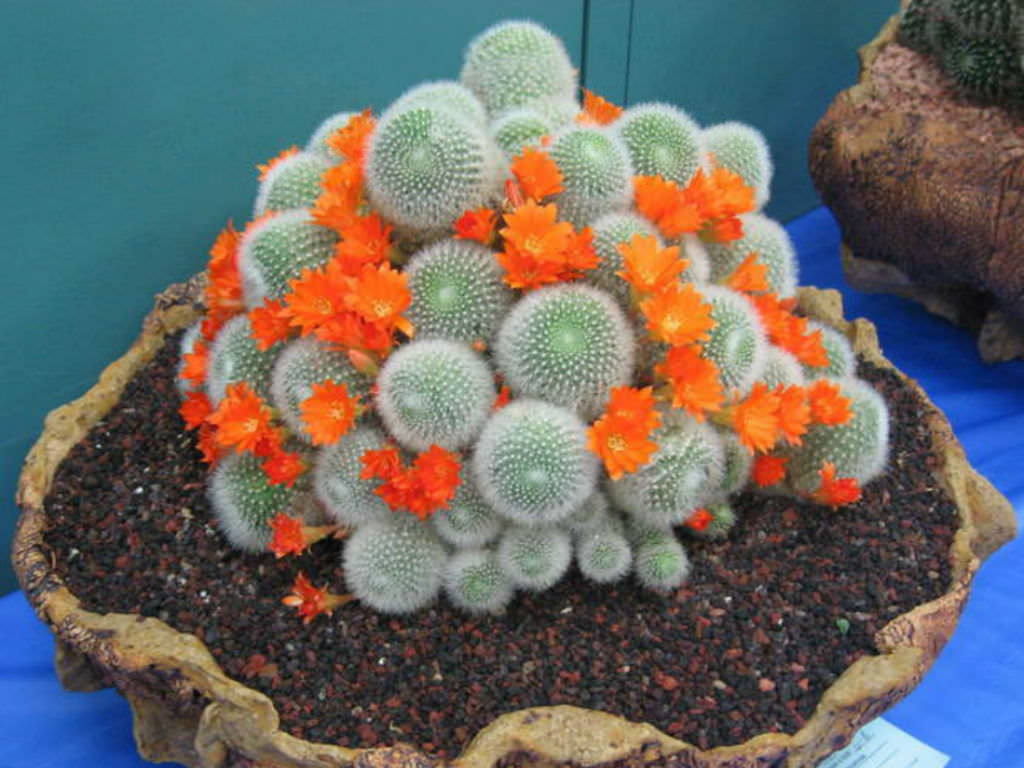
Aylostera muscula, formerly known as Rebutia muscula, is a small cactus that grows quite close to the ground and produces offsets with age, spreading up to 6 inches (15 cm) in diameter. The stems are pale green, at first spherical, later becoming elongated. They can reach up to 1.6 inches (4 cm) in diameter and usually grow taller than they are wide. In cultivation, they grow larger and cluster more vigorously than in the habitat.
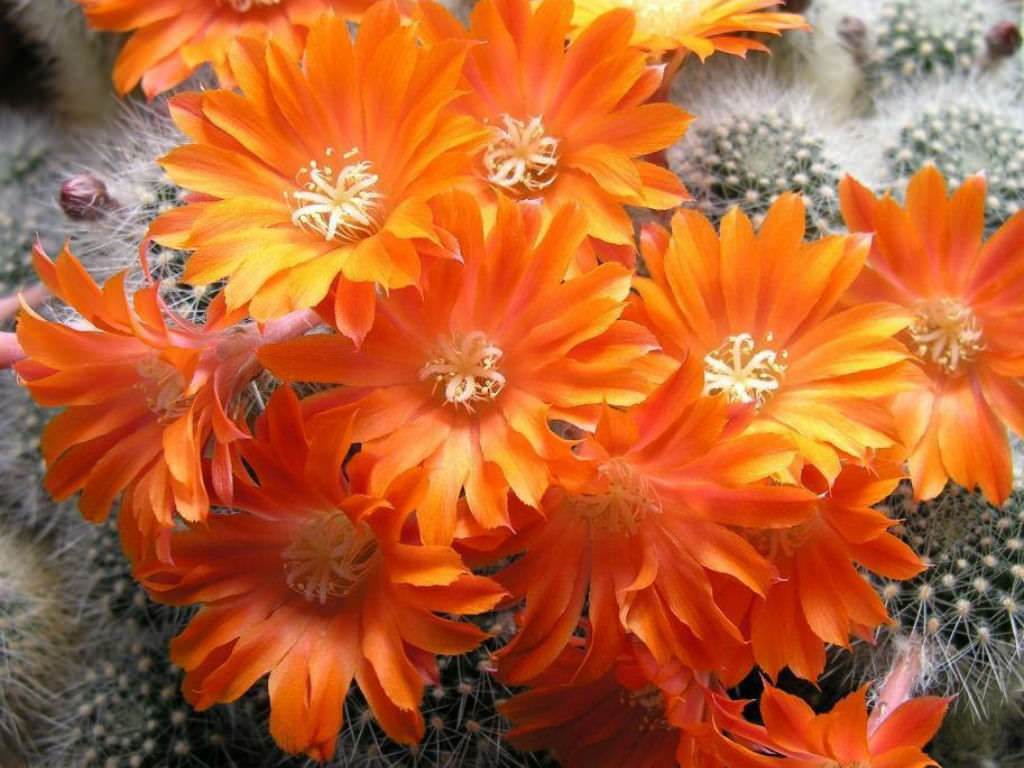
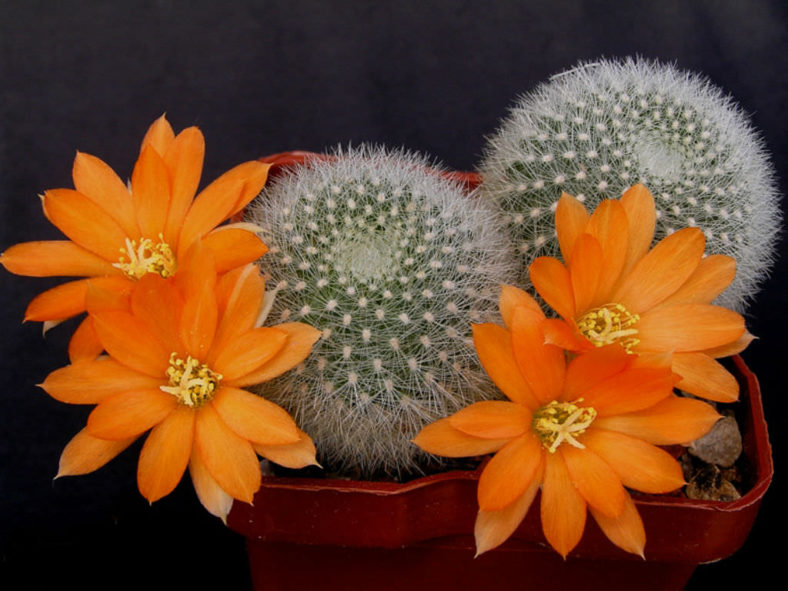
The deep orange, funnel-shaped flowers appear at the base of the stems. They can grow up to 1.4 inches (3.5 cm) long and 1.2 inches (3 cm) in diameter.
How to Grow and Care for Aylostera muscula
Hardiness: USDA hardiness zones 9b to 11b: from 25°F (-3.9°C) to 50°F (10°C).
If you can grow cacti and succulents successfully, you can likely grow the popular Rebutias without too much trouble. Their water and light requirements are pretty typical for many cacti species, including a winter cooling period to promote better blooming. Watering should be done carefully, allowing the plant to almost dry out between waterings. The cactus mustn't be exposed to prolonged dampness and standing water. Never let your cactus sit in a dish of water. Instead of propagating your offsets, let the plant form a large cluster for the best viewing. When it blooms, this will make a stunning display. Lastly, ensure fertilizer during the growing season for the best results.
Repot as needed, preferably during the warm season. To repot your Rebutia, ensure the soil is dry before repotting, then gently remove the pot. Knock away the old soil from the roots, removing any rotted or dead roots. Treat any cuts with a fungicide. Place the plant in its new pot and backfill it with potting soil, spreading the roots as you repot. Leave the plant dry for a week or so, then begin to water lightly to reduce the risk of root rot.
Learn more in "How to Grow and Care for Rebutia."
Links
- Back to genus Aylostera
- Succupedia: Browse succulents by Scientific Name, Common Name, Genus, Family, USDA Hardiness Zone, Origin, or cacti by Genus
Photo Gallery