Scientific Name
Apteranthes europaea (Guss.) Murb.
Synonym(s)
Boucerosia europaea, Caralluma europaea, Ceropegia europaea, Desmidorchis europaea, Stapelia europaea
Scientific Classification
Family: Apocynaceae
Subfamily: Asclepiadoideae
Tribe: Ceropegieae
Subtribe: Stapeliinae
Genus: Caralluma
Etymology
The specific epithet "europaea" (pronounced "yoo-ROH-pay-a") means "European; of or belonging to Europe." It refers to the continent where this species was first discovered by the Italian botanist Giovanni Gussone in 1828, specifically, the Italian island of Lampedusa in the Mediterranean Sea.
Origin
Apteranthes europaea is native to south-eastern Spain, southern Italy, Morocco, Tunisia, Libya, Egypt, and Jordan.
Description
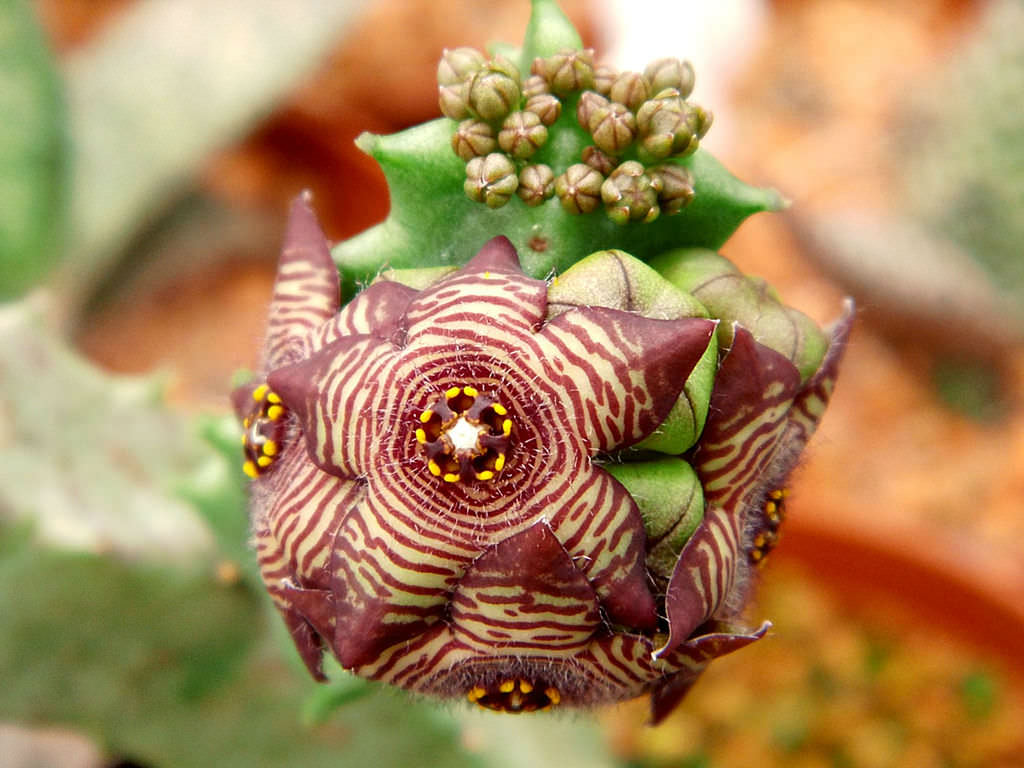
Apteranthes europaea, formerly known as Caralluma europaea, is a low-growing succulent with ascending or sprawling green or purplish-brown stems with toothed or lobed angles. The stems are 4-angled and can grow up to 8 inches (20 cm) long and 0.8 inches (2 cm) thick.
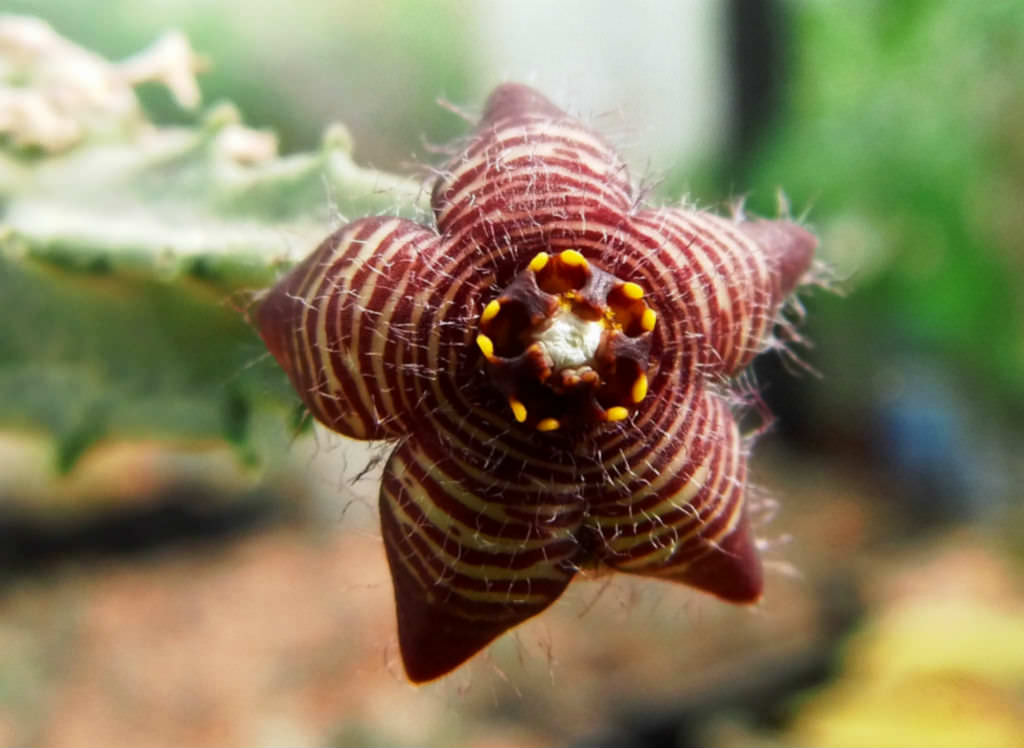
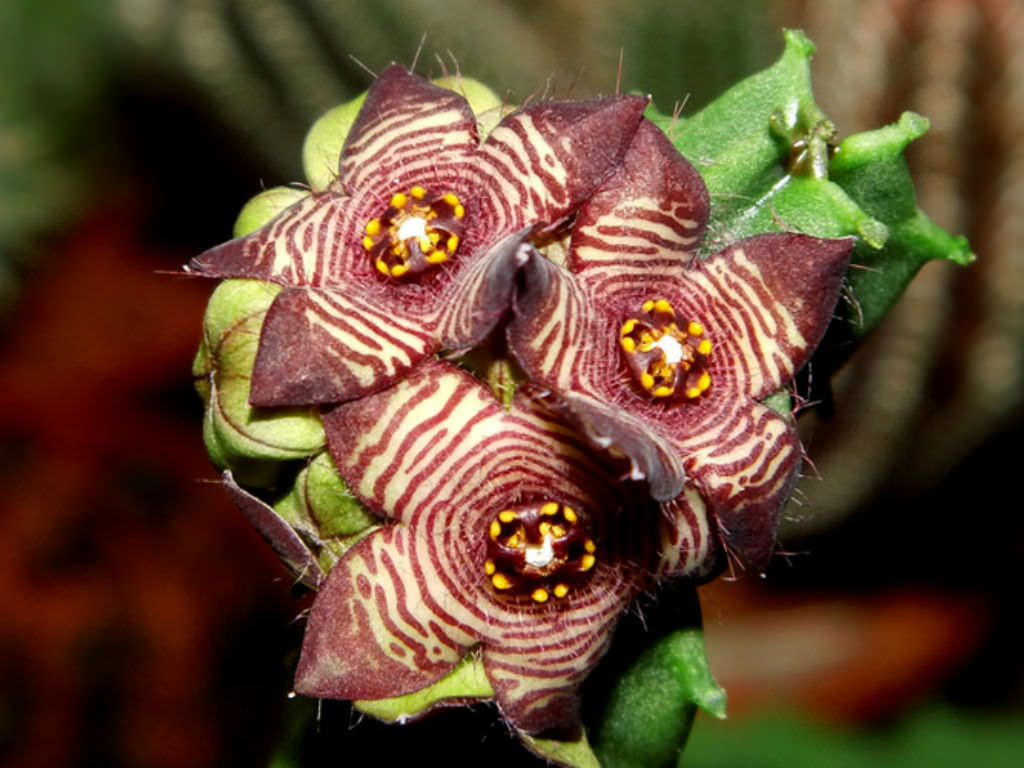
The flowers are variably hairy, dirty white or yellowish, with reddish-brown or purplish bands, or entirely purplish. They can reach a diameter of 1 inch (2.5 cm).
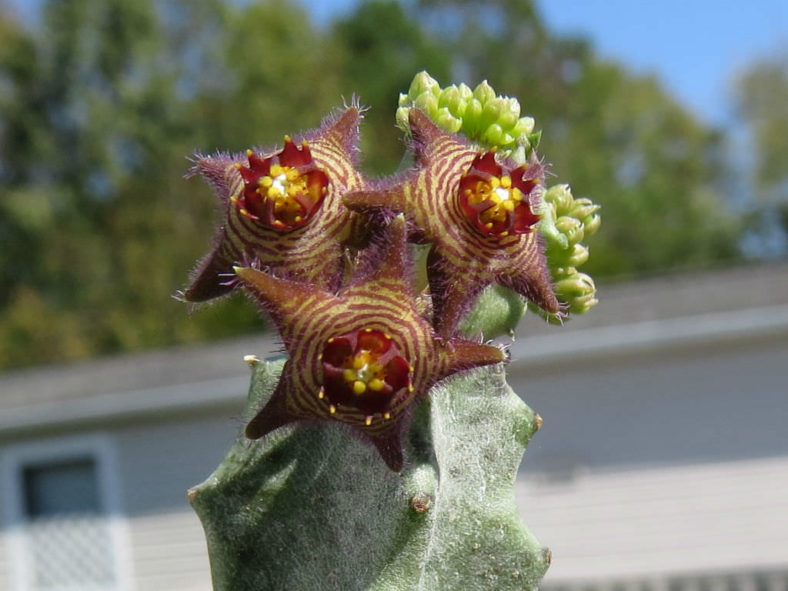
Subspecies and Varieties of Apteranthes europaea
- Apteranthes europaea subsp. europaea
- Apteranthes europaea var. judaica
- Apteranthes europaea subsp. maroccana
How to Grow and Care for Apteranthes europaea
Hardiness: USDA hardiness zone 10a to 11b: from 30°F (-1.1°C) to 50°F (10°C).
Stapeliads are relatively easy to grow. However, they should be treated as outdoor plants as they will easily rot indoors and cannot flower without exposure to outdoor temperature fluctuations. They should be grown under cover so that watering can be controlled. They require a reasonable amount of sunlight to promote flowering and maintain a well-shaped plant. Very shady positions will produce very poor flowering. Stapeliads come from climates where they survive extremely high temperatures in the summer months, so most growth is in spring and autumn, with flowering in autumn when the weather starts to cool down.
The easiest and best way to propagate Stapeliads is from stem cuttings, which can be taken year-round. Seed is also a method of propagation. They all need extra good drainage. Stapeliads are shallow-rooted, and a collection of them can be planted up nicely in a wide, shallow bowl. When planting, it is a good idea to bury the roots in soil and then place pure gravel or sand around the base of the plant to prevent rot.
See more at How to Grow and Care for Stapeliads.
Links
- Back to genus Caralluma
- Succupedia: Browse succulents by Scientific Name, Common Name, Genus, Family, USDA Hardiness Zone, Origin, or cacti by Genus
Photo Gallery
Click on a photo to see a larger version.