Scientific Name
Albuca bracteata (Thunb.) J.C.Manning & Goldblatt
Synonym(s)
Fenelonia bracteata, Ornithogalum bracteatum
Common Name(s)
False Sea Onion, Pregnant Onion, Sea Onion
Scientific Classification
Family: Asparagaceae
Subfamily: Scilloideae
Genus: Albuca
Etymology
The specific epithet "bracteata" (pronounced "brak-tee-AY-tuh") means "bracteate; having bracts" and refers to the bracts in the inflorescence of this species, which are longer than the flowers.
Description of Albuca bracteata
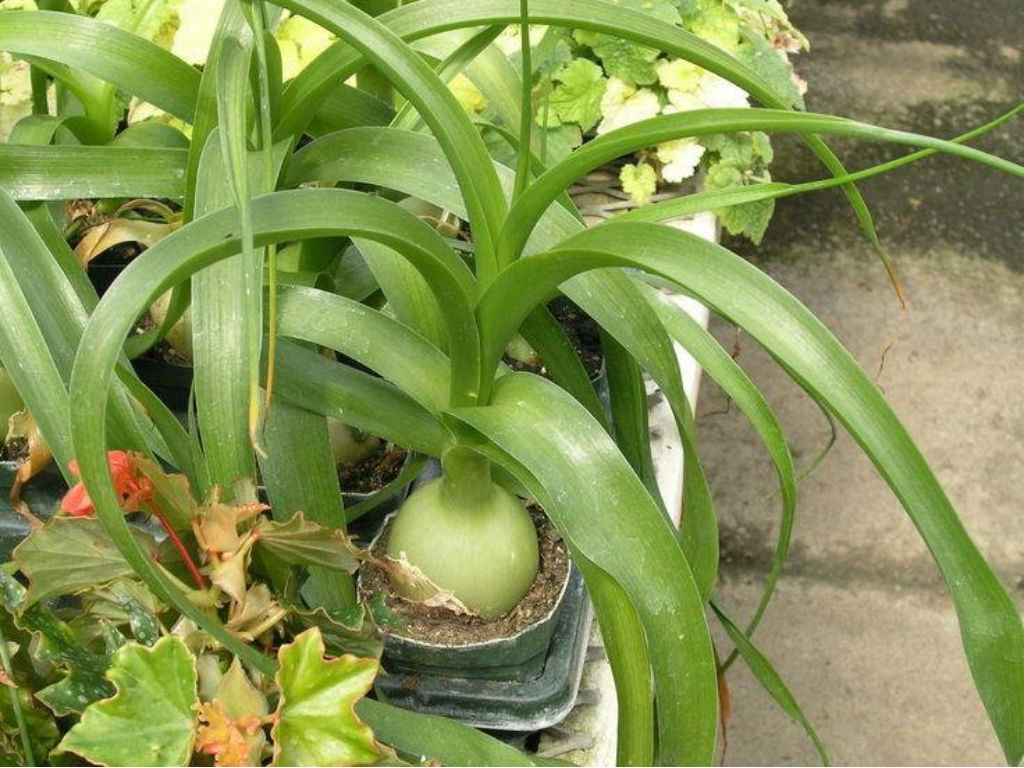
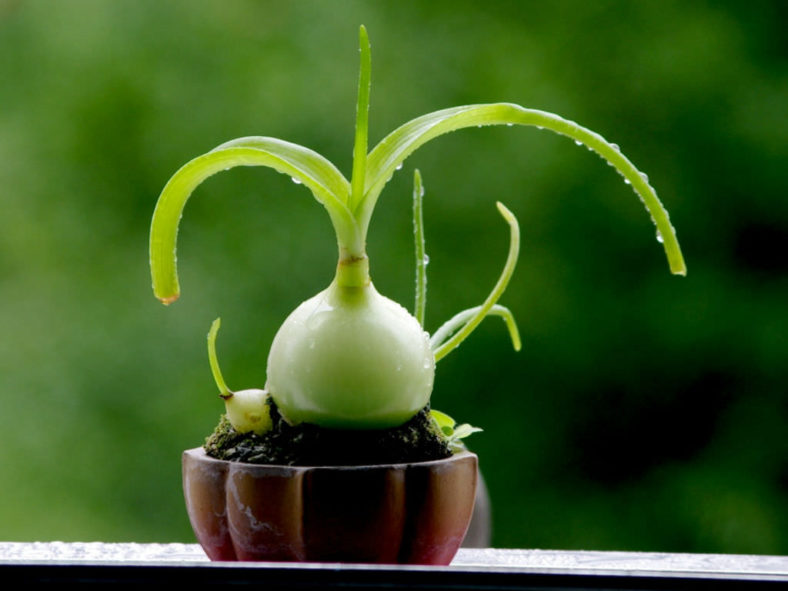
Albuca bracteata, also known as Ornithogalum caudatum, is a bulbous geophyte that can be planted with the top of the bulb above ground, exposing the adventitious bulblets produced on the outermost scale throughout the year. It also produces drooping green leaves. The bulb is smooth, globose to ovoid, and can reach a diameter of 4 inches (10 cm), resembling an onion. The leaves are semi-succulent and can grow up to 3.3 feet (100 cm) long and 2 inches (5 cm) wide.
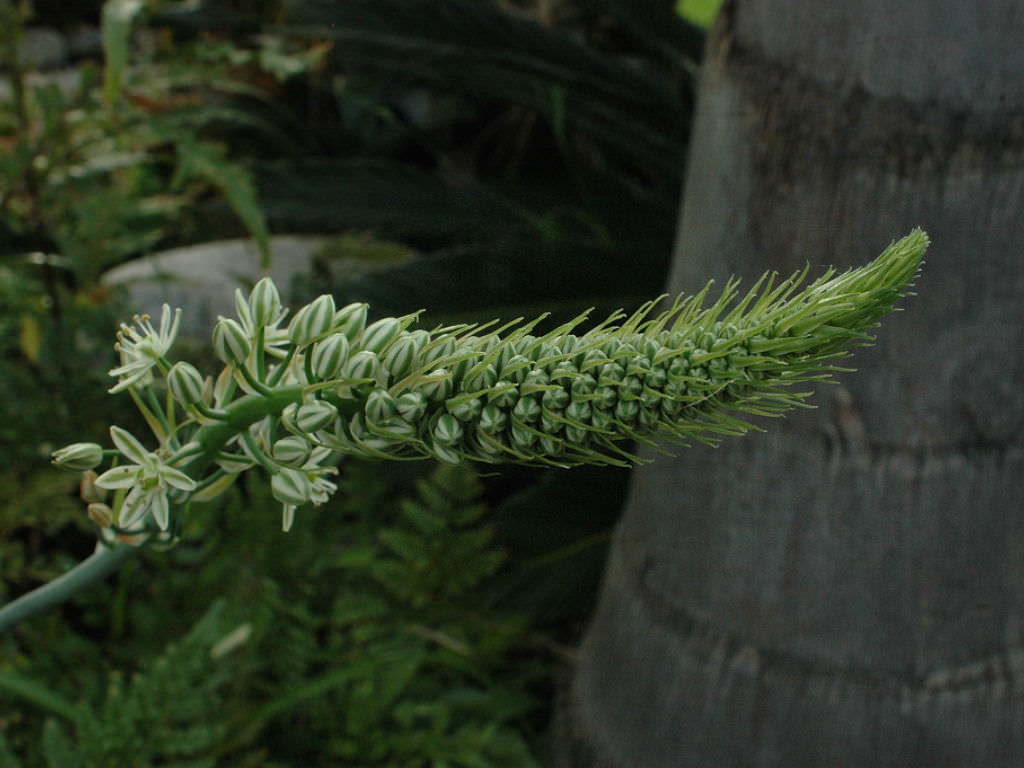
The white flowers with a broad, green central band appear in a dense raceme in spring and summer. The fruits are globose to ovate and can measure up to 0.4 inches (1 cm) in length and 0.25 inches (0.6 cm) in diameter.
Origin of Albuca bracteata
Albuca bracteata is native to South Africa (Western Cape, Eastern Cape, and KwaZulu-Natal). It occurs in forests, forest margins, closed woodland, and sheltered slopes.
How to Grow and Care for Albuca bracteata
Hardiness: USDA hardiness zones 9a to 11b: from 20°F (-6.7°C) to 50°F (10°C).
Albucas require sandy, loose soil in full to partial sun to produce their characteristic blooms. The plants can grow 3 to 4 feet (90 to 120 cm) tall with a slightly smaller width. Good cultivation encourages removing the bulb from the outdoors in frost-prone zones. They are not frost-hardy, and cold temperatures can damage the bulbs.
These South African natives look particularly attractive in rock gardens, slopes, and containers. The most important requirement for Albuca care is excellent drainage. The regions to which they are native are not known for consistent moisture, which means they are drought-tolerant once established. Consistent watering at planting is necessary to mimic the rainy season, but after that, light watering is essential when caring for Albuca.
Fertilize Albucas annually at installation and in the early spring with good all-purpose bulb food. Cut back spent foliage after it has yellowed and begun to wilt.
Learn more in "How to Grow and Care for Albuca."
Links
- Back to genus Albuca
- Succupedia: Browse succulents by Scientific Name, Common Name, Genus, Family, USDA Hardiness Zone, Origin, or cacti by Genus
Photo Gallery
Click on a photo to see a larger version.