Scientific Name
Adenia stylosa (Perr.) Hearn
Synonym(s)
Adenia epigea var. stylosa, Adenia firingalavensis var. stylosa
Common Name(s)
Candlestick Plant, Purple Vine of Evil
Scientific Classification
Family: Passifloraceae
Subfamily: Passifloroideae
Tribe: Passifloreae
Genus: Adenia
Etymology
The specific epithet "stylosa" (pronounced "sty-LOH-suh") means "having the form of a stylus or pencil" and refers to the long, slender style of the female (pistillate) flowers of this species.
Origin
This species is endemic to northern Madagascar. It occurs in Ankarana National Park, in dry forests, with stems climbing high into the surrounding vegetation.
Description
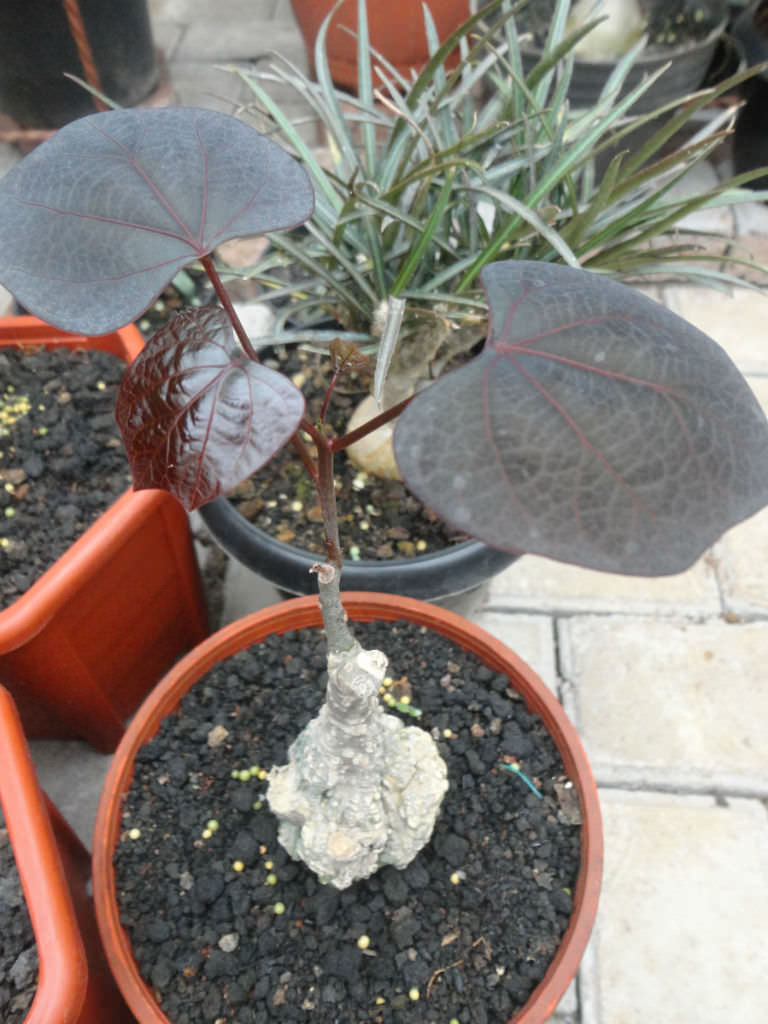
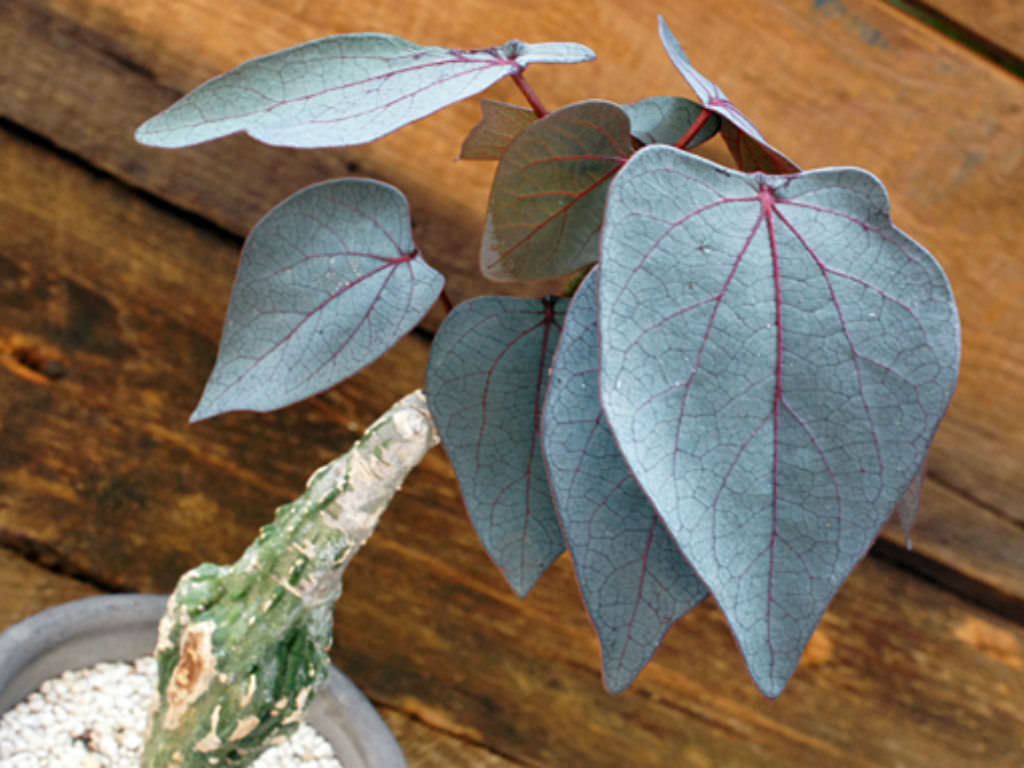
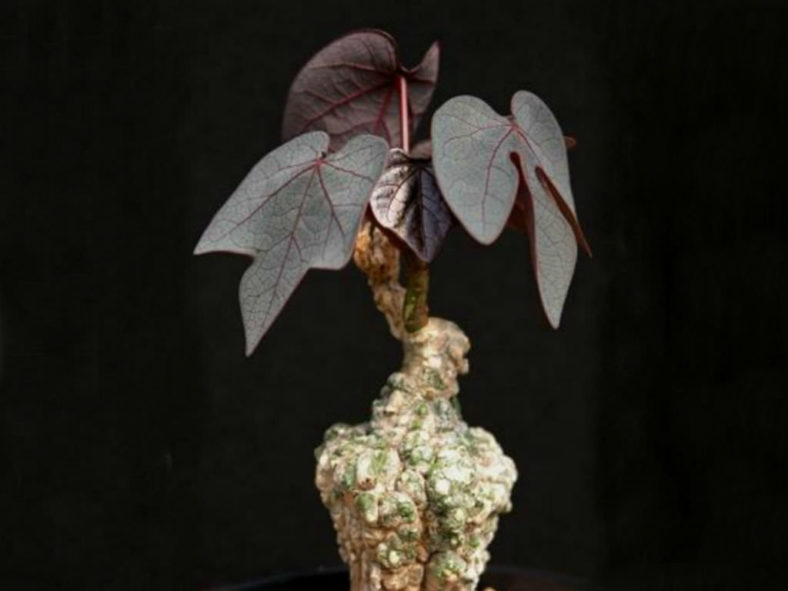
Adenia stylosa is an impressive pachycaul shrub or liana with fleshy, vine-like branches that grow from a caudex with a metallic green sheen. The caudex looks like wax dripping from a candle onto the candlestick, hence the common name. It can reach up to 6.7 feet (2 m) tall but usually grows less than 20 inches (50 cm) in height and up to 12 inches (30 cm) in diameter. The leaves are variable in shape and color but are usually heart-shaped and purple-violet to dark green with dark red veins.
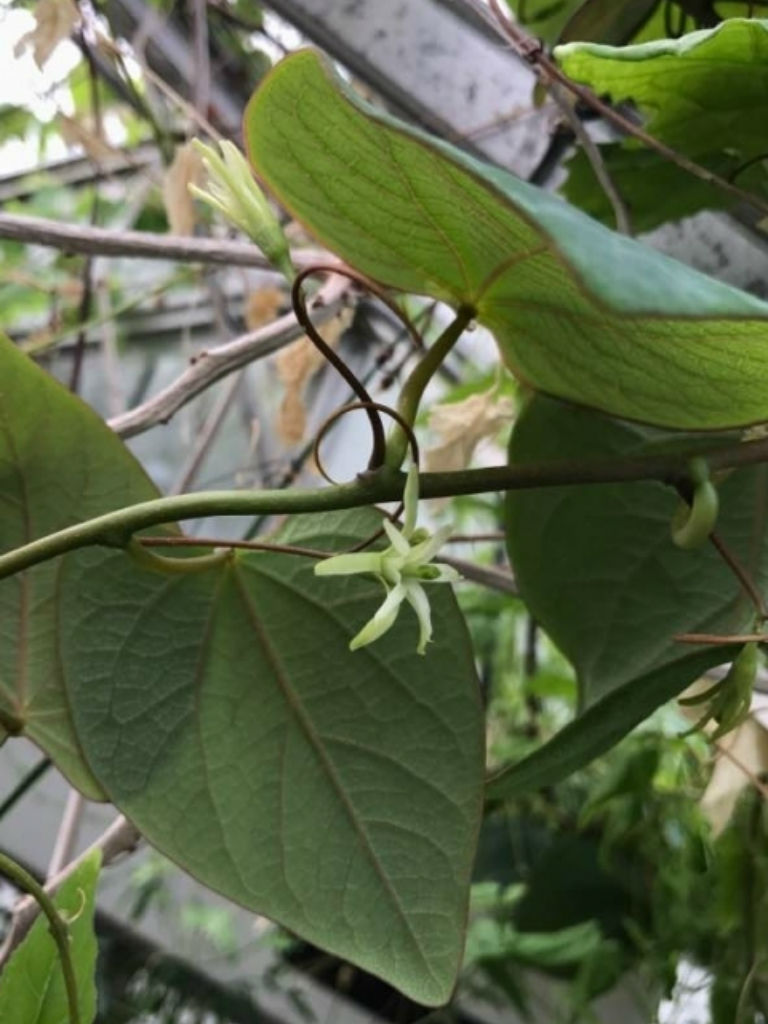
The small flowers are pale yellow or greenish-white and appear in spring and summer. Male and female flowers occur on separate plants.
How to Grow and Care for Adenia stylosa
Hardiness: USDA hardiness zone 11a to 11b: from 40°F (4.4°C) to 50°F (10°C).
Adenia plants are summer growers and can be watered and feed regularly if planted in fast-draining soil. Let the soil dry between watering if you are in a humid climate.
Most of your growth will be during the warm season, and the plant will have the most leaves. The plant will also grow best when the leaves are exposed to bright light, and the caudex is shaded.
Protect the plant from frost during the cool months to keep it alive. The plant rests typically during this period, and water should be kept to a minimum. However, you can keep the plant active above 50 degrees Fahrenheit (10 degrees Celsius).
Their sap is poisonous and should be handled cautiously, particularly when pruning.
Most cuttings do not produce a caudex, so it is best to propagate by seeds. Adenias are either male or female, so one of each is required to produce seeds.
See more at How to Grow and Care for Adenia.
Links
- Back to genus Adenia
- Succupedia: Browse succulents by Scientific Name, Common Name, Genus, Family, USDA Hardiness Zone, Origin, or cacti by Genus
Photo Gallery
Click on a photo to see a larger version.