Scientific Name
Tephrocactus articulatus var. diadematus (Lem.) Backeb.
Accepted Scientific Name
Tephrocactus articulatus (Otto) Backeb.
Synonym(s)
Opuntia diademata, Tephrocactus diademata
Common Name(s)
Spruce Cone Cholla, Spruce Cone Cactus, Pine Cone Cactus
Scientific Classification
Family: Cactaceae
Subfamily: Opuntioideae
Tribe: Tephrocacteae
Genus: Tephrocactus
Etymology
The specific epithet "articulatus" (pronounced "ar-tik-oo-LAH-tus") means "articulated; jointed" and refers to the appearance of the attachment points of the stem segments of this species.
The specific epithet "diadematus" (pronounced "dee-ah-deh-MAH-tus") means "diademed; wearing a diadem" and refers to the crown-like arrangement of spines at the top of the stem segments.
Description
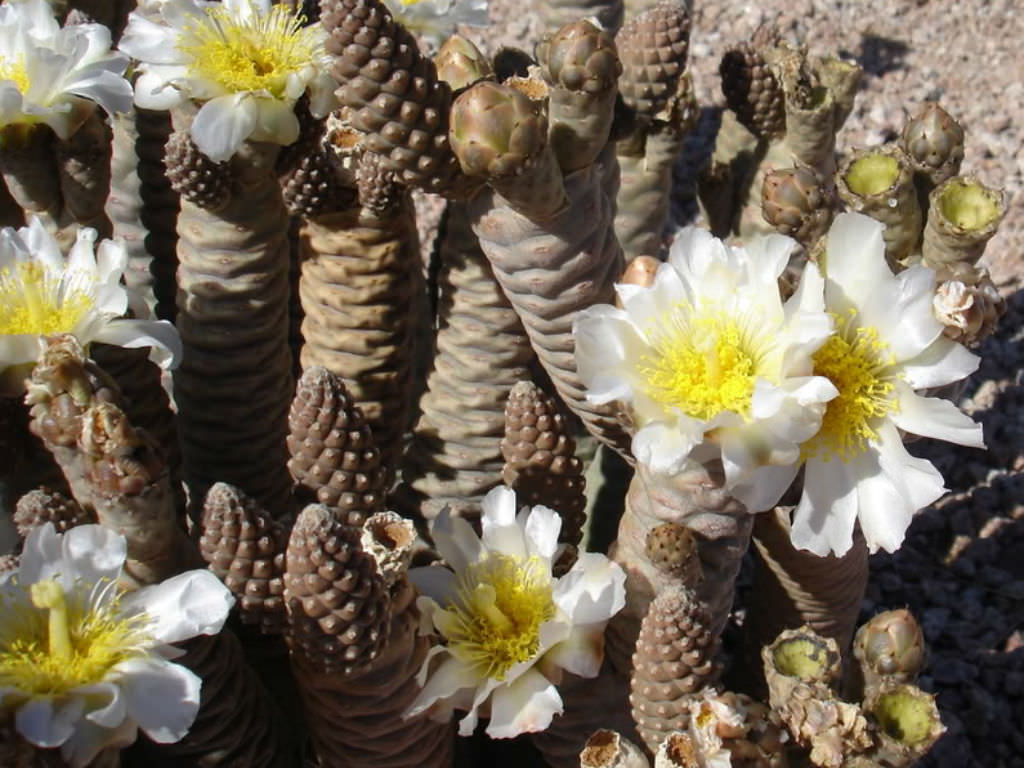
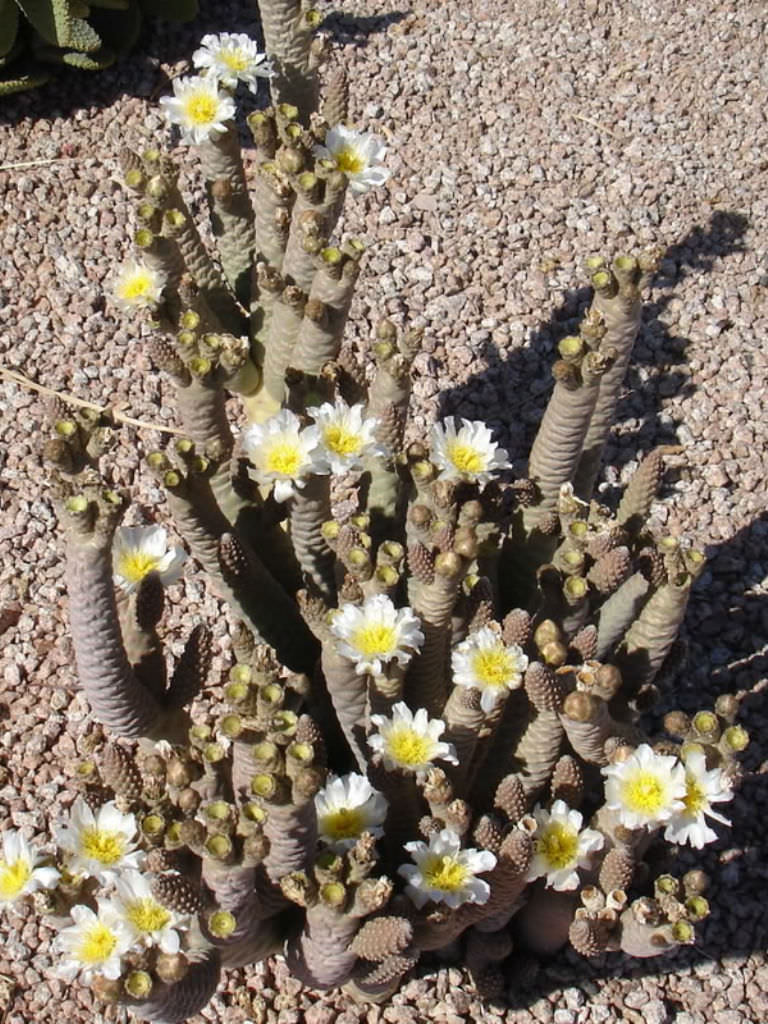
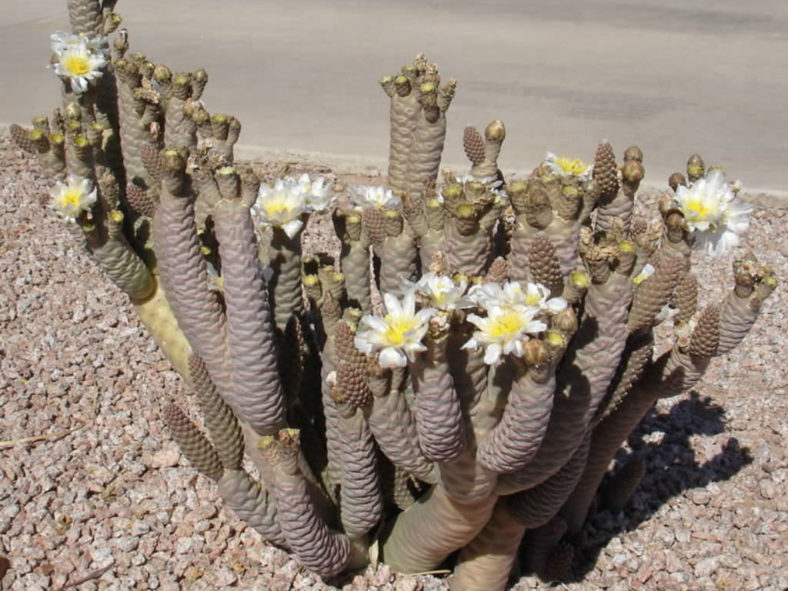
Tephrocactus articulatus var. diadematus is a unique cactus with fragile, erect stems composed of cylindrical segments that resemble pinecones. It grows up to 12 inches (30 cm) tall. The prominent tubercles and clusters of silvery spines are spirally arranged along the stem segments. Some forms lack spines.
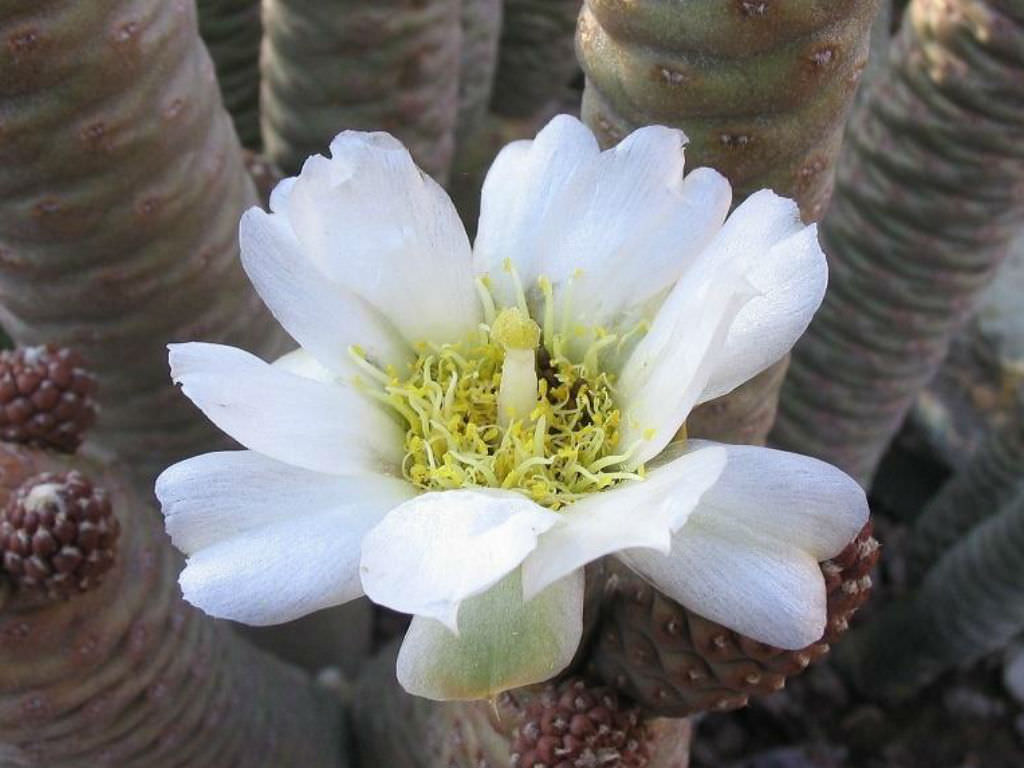
A shy bloomer, Tephrocactus articulatus var. diadematus sometimes produces white-to-pinkish, cup-shaped flowers in spring or early summer. The flowers can reach a diameter of up to 1.6 inches (4 cm). The fruits that follow are barrel-shaped, dry-fleshed, and very thin-walled.
Origin
Tephrocactus articulatus var. diadematus is native to western Argentina. It is not recognized as a separate variety and is treated as a synonym of Tephrocactus articulatus.
How to Grow and Care for Tephrocactus articulatus var. diadematus
Hardiness. USDA hardiness zones 9a to 11b: from 20°F (-6.7°C) to 50°F (10°C).
The wide variety of species within the genus Opuntia means that different types of Prickly Pears may need slightly different care. All are desert cacti that require lots of sun and light, and very little water. If you live in a hot, arid area, these plants can generally be planted outside, left alone, and enjoyed.
These cacti will grow just fine in a garden, but can also be grown in pots. To repot, ensure the soil is dry, then remove the pot and the old soil. After treating any cuts with fungicide, place the cactus in a new pot and backfill it with potting soil. As with a new cutting, ensure that you do not water a newly repotted Prickly Pear briefly to avoid rotting its roots.
Opuntia can propagate either by cuttings or by seed. To propagate by cuttings, sever pads from a plant and let them dry so the wounds heal. Then place the plants in dry soil and refrain from watering them until they begin to grow to prevent them from rotting.
See more at How to Grow and Care for Opuntia.
Links
- Back to genus Tephrocactus
- Succupedia: Browse succulents by Scientific Name, Common Name, Genus, Family, USDA Hardiness Zone, Origin, or cacti by Genus
Photo Gallery
Click on a photo to see a larger version.