Scientific Name
Stapelia olivacea N.E. Br.
Synonym(s)
Ceropegia olivacea, Gonostemon olivaceus
Common Name(s)
African Starfish Flower, Carrion Flower
Scientific Classification
Family: Apocynaceae
Subfamily: Asclepiadoideae
Tribe: Stapeliae
Genus: Stapelia
Etymology
Etymology
The specific epithet "olivacea (oh-lee-VAY-see-uh)" means "olive-green" and refers to the olive-green color used in the first painting of this species.
Origin
This species is native to South Africa. It occurs across much of the Great Karoo, usually quite high up in the mountains.
Description
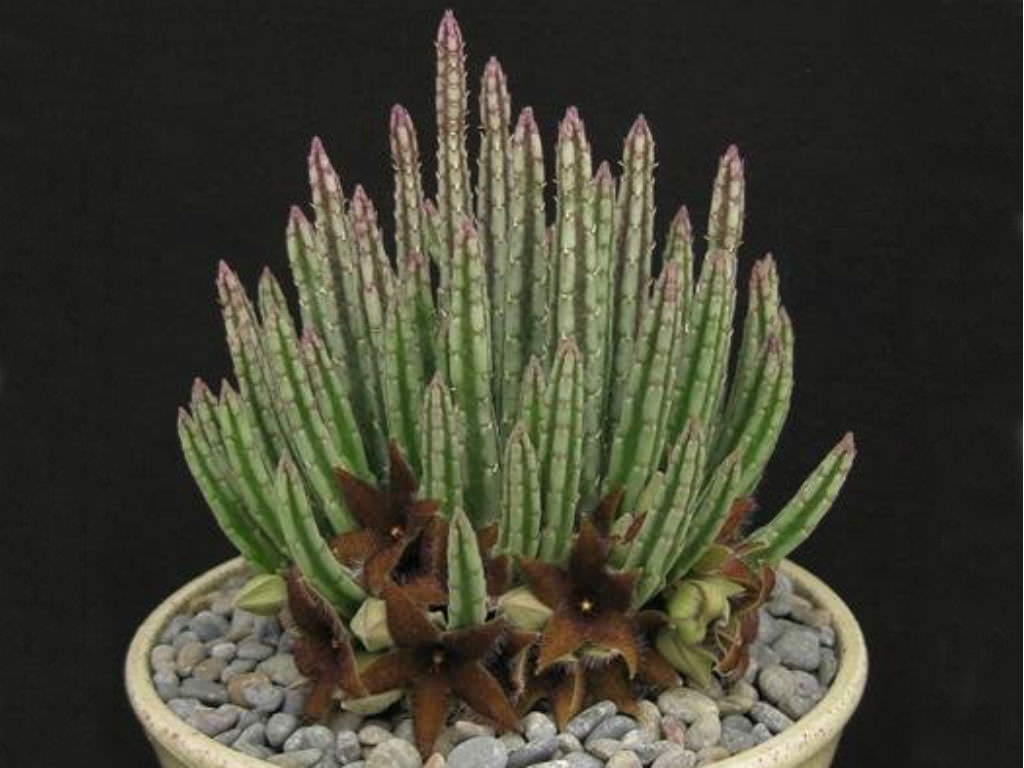
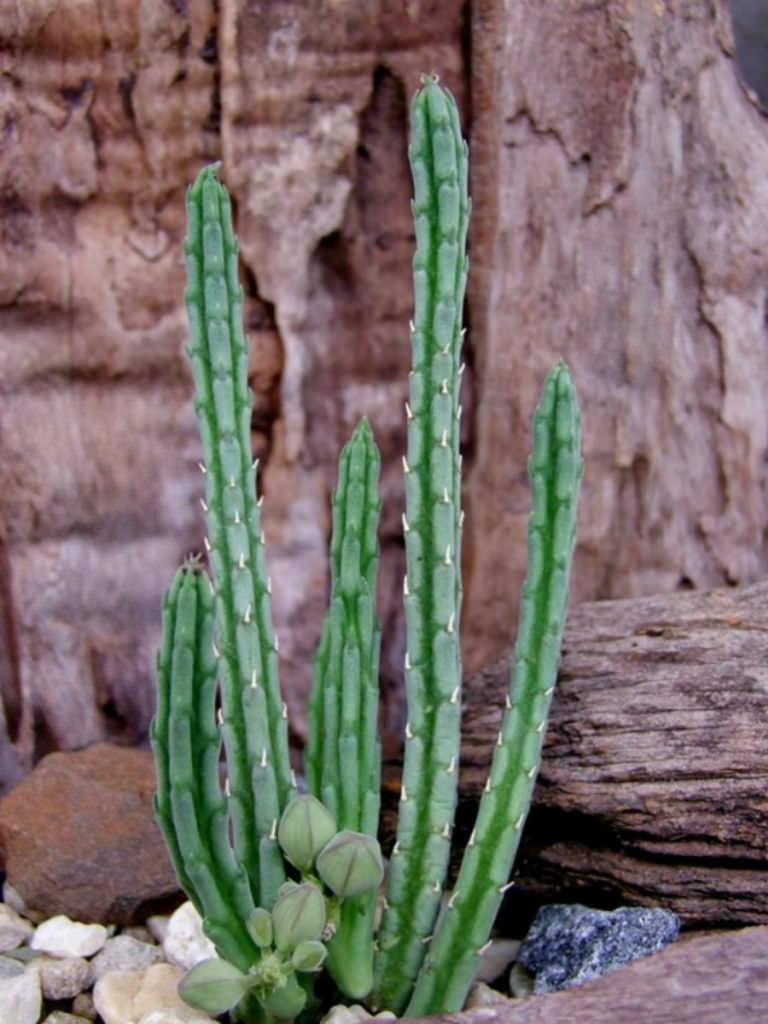
Stapelia olivacea is a small succulent that forms a compact clump of fleshy, erect stems with tubercles joined into four angles along the stem. It can reach up to 6 inches (15 cm) in width. The stems can grow up to 4.8 inches (12 cm) long and 0.4 inches (1 cm) thick. They are shortly pubescent, grey-green with purplish flecks and darker green in grooves between the angles.
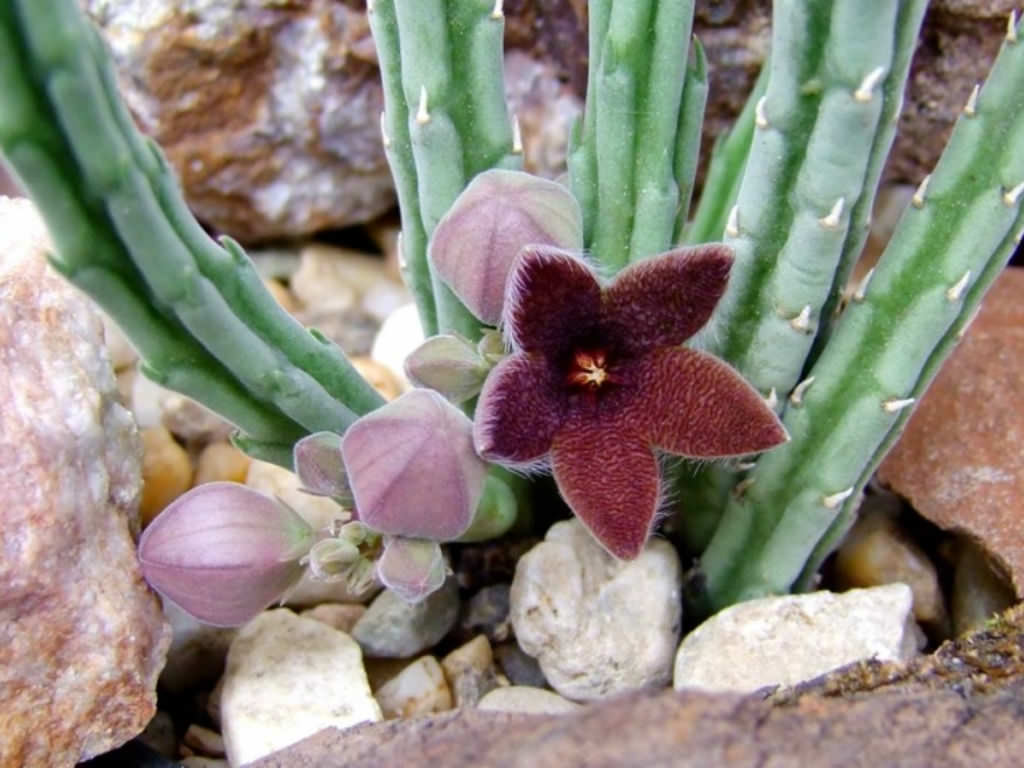
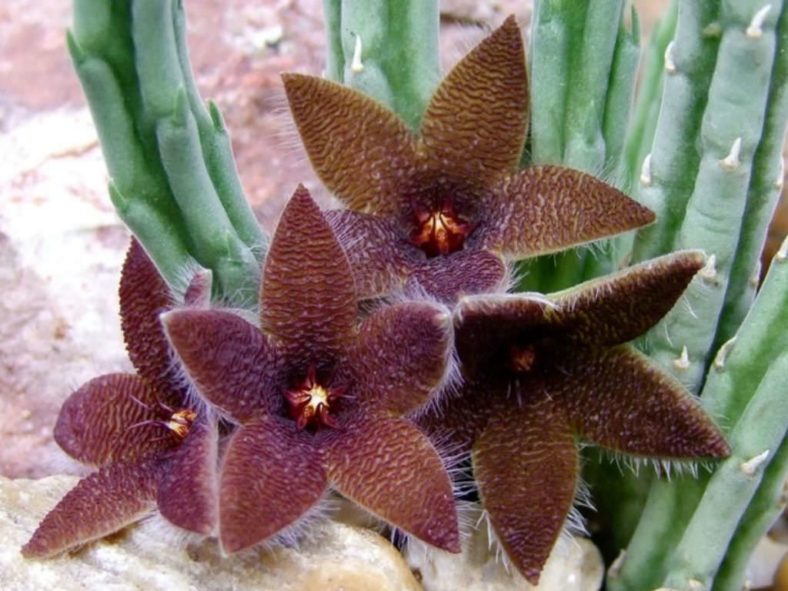
The flowers, which can reach a diameter of 1.6 inches (4 cm), are almost flat, transversely rugulose, dark maroon-red to greenish, and have white hairs along the margins. The inflorescences arise near the base of the stems and bear 1 to 6 flowers developing in gradual succession, usually in the fall. The fruits are spindle-shaped follicles that can grow up to 4 inches (10 cm) long and 0.25 inches (0.6 cm) in diameter.
How to Grow and Care for Stapelia olivacea
Hardiness: USDA hardiness zones 9a to 11b: from 20°F (-6.7°C) to 50°F (10°C).
Several species are fairly easy to grow. Others, often those with slightly hairy stems and the more unusual flowers, are more challenging and require careful watering (with some fertilizer) during the growing season and complete withdrawal of water during the winter months. A minimum winter temperature of 50°F (10°C) is acceptable, provided plants are kept dry. A heated growing bench or incubator may help delicate plants to get through the colder months. However, many species live under shrubs in their habitat and prefer light shade rather than full sun.
A gritty compost is essential, and clay pots are advisable for the more delicate species. Some growers prefer mineral-only compost to minimize the risk of fungal attack on roots. A layer of grit on the compost surface prevents moisture from accumulating around the base of the stems.
Keeping Stapelias and their roots free of pests such as mealybugs is the real key to success, as fungal attacks often result from insect damage to stems.
See more at How to Grow and Care for Stapelia.
Links
- Back to genus Stapelia
- Succupedia: Browse succulents by Scientific Name, Common Name, Genus, Family, USDA Hardiness Zone, Origin, or cacti by Genus
Photo Gallery
Click on a photo to see a larger version.