Scientific Name
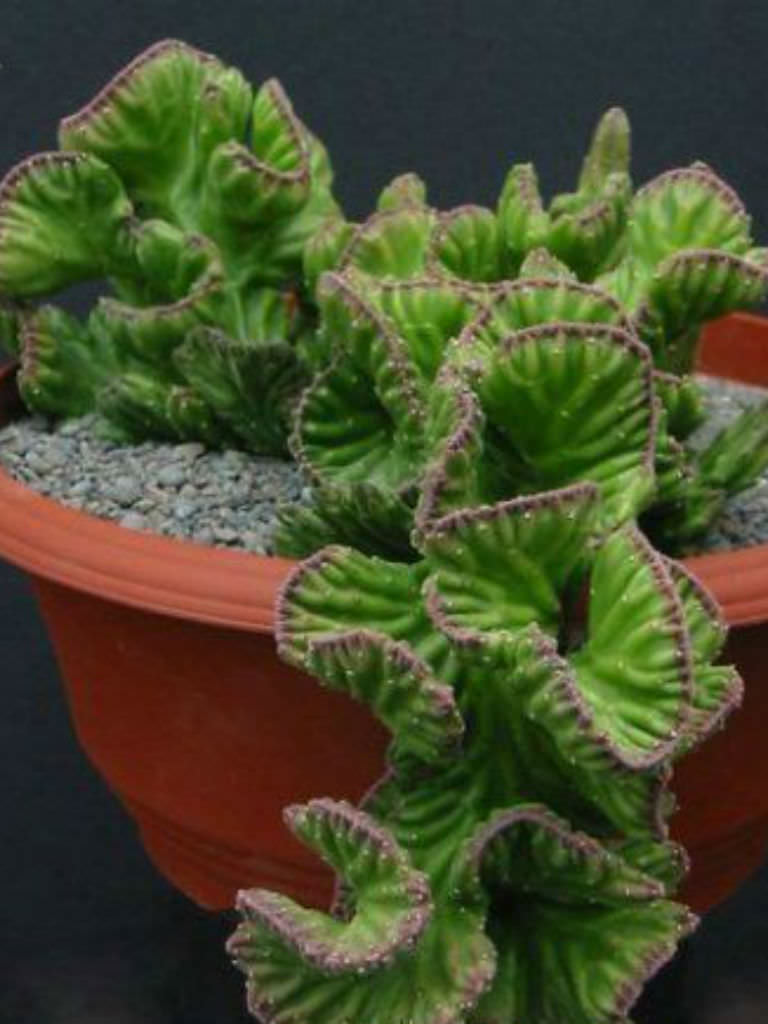
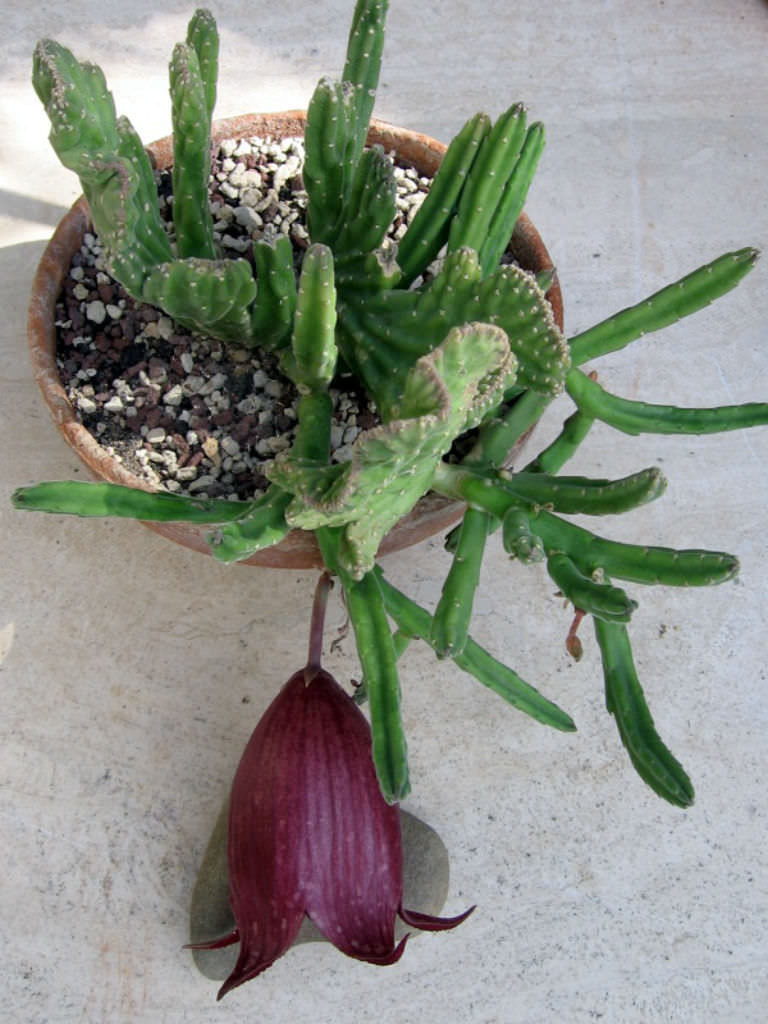
Stapelia leendertziae (crested) – an informal descriptive name
This plant is not found in the wild and therefore cannot be classified as a distinct form. Its crested growth (fasciation) is stable in cultivation; however, it has not been formally named as a cultivar under the ICNCP🡕.
Accepted Scientific Name
Stapelia leendertziae N.E. Br.
Common Name(s)
Black Bells, Carrion Flower, Maroon Cup Starfish, Rugose Cup Starfish, Star Flower
Scientific Classification
Family: Apocynaceae
Subfamily: Asclepiadoideae
Tribe: Stapeliae
Genus: Stapelia
Etymology
The specific epithet "leendertziae" (pronounced "leen-DERTZ-ee-ay") honors Reino Leendertz🡕, later Mrs. Pott (1869–1965), a Dutch botanist and the first official botanist employed at the Transvaal Museum, who first discovered this species at Heidelberg.
Description
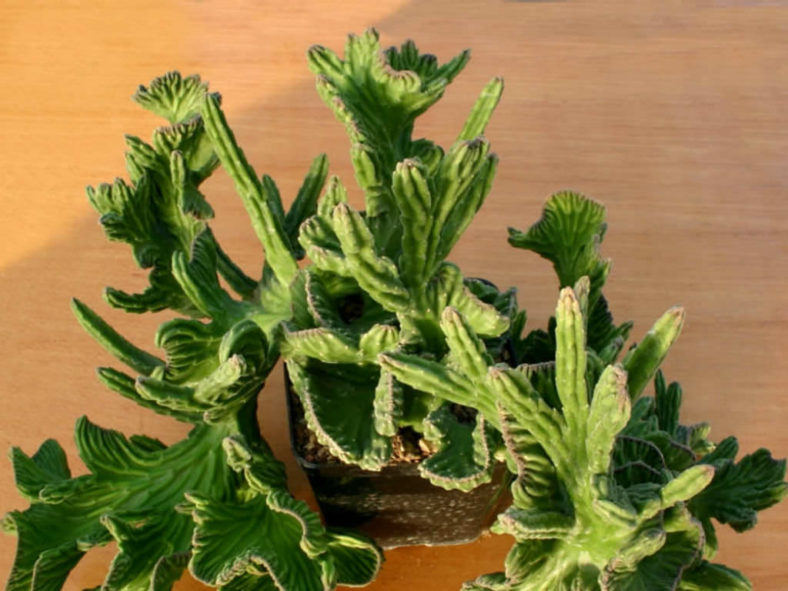
Stapelia leendertziae (crested) is an unusual succulent with fleshy, fan-shaped stems that grow along the ground or hang elegantly over the edge of the pot. The stems are dull green to reddish when the plant is grown in full sun.
This plant is most conspicuous in bloom due to its unique, purple-brown to dark purple flowers that appear in late summer. The flowers are bell-shaped to urn-shaped and can reach a length of 3.2 inches (8 cm) and a nearly equal diameter.
Origin
Stapelia leendertziae (crested) is a sport of Stapelia leendertziae selected in cultivation for its crested growth (fasciation).
How to Grow and Care for Stapelia leendertziae (crested)
Hardiness: USDA hardiness zones 9a to 11b: from 20°F (-6.7°C) to 50°F (10°C).
Several species are fairly easy to grow. Others, often those with slightly hairy stems and the more unusual flowers, are more challenging and require careful watering (with some fertilizer) during the growing season and complete water withdrawal during the winter months. A minimum winter temperature of 50°F (10°C) is acceptable, provided plants are kept dry. A heated growing bench or incubator can help delicate plants survive the colder months. However, many species live under shrubs and prefer light shade rather than full sun.
A gritty compost is essential, and clay pots are advisable for the more delicate species. Some growers prefer mineral-only compost to minimize the chance of a fungal attack on the roots. A layer of grit on the compost surface prevents moisture from accumulating around the base of the stems.
Keeping Stapelias and their roots free of pests, such as mealybugs, is the real key to success, as fungal attacks often result from insect-caused stem damage.
See more at How to Grow and Care for Stapelia.
Links
- Back to genus Stapelia
- Succupedia: Browse succulents by Scientific Name, Common Name, Genus, Family, USDA Hardiness Zone, Origin, or cacti by Genus
Photo Gallery
Click on a photo to see a larger version.