Scientific Name
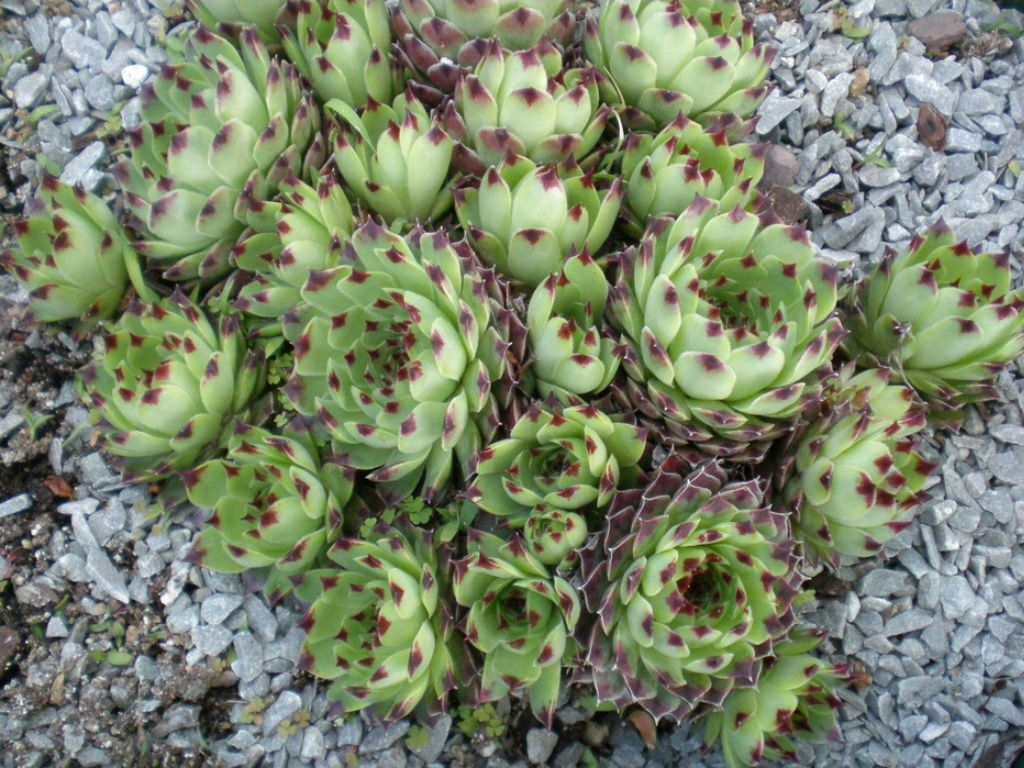
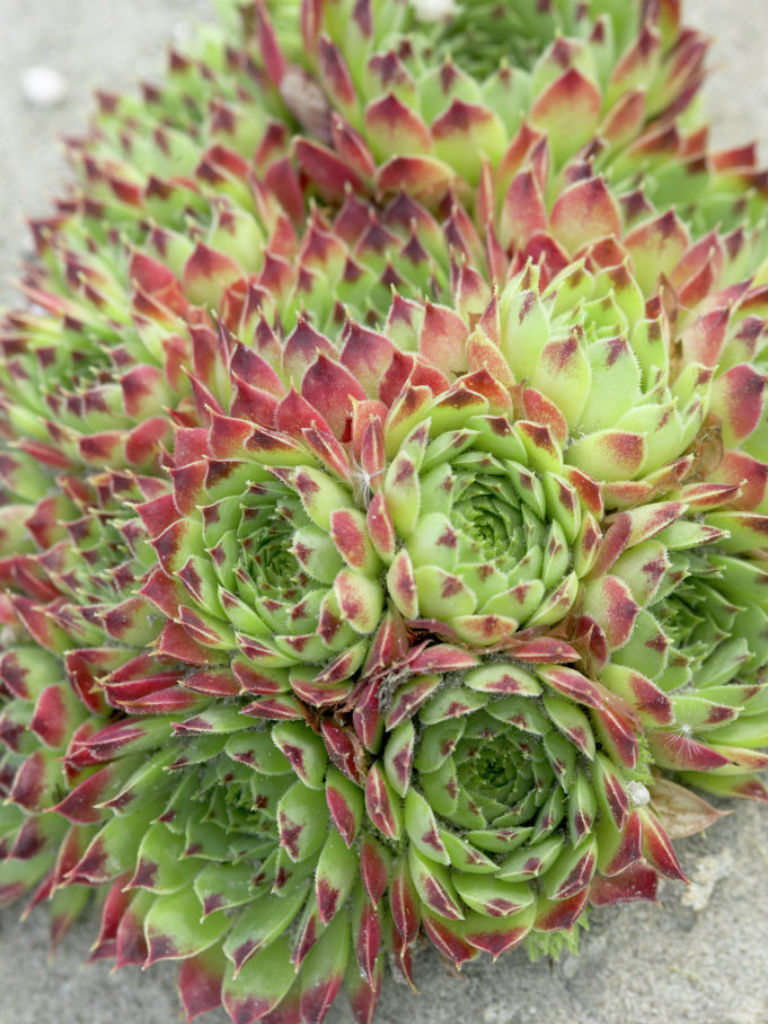
Sempervivum calcareum 'Sir William Lawrence'
Synonym(s)
Sempervivum 'Sir William Lawrence'
Common Name(s)
Houseleek, Hen and Chicks
Scientific Classification
Family: Crassulaceae
Subfamily: Sedoideae
Tribe: Sedeae
Subtribe: Sedinae
Genus: Sempervivum
Etymology
The generic name "Sempervivum" (pronounced "sem-per-VEE-vum") means "always alive" or "ever-living". It refers to the evergreen, resilient nature of plants in the genus Sempervivum.
The specific epithet "calcareum" (pronounced "kal-KAR-ee-um") means "calcareous; growing in a chalky habitat" and refers to the natural habitat of this species.
The cultivar epithet 'Sir William Lawrence' honors Sir William Lawrence, 3rd Baronet🡕 (1870–1934), an English horticulturalist, hospital administrator, and collector.
Description
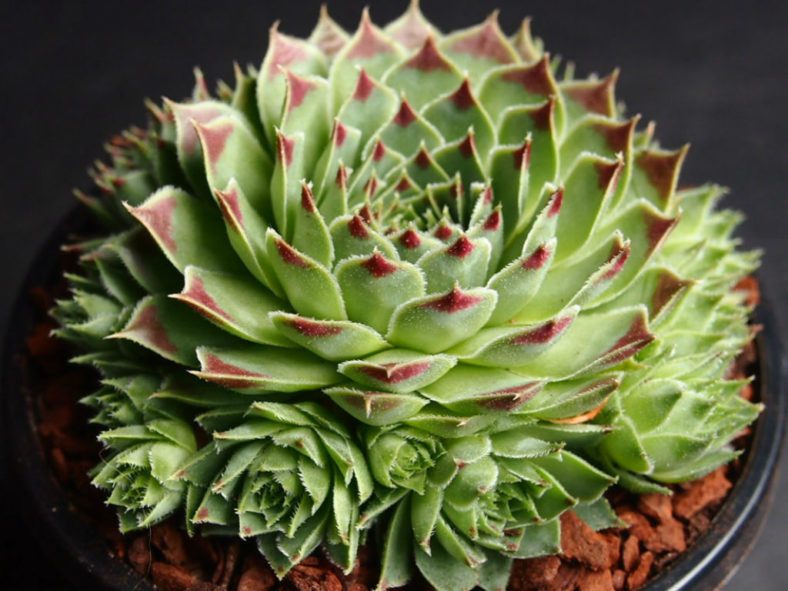
Sempervivum calcareum 'Sir William Lawrence' is a small succulent that forms attractive rosettes of grey-green leaves tipped with maroon red. The rosettes can grow up to 2.8 inches (7 cm) in diameter and produce offsets on stolons, forming dense clumps over time. The leaves are fleshy, ovate, and pointed.
Short spikes of pink flowers appear in summer. The rosettes die after flowering. However, the rest of the clump will not die; it will continue to grow, filling in the spaces.
Origin
Sempervivum calcareum 'Sir William Lawrence' is a cultivar of Sempervivum calcareum. Its exact origin remains unknown but is likely from the British alpine gardening community.
How to Grow and Care for Sempervivum calcareum 'Sir William Lawrence'
Hardiness: USDA hardiness zones 4a to 9b: from −30 °F (−34.4 °C) to 30 °F (−1.1 °C).
Sempervivums are not difficult to grow, provided they are not waterlogged and killed by excess watering. They can be easily grown outdoors and in containers, and they earned the name "Houseleeks" from their tendency to root on the roofs of houses. It will naturally die after the mother plant flowers, but by then, the plant has likely produced many offsets that will keep growing. These are excellent for cold windows. Sempervivum earned its popular name, "Hen and Chicks," from their growth habit. The mother plant, or hen, sends off numerous offsets that cluster around her base like chicks. These offsets can be easily repotted, or the plants can be left to form a clumping mat.
Repot as needed, preferably during the warm season. To repot a succulent, ensure the soil is dry before repotting, then gently remove the pot. Knock away the old soil from the roots, removing any rotted or dead roots. Treat any cuts with a fungicide. Place the plant in its new pot and backfill it with potting soil, spreading the roots as you repot. Leave the plant dry for a week or so, then begin to water lightly to reduce the risk of root rot.
Learn more at How to Grow and Care for Sempervivum.
Links
- Back to genus Sempervivum
- Succupedia: Browse succulents by Scientific Name, Common Name, Genus, Family, USDA Hardiness Zone, Origin, or cacti by Genus
Photo Gallery
Click on a photo to see a larger version.