Scientific Name
Crassula tomentosa Thunb.
Synonym(s)
Purgosea tomentosa, Sphaeritis tomentosa, Turgosea tomentosa
Common Name(s)
Woolly Crassula
Scientific Classification
Family: Crassulaceae
Subfamily: Crassuloideae
Genus: Crassula
Etymology
The specific epithet "tomentosa" (pronounced "toh-men-TOH-suh") means "densely covered with short, matted (often woolly) hairs" and refers to the leaves of this species, which typically have a felted (tomentose) texture and marginal cilia.
Origin
Crassula tomentosa is native to southern Namibia and South Africa (Northern Cape and Western Cape). It grows on sandy flats to rocky slopes under bushes.
Description
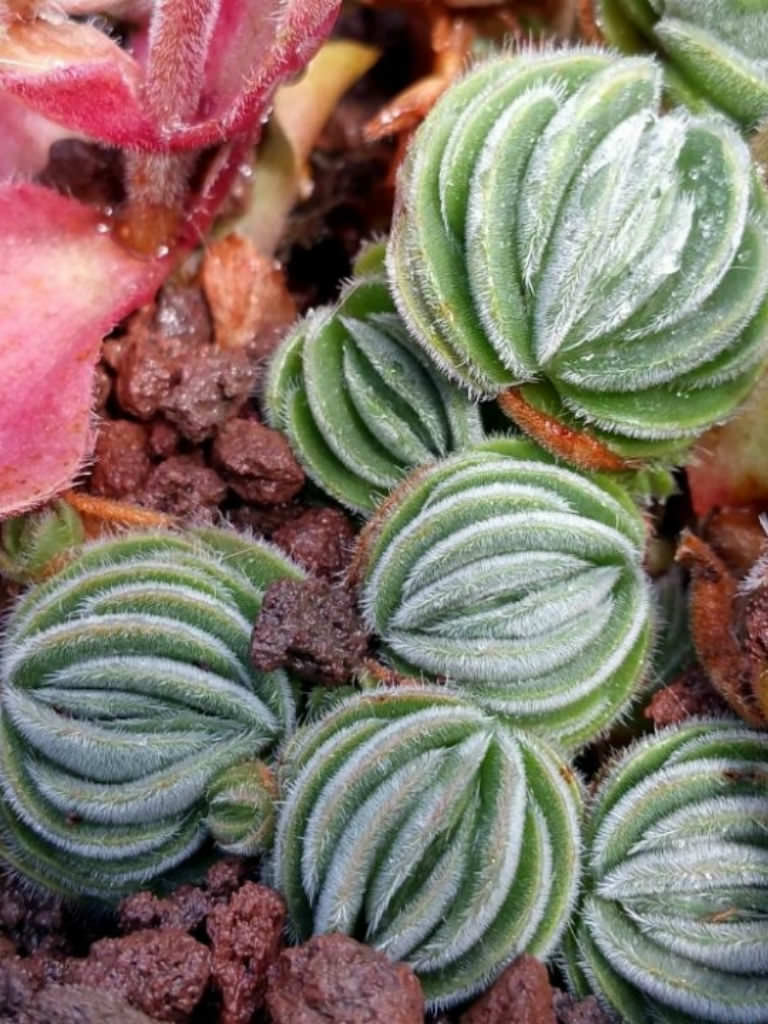
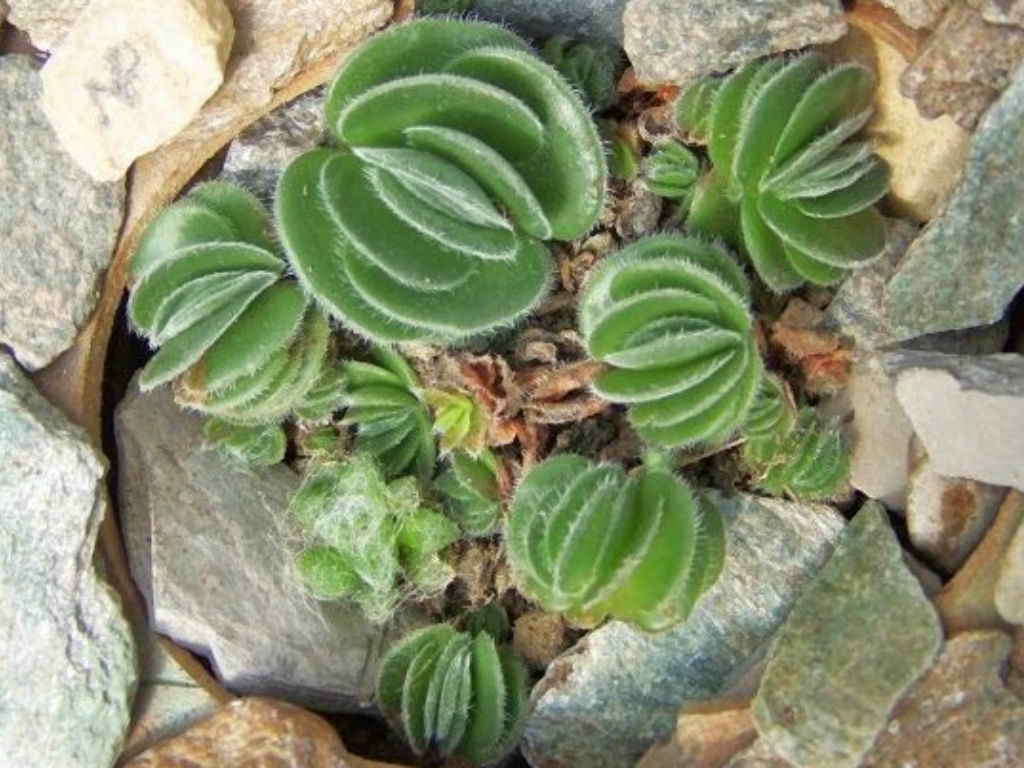
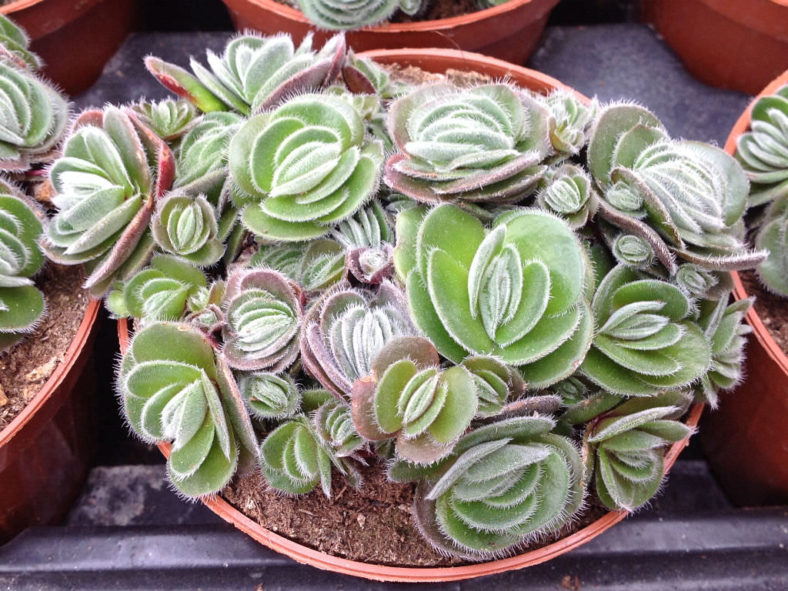
Crassula tomentosa is a perennial or biennial succulent that slowly forms a cluster of compact rosettes of grayish-green leaves that are usually densely hairy and have marginal cilia. It can reach a height of 2 feet (60 cm) when flowering. The leaves are variable in shape, flattened, scarcely convex, measuring up to 4 inches (10 cm) long and 1 inch (2.5 cm) wide.
The flowers are tubular, whitish to yellowish, and appear in dense clusters on spike-like thyrse in spring and early summer.
Varieties and Forms of Crassula tomentosa
- Crassula tomentosa var. glabrifolia (not accepted as a separate variety and is treated as a synonym of Crassula tomentosa var. interupta)
- Crassula tomentosa var. interupta
- Crassula tomentosa var. tomentosa
Hybrids of Crassula tomentosa
How to Grow and Care for Crassula tomentosa
Hardiness: USDA hardiness zone 9b to 11b: from 25°F (3.9°C) to 50°F (10°C).
Crassulas are easy to grow but susceptible to mealybugs and fungal diseases. As with all succulents, overwatering can be fatal, so err on the side of too dry rather than too wet. Never let your Crassula sit in water. If you water from beneath by allowing the plant to sit in a saucer, ensure that you pour off any excess water after a few minutes.
Crassulas are generally started by division, offsets, or leaf cuttings. Plants can be easily propagated from a single leaf: sprout leaves by placing them into a succulent or cacti mix, then covering the dish until they sprout.
Repot as needed, preferably during the warm season. To repot a succulent, ensure the soil is dry, then gently remove the pot. Knock away the old soil from the roots, removing any rotted or dead roots. Treat any cuts with a fungicide. Place the plant in its new pot and backfill it with potting soil, spreading the roots as you repot. Leave the plant dry for a week or so, then water lightly to reduce the risk of root rot.
See more at How to Grow and Care for Crassula.
Links
- Back to genus Crassula
- Succupedia: Browse succulents by Scientific Name, Common Name, Genus, Family, USDA Hardiness Zone, Origin, or cacti by Genus
Photo Gallery
Click on a photo to see a larger version.