Scientific Name
Crassula atropurpurea var. anomala (Schönl. & Bak.f.) Toelken
Synonym(s)
Crassula anomala, Globulea atropurpurea var. anomala
Scientific Classification
Family: Crassulaceae
Subfamily: Crassuloideae
Genus: Crassula
Etymology
The specific epithet "anomala" (pronounced "ah-NOM-uh-luh") means "irregular" or "deviating from the norm." It refers to the unique physical characteristics that distinguish this variety from the type variety of the species Crassula atropurpurea var. atropurpurea, particularly its dense covering of hairs.
Origin
Crassula atropurpurea var. anomala is native to South Africa. It occurs in the Western Cape province, growing on sheltered ledges, usually on the south- or southwest-facing aspects of mountains.
Description
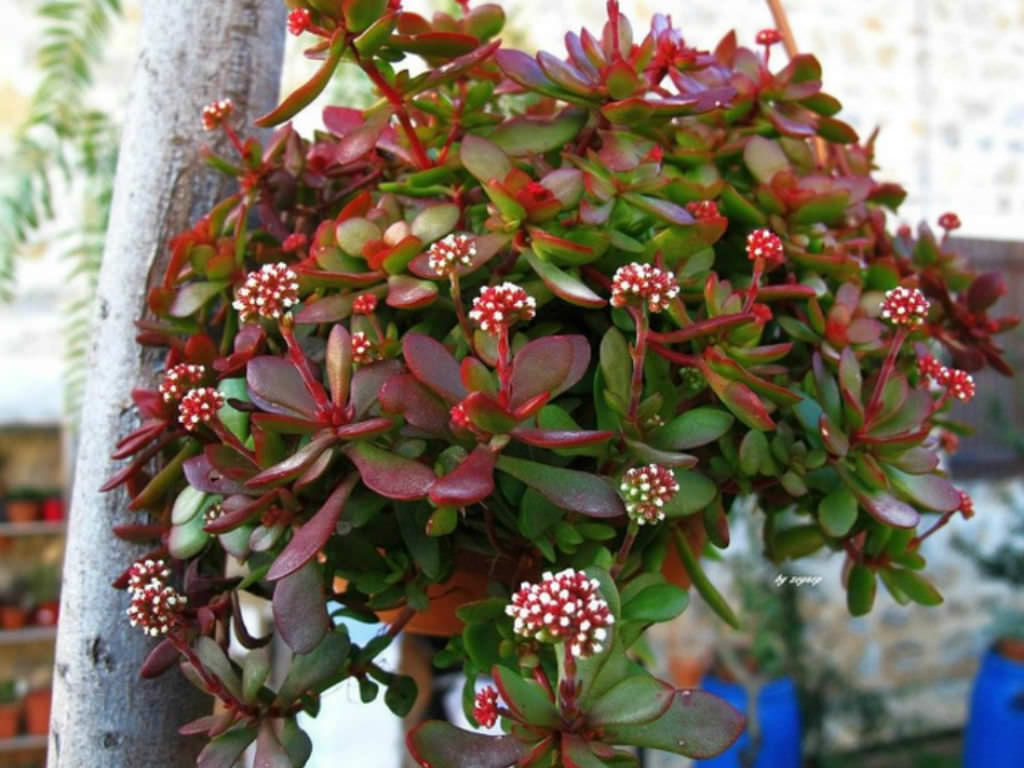
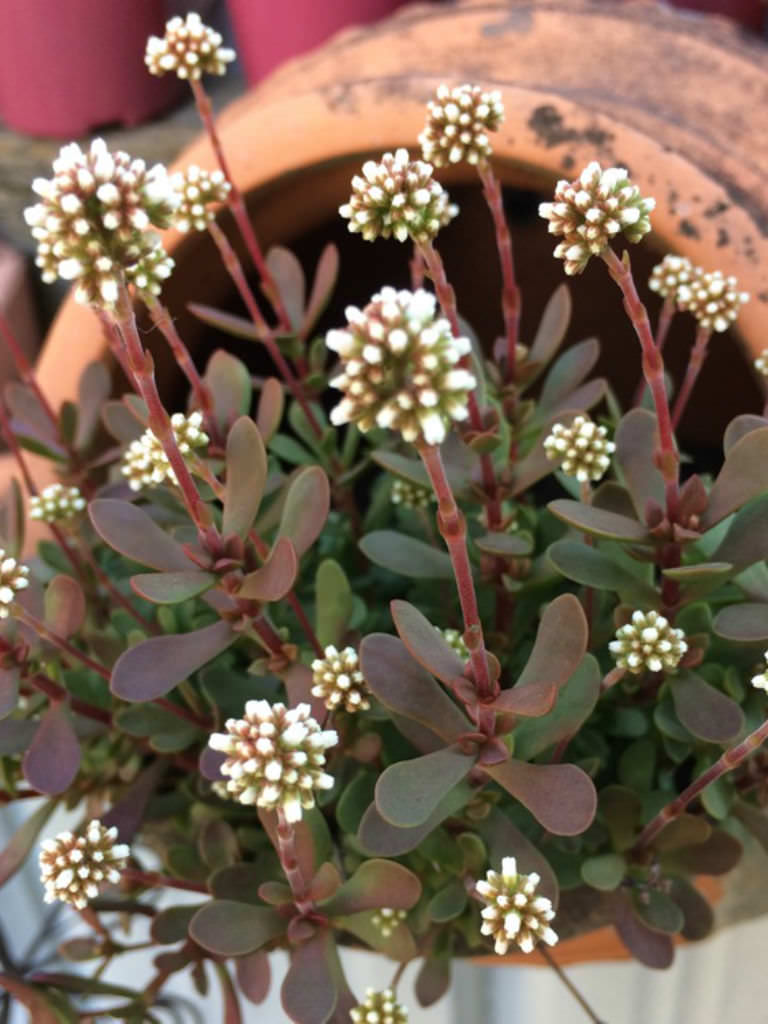
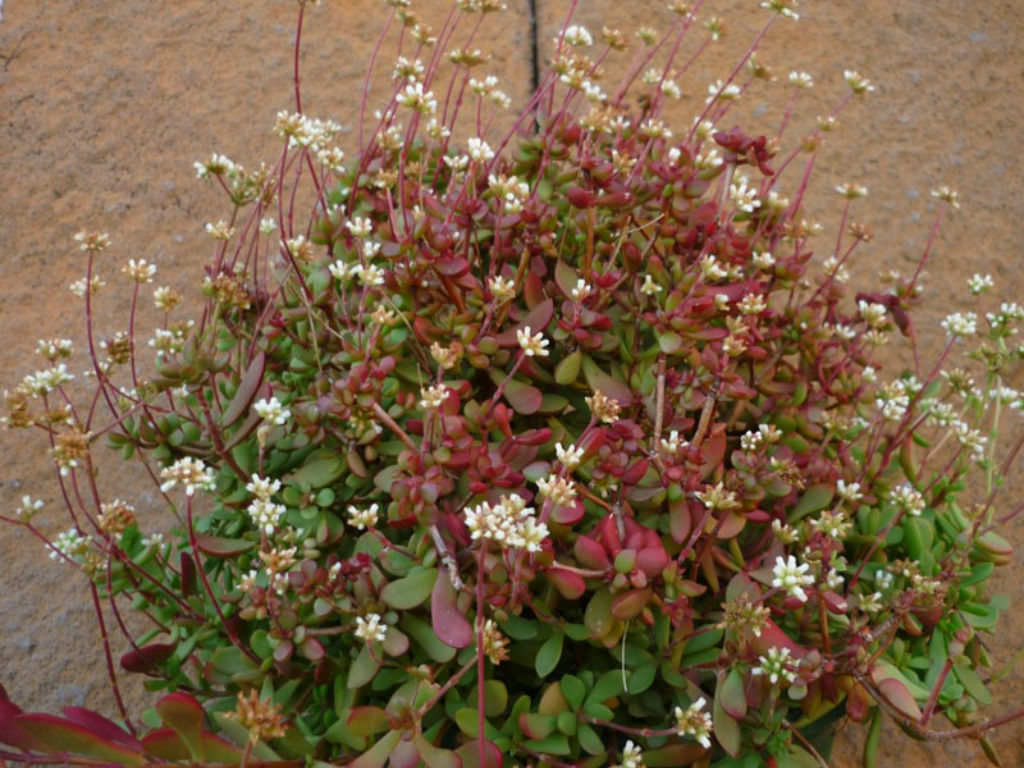
Crassula atropurpurea var. anomala is a succulent shrublet with fleshy, obovate leaves on erect or decumbent stems. It can grow up to 6 inches (15 cm) tall. The leaves are green to yellow and can develop vibrant red to purple tips and edges in full sun. All parts of the plant are densely covered with erect hairs.
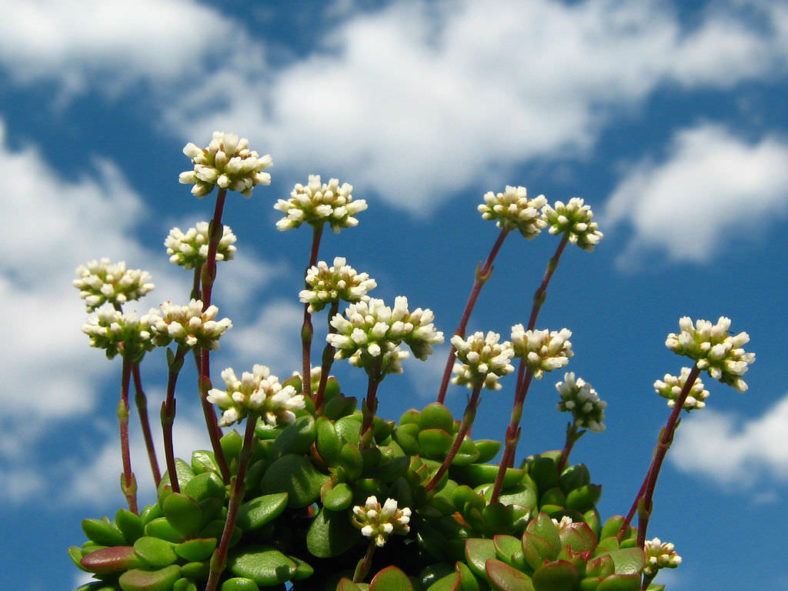
The small, tubular flowers are white and appear in several dense clusters atop erect stalks in mid-summer.
How to Grow and Care for Crassula atropurpurea var. anomala
Hardiness: USDA hardiness zone 10a to 11b: from 30°F (-1.1°C) to 50°F (10°C).
Crassulas are easy to grow but susceptible to mealy bugs and fungal diseases. Overwatering is sure to be fatal, as with all succulents, so err on the side of too dry rather than too wet. Never let your Crassula sit in water. If you water from beneath by letting the plant sit in a saucer of water, ensure to pour off any excess water after a few minutes.
Crassulas are generally started by division, offsets, or leaf cuttings. Plants can be easily propagated from a single leaf: sprout leaves by placing them into a succulent or cacti mix, then covering the dish until they sprout.
Repot as needed, preferably during the warm season. To repot a succulent, ensure the soil is dry, then gently remove the pot. Knock away the old soil from the roots, removing any rotted or dead roots. Treat any cuts with a fungicide. Place the plant in its new pot and backfill it with potting soil, spreading the roots out as you repot. Leave the plant dry for a week or so, then begin to water lightly to reduce the risk of root rot.
See more at How to Grow and Care for Crassula.
Links
- Back to genus Crassula
- Succupedia: Browse succulents by Scientific Name, Common Name, Genus, Family, USDA Hardiness Zone, Origin, or cacti by Genus
Photo Gallery
Click on a photo to see a larger version.