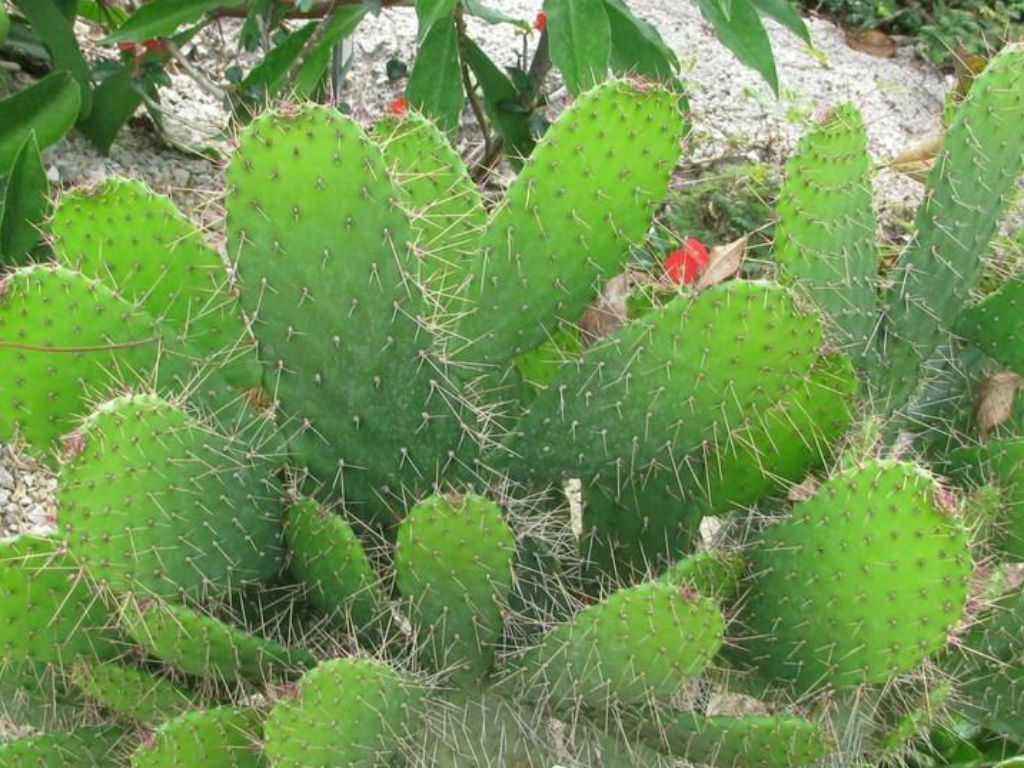
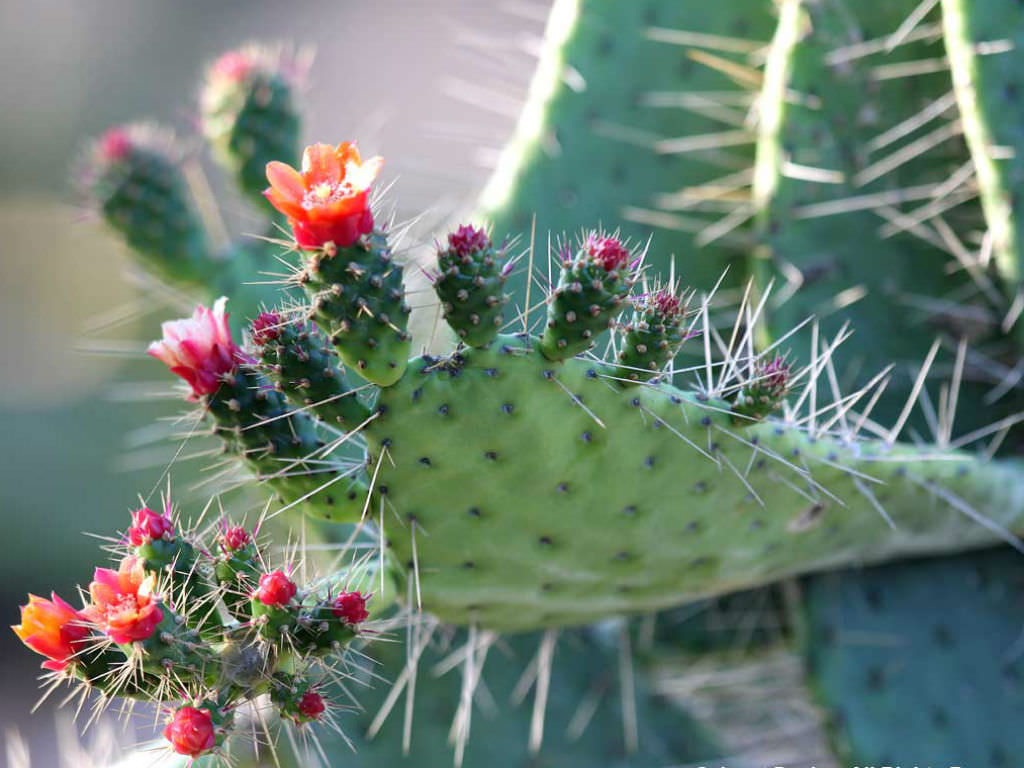
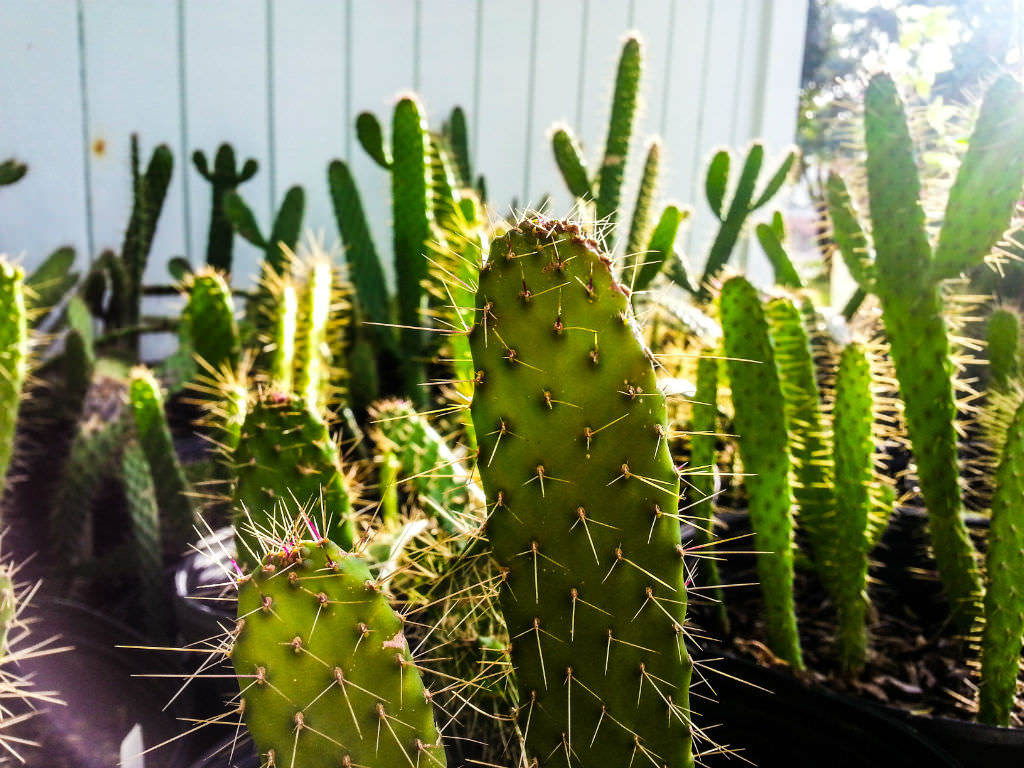
Consolea millspaughii subsp. corallicola, commonly known as the Florida Semaphore Cactus, is native to the Florida Keys in the United States. The common name "Florida Semaphore Cactus" reflects the cactus's resemblance to railway semaphore signals.
Taxonomy of Consolea millspaughii subsp. corallicola
Scientific Name
Consolea millspaughii subsp. corallicola (Small) Majure
Synonym(s)
Consolea corallicola, Consolea spinosissima subsp. corallicola, Opuntia corallicola
Common Name(s)
Florida Semaphore Cactus, Semaphore Pricklypear
Scientific Classification
Family: Cactaceae
Subfamily: Opuntioideae
Tribe: Opuntieae
Genus: Consolea
Etymology
The specific epithet "millspaughii" (pronounced "mill-SPAW-ee-eye") honors Charles Frederick Millspaugh (1854–1923), an American botanist, botanical illustrator, and physician.
The subspecific epithet "corallicola" (pronounced "kor-al-lih-KOH-lah") means "coral-dweller" and refers to the natural habitat of this subspecies.
Origin of Consolea millspaughii subsp. corallicola
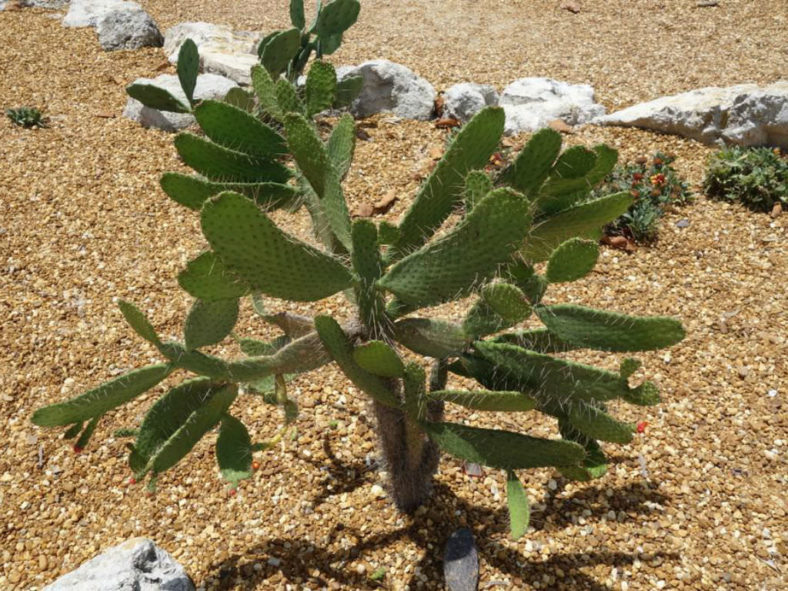
Consolea millspaughii subsp. corallicola is endemic to Florida, United States, and is limited to the Florida Keys. It grows on bare rocks with only slight humus covering in hardwood hammocks near sea level.
Description of Consolea millspaughii subsp. corallicola
Consolea millspaughii subsp. corallicola, formerly known as Consolea corallicola, is a rare, tree-like cactus with a cylindrical trunk and flattened, segmented branches armed with needle-like spines. It can grow up to 8 feet (2.4 m) tall. The stem segments (pads) can measure up to 16 inches (40 cm) long, 4 inches (10 cm) wide, and 0.4 inches (1 cm) thick. The areoles are arranged in 10 or more rows. Each areole bears 5 to 9 spines that can grow up to 5 inches (12.5 cm) long. The spines on branches are smaller and more flexible than those on the trunk.
Flowers are bright red with numerous stamens and appear year-round. They are up to 1 inch (2.5 cm) long and nearly equal in diameter. The spiny fruits are yellow, fleshy, egg- to club-shaped, and up to 2.4 inches (6 cm) long.
How to Grow and Care for Consolea millspaughii subsp. corallicola
Hardiness: USDA hardiness zone 10a to 11b: from 30°F (-1.1°C) to 50°F (10°C).
Though the large variety of species within the Opuntia genus means different types of prickly pears may need slightly different care, all are desert cacti that need lots of sun, lots of light, and very little water. Therefore, if you live in a hot, arid area, particularly the American Southwest, these plants can generally be planted outside, left alone, and enjoyed.
Though Opuntia will grow just fine in a garden, it can also be grown in pots. To repot, ensure the soil is dry, remove the pot, and remove the old soil. After treating any cuts with fungicide, place the prickly pear in a new pot and backfill it with potting soil. As with a new cutting, ensure not to water a newly repotted prickly pear briefly to avoid rotting its roots.
See more at How to Grow and Care for Opuntia.
Photo Gallery
Click on a photo to see a larger version.